


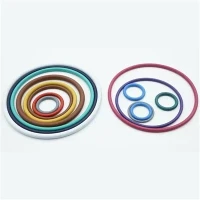


Hey there! As a V - Seals supplier, I often get asked if there are different types of V - Seals. And the answer is a big yes! In this blog, I'm gonna break down the various types of V - Seals, their features, and where they're used.
Let's start with the basics. V - Seals, also known as V - rings, are sealing devices that are shaped like the letter "V". They're used to prevent the leakage of fluids, like oil or grease, and to keep out contaminants such as dust and dirt. They're super versatile and can be found in all sorts of machinery and equipment.
Rubber V Seals
One of the most common types is the Rubber V Seal. Rubber V Seals are made from different kinds of rubber compounds, each with its own set of properties. For example, Nitrile rubber (NBR) is a popular choice because it has good resistance to oil, fuel, and other petroleum - based fluids. It can handle a wide range of temperatures, usually from - 40°F to 250°F (- 40°C to 121°C). So, if you have a machine that deals with oil and operates in a normal temperature range, a Nitrile rubber V - Seal would be a great option.
On the other hand, Fluorocarbon rubber (FKM) is known for its excellent resistance to high temperatures and chemicals. It can withstand temperatures up to 400°F (204°C) and is resistant to many aggressive chemicals. This makes it ideal for applications in the chemical industry or in high - temperature environments like in some engines.
Silicone rubber V - Seals are another type. They have great flexibility and can operate in a wide temperature range, from - 60°F to 450°F (- 51°C to 232°C). They're also resistant to ozone and weathering, so they're often used in outdoor applications.
V - Seal 101: Understanding the Design
Before we dive into more types, let's take a quick look at V Seal 101. The design of a V - Seal is crucial to its performance. The "V" shape allows it to be self - energizing. When the seal is installed, the lips of the "V" press against the mating surfaces, creating a tight seal. The pressure exerted by the seal increases as the internal pressure in the system rises, which helps to maintain an effective seal.
There are single - lip and multi - lip V - Seals. Single - lip V - Seals are simpler and are usually used in applications where there is less pressure or where the sealing requirements are not very high. Multi - lip V - Seals, on the other hand, have multiple sealing lips. This provides better sealing performance, especially in applications where there is a risk of contamination or where the fluid pressure is higher.
Rubber V Rings for Specific Applications
Now, let's talk about Rubber V Ring applications. In the automotive industry, V - Seals are used in transmissions, engines, and differentials. For example, in a transmission, they prevent the leakage of transmission fluid and keep out dirt and debris. The high - quality rubber used in these V - Seals can withstand the high pressures and temperatures generated in the transmission.
In the industrial machinery sector, V - Seals are used in pumps, compressors, and hydraulic systems. In a pump, a V - Seal can prevent the leakage of the pumped fluid, whether it's water, oil, or a chemical. In a compressor, it helps to maintain the pressure inside the system and prevent the loss of compressed air or gas.
In the food and beverage industry, special food - grade rubber V - Seals are used. These seals are made from materials that comply with food safety regulations. They're resistant to food products and cleaning agents, and they can be used in equipment like mixers, conveyors, and filling machines.


Custom - Made V - Seals
Sometimes, standard V - Seals may not fit the specific requirements of a particular application. That's where custom - made V - Seals come in. As a V - Seals supplier, I've worked with many customers to design and manufacture custom V - Seals. We can change the size, shape, and material of the seal according to the customer's needs.
For example, if a customer has a unique machine with non - standard dimensions, we can create a V - Seal that fits perfectly. Or, if the application requires a seal with special chemical resistance, we can select the appropriate rubber compound.
How to Choose the Right V - Seal
Choosing the right V - Seal depends on several factors. First, you need to consider the type of fluid that needs to be sealed. If it's oil, you'll need a seal that's resistant to oil. If it's a chemical, you'll need a seal that can withstand that particular chemical.
The temperature range of the application is also important. If the machine operates at high temperatures, you'll need a seal that can handle those temperatures without losing its sealing properties.
The pressure in the system is another factor. Higher pressure applications may require a multi - lip V - Seal or a seal made from a more durable rubber compound.
Contact Us for Your V - Seal Needs
If you're in the market for V - Seals, whether it's a standard type or a custom - made one, I'd love to help. We have a wide range of V - Seals in different materials, sizes, and designs. Our team of experts can assist you in choosing the right seal for your application. Just reach out to us, and we'll start the conversation about your V - Seal requirements.
References
- "Sealing Technology Handbook" by John H. Bickford
- "Rubber Seals and Their Applications" by Rubber Manufacturers Association