


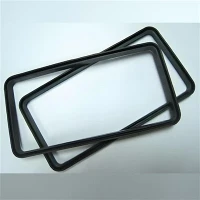

V-Seals
Why Choose Us
Our certificate
We have approved the Quality and Environment System ISO9001:2015 and ISO 14001:2015.all of the raw materials meet the ROHS, REACH, and PAHS, and most of our products have been approved by the NSF, FDA, LFGB, ACS, KTW-W270, WRAS, and UL.
Advanced Equipment
We have advanced production equipment and testing equipment such as automatic feeding machines, automatic packaging machines, injection molding machines, automatic feeding machines, automatic sorting machines, intelligent cutting machines, perform machines, etc.
Quality Control
After completion of manufacturing, the sealing ring needs to undergo appearance inspection, dimensional inspection, pressure test, media resistance test, air tightness, hardness, tensile strength, elongation, tearing performance, compression deformation under high and low temperatures, aging resistance, Water resistance, corrosion, and other inspection items to ensure that the quality meets standard requirements.
Quality customer service
Our dedicated team is always ready to answer your questions, provide you with detailed information about our products and guide you in your choice. We understand that every customer is unique.
What is V-Seals
V-Seals is a solid rubber seal used on shafts to prevent dirt, moisture, and other unwanted material from entering an oil seal, housing, or any other desired area while simultaneously keeping lubricants in. It works by stretching over the shaft to create a tight seal along the shaft while the flexible lip seals lightly against the counterface at a right angle to the shaft.The V-Ring works well on its own and excels when combined with rotary shaft seals to help extend the life of bearings, oil seals, and shafts. Gamma Seals provide the same function as V-Rings, but with the added protection of a metal case.


Leak proof
The main reason for using V-shaped seals is to prevent leakage of various fluids. Not only liquids, but also radial seals prevent gas leaks. The lip of the radial seal forms a rigid barrier between the housing and the shaft, ensuring that fluid or gaseous components cannot escape. Preventing leaks is critical to several industries that use seals, such as the automotive, aerospace, mechanical, and oil and gas industries. Stopping leaks is therefore one of the main benefits of using radial seals.
Rubber O-ring gasket for pipe. Rubber seal for joint sealing
pollution prevention V-seals can help prevent contaminants or contaminants from entering the machine. Contaminants such as dust, dirt, grime, mud, and other particles can get into the machine and cause problems with its operation. Radial seals prevent various impurities from entering the interior of the machine, which means there will be fewer functional or maintenance issues with the machine.
Lubrication to maintain
Another important benefit of using a V-seal is that it helps retain more lubrication. Maintaining lubrication helps reduce the possibility of machine wear and tear, allowing the machine to work for a long time without any problems.
What are the Applications of V-Seals
Rotating shafts
The V-ring seal is widely used in rotating shaft applications, including pumps, motors, gearboxes, and compressors. It provides effective sealing against lubricants and prevents contaminants from entering the system, thereby ensuring smooth operation and reducing downtime.
01
Automotive industry
In the automotive sector, the V-ring seal finds applications in engines, differentials, wheel hubs, and other rotating assemblies. It helps in sealing various fluids, such as oil, coolant, or hydraulic fluids, and protects the critical components from dust, dirt, and moisture.
02
Industrial machinery
V-ring seals are extensively employed in various industrial machinery, such as conveyors, mixers, agitators, and rotary valves. They aid in sealing rotating shafts, preventing leakage, and maintaining a clean and lubricated environment.
03
Agricultural equipment
The V-ring seal is commonly used in farming equipment, including tractors, combine harvesters, and tillers. It ensures proper sealing of rotating shafts and protects the machinery from harsh agricultural conditions.
04
Marine and offshore industry
V-ring seals are employed in marine applications, such as propeller shafts, thrusters, and winches. They seal the shafts to prevent water ingress and protect the internal components from corrosion.
05
V-Seal Available Sizes

01
VR1
VR1 designs are the most common style of v-seals. They are available in a wide range of sizes, from .110” to 79.530” (2.79 mm to 2020 mm) shafts. This style of v-seal is ideal for conveyor rollers and applications, and are often made from nitrile and fluoroelastomer materials.

02
VR2
VR2 style v-seals are considered the original, and are designed with a wide body and tapered heel to provide a firm hold on the seal. These v-ring deals are available for shaft sizes from .180” to 8.270 (4.57 mm to 210 mm).VR2 styles are commonly used in automotive and agricultural applications.
03
VR3
VR3 v-seals feature a narrow axial cross-section and are used in pillow-blocks to replace or be used in combination with labyrinth seals. VR3 seals are available for shaft diameters of 4.134" to 24.800" (105 mm to 630 mm).

04
VR4
VR4 styles are heavy-duty, large diameter v-seals that also allow the largest axial displacements. They are commonly used as secondary seals and in rolling mills to exclude dirt and water. These v-ring seals are available for shaft sizes from 11.811" to 79.134" (300 mm to 2010 mm).VR4 styles can be stretched up to 2 1/2 times its original diameter as well.
How to Choose V-Seals
Shaft Diameter
The shaft diameter is the diameter of the shaft that the V-ring will seal.A loose fit can cause contaminants to seep in, while a tight fit can lead to excessive wear and tear.Use a micrometer or caliper to measure the shaft diameter with precision.
V-Size
V-rings are available in various sizes—from small to large—and choosing the wrong size can have disastrous consequences for your application.If it's too small, it won't fit securely, and if it's too large, it won't create a tight seal.It's a good idea to refer to the manufacturer's catalogue or online resources to find the perfect V-ring size for your application.
Shaft Tolerance
It's a critical factor that you cannot afford to overlook.The shaft tolerance is the allowable deviation from the nominal shaft diameter.
It is crucial to choose a V-ring that matches the shaft tolerance to ensure proper sealing.
V-Ring Material
V-rings come in different materials like Nitrile, Viton, and Silicone—each with unique properties like temperature range, chemical resistance, and hardness.If you choose a material that isn't suitable for your application, you put your products at risk.You can consult your V-ring manufacturer or supplier if you are unsure of what material to choose.
V-Ring Type
There are different types of V-rings available, including standard, tapered, and custom designs, each with its own unique advantages.Standard V-rings are great for most applications, but for those with larger shaft diameters, tapered V-rings may be the way to go.And if you need a V-ring with specialized properties, like high temperature or chemical resistance, custom designs can be tailored to meet your exact needs.
Operating Conditions
It's essential to choose a V-ring that can withstand operating conditions to ensure optimal performance and longevity.High temperatures or harsh environments require a durable V-ring material that can stand up to the challenge.But if your application requires low pressure and temperature, a softer material will do the trick.
V-Seals and V-Rings
Versatile V-seals and V-rings offer all rubber, one-piece construction of resilient seals, extending bearing and shaft performance while protecting rotary shafts from dirt, water and contaminants. The one-piece rubber seals are mounted on a shaft to keep water, dirt and other materials from entering bearing housings. The V-seal's self-adjusting lip rotates with the shaft against the counter face bearing housing or shaft collar to produce the dynamic sealing. The rotating peripheral shaft speed causes contaminants to be blocked while dirt and water are not able to attach to the flexible sealing lip.
V-seals are formed into different profiles based on the shaft size to be sealed, available mounting space, as well as the applications. Usually constructed of Nitrile rubber (-40°F to 212°F/-40°C to 100°C) or FKM fluoroelastomers (-15°F to 390°F/-26°C to 199°C), V-seals can be made to order with special sizes or configurations. V-rings are easily installed by stretching over flanges for minimal disassembly and offer extremely low heat build-up and low torque drag. The V-seals do not need excessive countersurface preparation or expense to create optimal sealing.
Advantages of the V-Seals
The V-ring seal offers several advantages over other sealing mechanisms, making it a preferred choice in various industrial applications. Some notable advantages include:
Easy installation
V-ring seals are designed to be easily mounted on the shaft without requiring complex assembly procedures. This simplifies the installation process and reduces downtime during maintenance or replacement.
01
Wide temperature range
The V-ring seal can withstand a broad temperature range, making it suitable for both high and low-temperature applications. Specialized materials can be chosen to meet extreme temperature requirements.
02
Effective sealing performance
The V-shaped cross-section of the seal provides excellent sealing capabilities, even in dynamic conditions. It can accommodate axial movement and minor misalignment of the shaft while maintaining an effective seal.
03
Resistance to contaminants
The V-ring seal effectively prevents the ingress of contaminants, such as dust, dirt, and water, thereby protecting the equipment from premature wear and damage. This leads to improved reliability and increased service life.
04
Cost-effective solution
The V-ring seal is a cost-effective sealing solution compared to other complex sealing mechanisms. Its simple design, easy installation, and durability contribute to lower maintenance costs and improved operational efficiency.
05

A V-Seals is a shaped packing seal with a V-shaped lip in cross-section. The name of the V-ring seal is the same as the O-ring seal because its cross-section is V-shaped so named, V-ring seal belongs to a kind of lip-shaped seal.
A V-Seals sealing ring is generally composed of three parts: the support ring, the sealing ring, and the pressure ring. A standard V-ring seal has an angle of 90 degrees and in some workplaces 60 degrees. The support ring is an important part of the support V-seal. It has a thick and strong section, precise dimensions, and a concave angle that is the same as the V-seal (90°) or slightly larger, making the seal stable in placement.
The V-Seals is a solid rubber seal used on shafts to prevent dirt, moisture, and other unwanted materials from entering the oil seal, housing, or any other desired area while keeping the lubricant in. It produces a tight seal along the shaft by extending over the shaft, while the flexible lip rests gently against the mating surface at right angles to the shaft.
The V-Seals works well on its own and performs well in combination with rotary shaft seals, helping to extend the life of bearings, oil seals, and shafts.
How to Maintain V-Seals
Temperature
Storage temperatures should not exceed 50°C. Low temperatures are not permanently harmful provided the rubber items are handled carefully and not distorted. When taken from low temperatures items should be raised to approximately 30°C before they are used.
Cleaning
Organic solvents such as trichloroethylene, carbon tetrachloride and petroleum are the most harmful agents. Soap and water and methylated spirits are the least harmful, and all parts should be dried at room temperature before use.
Light
Protection from direct sunlight and strong artificial light with a high ultraviolet content is important. Unless packed in opaque containers, it is advisable to cover windows with red or orange screens or coatings.
Oxygen and ozone
Elastomeric items should be protected from circulating air wherever possible. As ozone is particularly harmful to rubber, storage rooms should be free from equipment that may give rise to electric sparks or discharge. Wrapping, storage in airtight containers or other suitable means should be used for vulcanised rubber items.
Deformation
Where possible, rubber items should be stored in a relaxed position, free from tension or compression. Laying the item flat and avoiding suspension or crushing keeps it free from strain and minimises deformation.
Contact with liquid and semi-solid material
Contact with liquids and semi-solid materials, particularly solvents, such as oils or greases should be avoided unless so packed by the manufacturer.
Our Factory
We are a major rubber sealing products manufacturer with advanced research and development, manufacturing, and sales. We have approved the Quality and Environment System ISO9001:2015 and ISO 14001:2015.Our products are extensively applied to Food and Drinking Water Sanitary and bathing products, electronic and electric appliances hardware and machinery Auto parts, etc.We are professionally specialized in rubber O-rings, Y-seals, Shower gaskets, RO membrane seals, Silicone tubes, and other industries' customized rubber parts.To further increase the quality, all of the raw materials meet the ROHS, REACH, and PAHS, and most of our products have been approved by the NSF, FDA, LFGB, ACS, KTW-W270, WRAS, and UL.
Certificate


FAQ
As one of the most professional v-seals manufacturers and suppliers in China, we're featured by quality products and good service. Please rest assured to buy customized v-seals at competitive price from our factory.
sealing flyer, sealing website, sealing testing