




FDA O-Rings for Food, Water and Pharmaceutical Applications
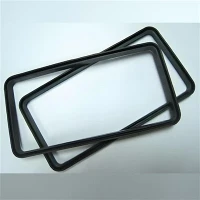
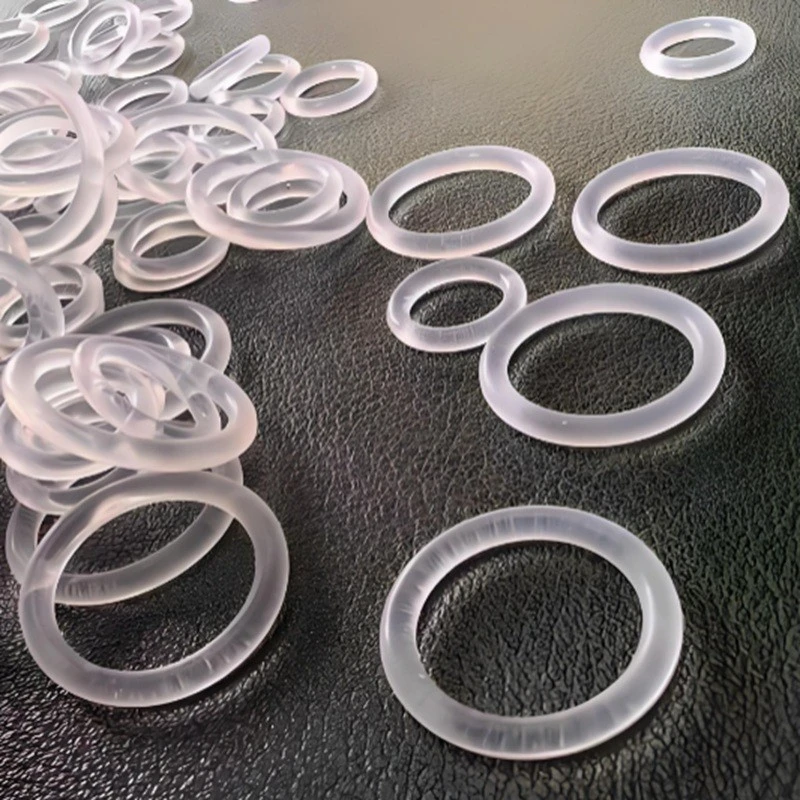
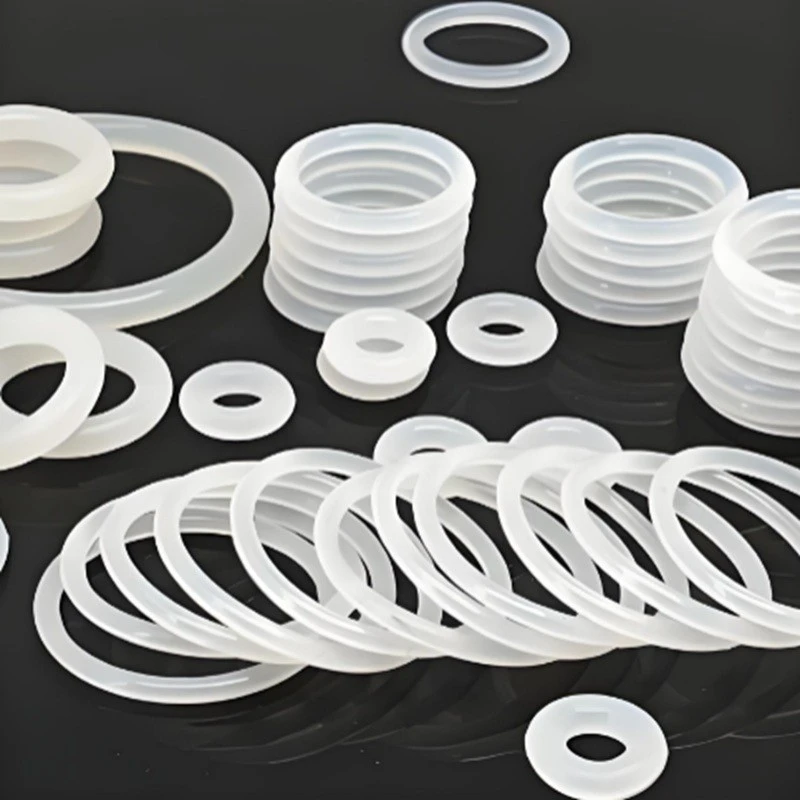
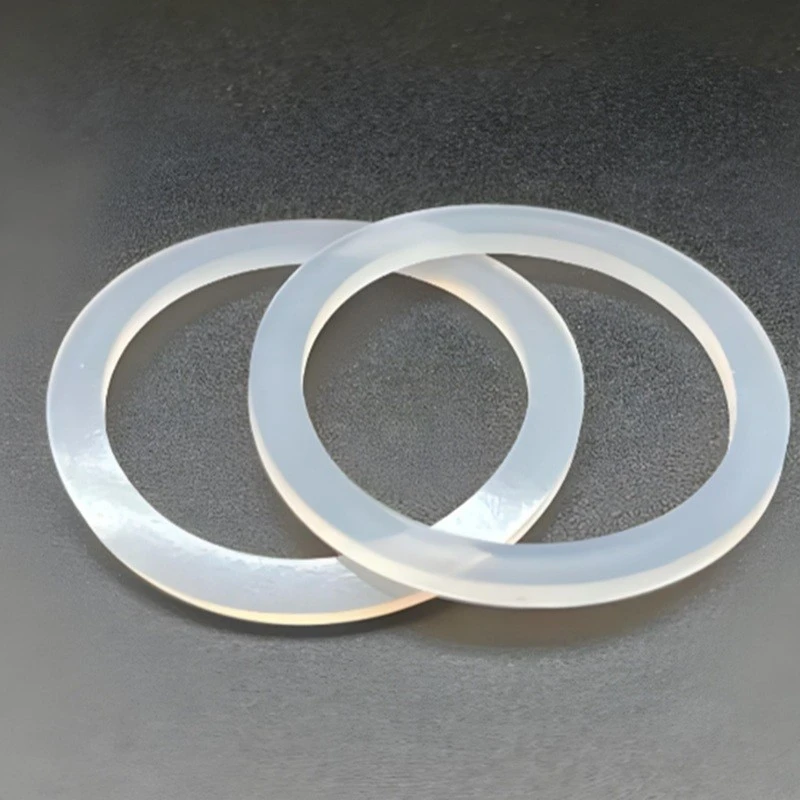
FDA O-rings are rubber sealing components specified for applications where the seal may contact food, drinking water, pharmaceutical products, or other regulated media. Silicone and EPDM are common material choices, but the correct compound, formulation, manufacturing process, surface treatment, and supporting documentation must all match the intended application.
For buyers sourcing FDA compliant O-rings, the key question is not simply whether an O-ring is called "FDA grade." The compound and finished sealing component need to be appropriate for the required food-contact conditions and application.
What Does "FDA Compliant O-Ring" Actually Mean?
One point causes repeated confusion in industrial purchasing: the U.S. Food and Drug Administration does not generally "certify" individual O-rings as a product category.
Instead, applicable FDA regulations specify substances and conditions that can be used in materials intended for food contact. For rubber articles, CFR21.177.2600 is particularly relevant to repeated-use rubber articles intended for contact with food.
That means an FDA compliant O-ring should be evaluated through its actual compound formulation and intended service conditions rather than through a marketing label alone.
For procurement teams, documentation should therefore answer several practical questions:
- What elastomer is being used?
- Is the compound suitable for the intended food-contact application?
- Can the supplier provide material or compliance documentation?
- Are additives, pigments, processing aids, lubricants, and post-production treatments suitable?
- Can the supplier maintain batch-level traceability?
- Does the finished component meet the customer's dimensional and sealing requirements?
This approach is more useful than simply searching for an "FDA certified O-ring."

FDA O-Ring Material Selection: Silicone vs. EPDM
Material selection should start with the medium, temperature, pressure, cleaning process, and required sealing geometry.
Silicone and EPDM are both used in sanitary sealing applications, but their performance profiles are different.
| Property | Silicone Rubber | EPDM Rubber |
|---|---|---|
| Typical hardness range | 30–80 Shore A | 60–80 Shore A |
| Low-temperature capability | Approximately -50°C | Approximately -50°C |
| High-temperature capability | Up to approximately 200–250°C depending on compound | Up to approximately 150°C depending on compound |
| Water resistance | Excellent | Excellent |
| Weather/ozone resistance | Excellent | Excellent |
| Steam resistance | Good to very good, compound dependent | Very good |
| Polar chemicals | Generally good | Generally good |
| Petroleum oils | Poor | Poor |
| Typical sanitary applications | Food, beverage, medical, water equipment | Water, food, beverage, steam and sanitary equipment |
Actual limits depend on compound formulation, compression, pressure, exposure time, and operating conditions. The figures above are engineering reference ranges, not universal ratings for every compound.
Silicone FDA O-Rings
Silicone is often selected where a broad temperature range, flexibility, and clean sealing surface are required. It can remain flexible at low temperatures and is widely used in food, beverage, water-treatment, medical, and laboratory equipment.
For applications requiring repeated exposure to hot water or elevated temperatures, the exact silicone formulation matters. Buyers should specify the operating temperature rather than simply requesting "silicone."
EPDM FDA O-Rings
EPDM is a practical choice for water, steam, weather exposure, and many polar chemical environments. It offers strong resistance to ozone and aging and is commonly used in sanitary water-handling equipment.
However, EPDM should not normally be selected for applications involving mineral oils, petroleum-based fluids, or hydrocarbon fuels without specific compound compatibility data.
Procurement point: Send the actual fluid name, concentration, operating temperature, pressure, cleaning chemicals, and duty cycle when requesting an FDA O-ring quotation. Those details allow the compound to be screened before tooling or mass production.
Key Parameters for FDA O-Ring Purchasing
An O-ring drawing with only the inside diameter and outside diameter is often not enough for production approval. A production supplier needs the complete sealing requirements.
| Parameter | Recommended Purchasing Specification |
|---|---|
| Material | FDA-suitable silicone, EPDM, or specified compound |
| Hardness | Typically 30–90 Shore A, application dependent |
| O-ring size | Standard AS/ISO sizes or custom dimensions |
| Cross-section | Based on gland design and compression |
| Temperature | Specify continuous and peak temperatures |
| Pressure | Specify static or dynamic pressure |
| Medium | Water, food, beverage, steam, chemicals, etc. |
| Color | White, translucent, black, or specified color |
| Surface finish | Application dependent |
| Compliance | 21 CFR §177.2600 where applicable |
| Additional requirements | NSF, WRAS, LFGB, ACS, KTW-W270, RoHS, REACH, etc., where applicable |
| Production | Compression molding or other suitable rubber molding process |
| Inspection | Dimensional, appearance and material-related checks |
| Packaging | Clean packaging suitable for the customer's handling requirements |
Why Manufacturing Control Matters
Regulatory suitability does not end with raw-material selection.
A food-contact O-ring can still create problems if manufacturing introduces contamination or if an unsuitable lubricant, pigment, release agent, or post-production treatment is used.
For this reason, a reliable FDA rubber seal manufacturer should control the production chain from compound sourcing through molding, inspection, cleaning where specified, and packaging.
At Jinshun Sealing, our quality management system is certified to ISO 9001:2015 and ISO 14001:2015. Our stated raw-material requirements include RoHS, REACH, and PAHS compliance, while many products have approvals or certifications including NSF, FDA, LFGB, ACS, KTW-W270, WRAS, and UL, depending on the specific product and application.
Request FDA O-Ring Material & Compliance Support
How Custom FDA O-Rings Are Manufactured
For custom O-rings, the manufacturing process normally begins with the customer's drawing, sample, or application data.
1. Application Review
The engineering team reviews:
- O-ring dimensions
- Groove geometry
- Compression
- Operating temperature
- Working pressure
- Fluid compatibility
- Static or dynamic sealing conditions
- Cleaning and sterilization requirements
- Required compliance documentation
This stage prevents a common purchasing mistake: choosing the material first and checking the actual operating conditions afterward.
2. Compound Selection
The elastomer is selected according to the actual working environment. Silicone and EPDM are common options, while other compounds may be considered where the application requires different oil, chemical, temperature, or mechanical performance.
3. Mold Development
For non-standard O-ring dimensions, a production mold is developed according to the approved drawing.
Critical dimensions include the cross-section, inside diameter, parting-line position, mold cavity accuracy, and flash control.
4. Molding and Vulcanization
The selected rubber compound is formed and cured under controlled temperature and pressure conditions. Cure conditions influence hardness, elasticity, compression behavior, and final dimensional stability.
5. Inspection
Finished O-rings should be checked for dimensions, surface defects, flash, deformation, and other customer-defined requirements.
For regulated applications, material and compliance documentation should also be maintained as part of the quality record.
Applications of FDA O-Rings
FDA compliant O-rings are used wherever a rubber seal may contact food, beverage, water, pharmaceutical materials, or sanitary process media.
Typical applications include:
Food and Beverage Equipment
Common examples include:
- Beverage dispensing equipment
- Food processing machinery
- Filling and dosing equipment
- Pumps and valves
- Mixing systems
- Stainless-steel sanitary fittings
The O-ring must withstand the product medium as well as the cleaning process.
Drinking Water and Filtration Systems
FDA-suitable silicone or EPDM O-rings can be used in:
- Water filters
- Water purification equipment
- Valves
- Pump assemblies
- Cartridge housings
- Drinking-water connections
Additional certifications such as NSF, WRAS, ACS, or KTW-W270 may be required depending on the destination market and application.
Pharmaceutical Equipment
Pharmaceutical equipment places additional emphasis on cleanliness, traceability, material selection, and process control.
O-rings may be used in:
- Fluid handling systems
- Pumps
- Valves
- Process equipment
- Filling systems
- Laboratory equipment
The exact regulatory and validation requirements should be confirmed by the equipment manufacturer and end user.
Dairy and Sanitary Processing
EPDM and silicone compounds are commonly considered for dairy and sanitary equipment because of their resistance to water and selected cleaning conditions.
The correct material still depends on the cleaning chemicals, temperature, exposure time, and mechanical design.
Cosmetic and Personal-Care Equipment
O-rings can also be used in equipment for producing and transferring cosmetic and personal-care products. Material compatibility should be verified against the specific formulation rather than assumed from the product category.
What QA Teams Should Check Before Approving an FDA O-Ring Supplier
For an international sourcing project, price is only one part of the supplier evaluation.
A practical QA checklist includes:
| QA Checkpoint | What to Request |
|---|---|
| Material identity | Elastomer and compound specification |
| Regulatory basis | Applicable FDA/CFR requirement |
| Raw-material traceability | Supplier and batch information |
| Dimensional control | Approved drawing and inspection records |
| Hardness | Shore A test requirement |
| Appearance | Flash, cracks, contamination and surface defects |
| Production consistency | Batch inspection records |
| Certifications | Copies applicable to the exact product |
| Packaging | Clean, protected packaging |
| Change control | Notification procedure for material/process changes |
| Supplier quality system | ISO 9001:2015 certificate |
Important: An FDA-related certificate from one rubber compound or product should not automatically be treated as evidence that every O-ring manufactured by the supplier has the same compliance status. Procurement teams should match documentation to the exact compound and finished product being purchased.
Custom FDA O-Rings for OEM and Private-Label Programs
For OEM and private-label buyers, the O-ring is often a small component with a large effect on product reliability. A dimensional change of only a fraction of a millimeter can alter gland fill, squeeze, extrusion risk, or assembly force.
Jinshun Sealing supports customized rubber sealing products including rubber O-rings, Y-seals, silicone gaskets, RO membrane seals, silicone tubes, molded rubber gaskets, and other custom rubber components.
Customers can provide:
- 2D drawings
- 3D CAD files
- Existing samples
- O-ring specifications
- Material requirements
- Annual demand forecasts
- Packaging requirements
- Certification requirements
For repeat production, agreeing on the drawing revision, material specification, inspection criteria, and change-control procedure before mass production reduces the risk of inconsistent batches.
Discuss Your Custom O-Ring Drawing With Jinshun Engineering
FDA O-Ring Buying Guide: What Information Should You Send for a Quote?
A quotation becomes much more accurate when the RFQ contains engineering data rather than only a product name.
For a custom FDA O-ring, send:
- O-ring ID and cross-section or the complete part drawing.
- Required material, if already specified.
- Operating temperature range.
- Working pressure.
- Fluid or food-contact medium.
- Static or dynamic application.
- Expected annual quantity.
- Required certifications or compliance documents.
- Color and packaging requirements.
- Target delivery schedule.
If the material is not fixed, provide the operating conditions and let the sealing manufacturer recommend the compound.
Why Work With Jinshun Sealing?
Xiamen Jinshun Sealing Technology Co., Ltd. has manufactured rubber sealing products since 2002, with capabilities covering rubber O-rings, Y-seals, silicone gaskets, RO membrane seals, silicone tubes, molded rubber gaskets, and other customized rubber components.
Our quality and environmental management systems are certified to ISO 9001:2015 and ISO 14001:2015. Depending on the product, our materials and sealing products can be supplied with documentation or approvals including FDA, NSF, LFGB, ACS, KTW-W270, WRAS and UL, in addition to RoHS, REACH and PAHS requirements.
For international importers, distributors, wholesalers, private-label buyers, product developers, and QA teams, the practical objective is straightforward: define the sealing conditions, select the right compound, document the compliance basis, and keep production consistent from sample approval through repeat orders.
FAQs
Are FDA O-rings certified by the FDA?
No. The FDA generally does not certify individual O-rings. FDA compliance normally refers to meeting applicable food-contact requirements, such as 21 CFR §177.2600, for the specific rubber compound and intended use.
What is the best material for FDA O-rings, silicone or EPDM?
Neither is universally better. Silicone is often selected for broad temperature flexibility, while EPDM is strong for water, steam, ozone, and aging resistance. The correct choice depends on temperature, fluid, pressure, cleaning chemicals, and sealing conditions.
Can Jinshun manufacture custom FDA O-rings for OEM production?
Yes. Jinshun manufactures custom rubber O-rings from customer drawings, samples, or specifications. Buyers can specify dimensions, material, hardness, color, certification requirements, packaging, and production quantity.
Request A Custom FDA O-Ring Quote
If you are sourcing FDA O-rings, food grade O-rings, sanitary rubber seals, silicone O-rings, EPDM O-rings, or custom rubber sealing components, send us your drawing or sample together with the operating temperature, medium, pressure, quantity, and required compliance documents.
Our engineering team can review the sealing conditions and help determine a suitable material and production route before you place a production order.
Contact Jinshun Sealing for Custom FDA O-Rings


