



O-Rings
Custom O-Rings Manufacturer in China
Supplier of Custom and Standard O-Rings for Every Sealing Application
Why Choose Xiamen Jinshun Sealing Technology
Our certificate
We have approved the Quality and Environment System ISO9001:2015 and ISO 14001:2015 of the raw materials that meet the ROHS, REACH, and PAHS, and most of our products have been approved by the NSF, FDA, LFGB, ACS, KTW-W270, WRAS, and UL.
Advanced Equipment
We have advanced production equipment and testing equipment such as automatic feeding machines, automatic packaging machines, injection molding machines, automatic feeding machines, automatic sorting machines, intelligent cutting machines, perform machines, etc.
Quality Control
After completion of manufacturing, the sealing ring needs to undergo appearance inspection, dimensional inspection, pressure test, media resistance test, air tightness, hardness, tensile strength, elongation, tearing performance, compression deformation under high and low temperatures, aging resistance, Water resistance, corrosion, and other inspection items to ensure that the quality meets standard requirements.
Quality customer service
Our dedicated team is always ready to answer your questions, provide you with detailed information about our products and guide you in your choice. We understand that every customer is unique.
What is O-Ring
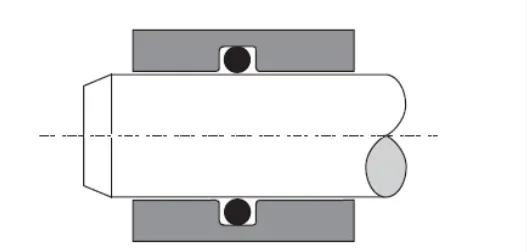
O-rings are circular gaskets or seals characterized by a round cross-section, commonly employed to prevent fluid or gas leaks in various products, systems, or machinery across diverse industries. These essential components are favored for their low cost, straightforward production process, ease of installation, and resilience to pressure, finding extensive application in products such as automobiles, engines, rockets, and aircraft within the aerospace industry. O-rings are available in a variety of materials, each chosen based on specific operating conditions, encompassing factors like temperature, chemical exposure, and abrasion resistance.


Benefits of O-Ring
Oil Resistant
When sealing oil hoses and passages, you may want to use nitrile O-rings. They offer excellent resistance to oil. They won't damage or degrade. Even when directly exposed to oil over an extended period, nitrile O-rings will continue to seal the hose or passage with which they are used.
Heat Resistant
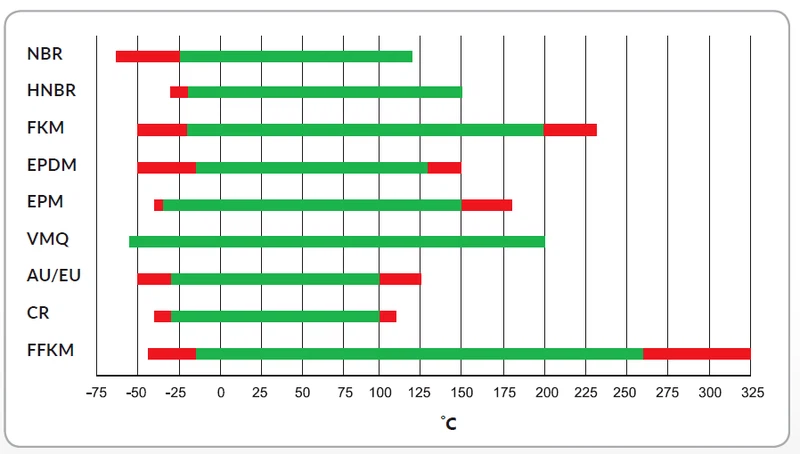
You don't have to worry about heat damaging nitrile O-rings. As an elastomer, nitrile can withstand hot temperatures. Some nitrile O-rings, in fact, can withstand temperatures of up to 135 degrees Celsius. For sealing applications in which heat is a concern, you may want to choose nitrile O-rings for their heat-resistant properties.
Readily Available
Nitrile O-rings are readily available. They are one of the most common types of O-rings. More O-rings are made of nitrile than any other elastomer. With their widespread, nitrile O-rings are inexpensive and easy to find, thus making them a popular choice among businesses.
Supports Compounding
Nitrile O-rings can be compounded. When compounded, the properties of nitrile O-rings will change. You can use compounding to increase their resistance to sunlight, for example. By default, nitrile O-rings boast a low level of protection against the sun's ultraviolet (UV) rays. Compounding, though, will increase their UV protection. If you're planning to use them outdoors where they will be exposed to the sun, compounding can extend the life of your nitrile O-rings.
Chemical Resistant
Another benefit of nitrile O-rings is chemical resistance. They are highly resistant to chemicals. Like all O-rings, nitrile O-rings are typically used around the mating surfaces of hoses. These hoses may carry chemicals, such as fuel, oil or coolant. While chemicals may degrade other types of O-rings, they won't interfere with the function of nitrile O-rings. Nitrile O-rings will continue to seal the hose while preventing the chemical from leaking out of the hose.
Strong and Durable
You can rest assured knowing that nitrile O-rings are strong and durable. When exposed to heat and/or pressure, they will expand. As the heat and/or pressure goes away, they will contract. Under normal operations, nitrile O-rings will repeat these cycles without succumbing to damage.

Transportation
In industries like passenger automotive, heavy-duty trucking, and aerospace, severe conditions call for high-performance products. Chemical exposure, extreme temperatures and vibration are all factors that affect elastomer selection for O-Rings. Custom compounds have been produced to meet strict OEM and Tier 1 specifications and are continually refined to adhere to biofuel and emissions requirements.
Medical
In the medical field syringes, pumps, filtration and connectors require speciality FDA-grade O-Rings.
Oil, Gas & Industrial
Valves, gas pumps, fittings, dispensers and storage tanks need sealing solutions that can withstand extreme temperatures, noxious chemicals, and high compression. Speciality compounds like peroxide and triazine-cured perfluoroelastomers assure heat and chemical resistance.
Electronics
Semiconductor processing and dust protection in consumer electronics call for O-rings to be manufactured in clean environments. Particulate and contaminant-free O-rings are available in a wide range of compounds.
Food & Beverage
Speciality 3A sanitary, NSF-61 and water service O-Rings and seals are ideal for the food processing, beverage dispensing and water filtration markets.
Types of O-Ring
Nitrile (NBR) O-rings
Commonly used in hydraulic systems, automotive applications, and as general-purpose seals. Resistant to oil, fuel, and water, making them ideal for sealing applications involving these fluids.
Viton (FKM) O-rings
Suitable for high-temperature and chemically aggressive environments.Used in aerospace, chemical processing, and applications involving exposure to fuels and chemicals.
Silicone O-rings
Resistant to extreme temperatures, both high and low. Commonly used in medical devices, food processing, and where flexibility at low temperatures is required.
EPDM (Ethylene Propylene Diene Monomer) O-rings
Excellent resistance to weathering, ozone, and UV exposure. Often used in outdoor applications, automotive cooling systems, and in the plumbing industry.
Neoprene O-rings
Known for their oil resistance and ability to maintain flexibility over a wide temperature range.Used in refrigeration systems, HVAC, and as sealing elements in hydraulic and pneumatic systems.
PTFE (Polytetrafluoroethylene) O-rings
Highly chemical-resistant and suitable for extreme temperatures.Commonly used in the pharmaceutical, chemical, and food processing industries.
Polyurethane O-rings
Known for their abrasion resistance and high load-bearing capacity.Used in heavy machinery, hydraulic systems, and pneumatic applications.
Fluorosilicone O-rings
Combines the properties of silicone and fluorocarbon elastomers.Used in aerospace and automotive applications where resistance to fuels and lubricants is needed.
Whether sold individually, in large wholesale batches or - as is increasingly common - as part of a highly flexible range of o-ring kits, the basic form and role of o-rings are generally the same across the board. Their name, as implied, simply refers to a classic doughnut or torus shape, and they exist purely to create a better, more leak-proof seal between two other components, with the aim usually being to prevent the unwanted escape of gases or liquids. In this sense, they're effectively a type of gasket - the main difference being that o-rings are more commonly used in very high-pressure environments, where a normal cork, paper or rubber gasket would likely be prone to failure.

Understand The Different Types Of O-Ring Materials
Polyurethane
Polyurethane O-rings are known for their toughness and resistance to abrasion. The material is used to make everything from foam sponges to spandex. Polyurethane seals are perfect for applications that need a durable rubber that can withstand challenging environments, high impacts and heavy loads. It does not, however, have excellent heat resistance so this needs to be taken into account.
01
Neoprene
Neoprene O-rings are commonly used to seal refrigerators and air-conditioners. This material is resistant to weather, combustion, water, chemicals, fluids and gases, making it one of the more versatile and widely used materials for manufacturing O-rings. Some neoprene products, however, contain lead-based agents, making them extremely hazardous to human health.
02
Nitrile (Bruna, NBR)
Nitrile is an economic material that is widely used because of its resistance to abrasions and tears. It is best suited as a general-purpose seal for petroleum-based oils and fuel, water, some hydraulic fluids and dynamic applications. Nitrile works better in applications that have limited temperature requirements and should not be used with brake fluids or ozone.
03
Ethylene-Propylene Rubber (EPR, EPDM)
In contrast to Nitrile, EPR O-rings have a high resistance to ozone and can be used with various hydraulic fluids as well as brake fluids, steam, silicone oils and alcohol. EPR O-rings are even used in the aerospace industry's hydraulic pumps. They are, however, very susceptible to wear and tear so avoid mineral oil products and hydrocarbon fluids with these O-rings.
04
Fluorocarbon (Vikton, FKM)
Fluorocarbon is a versatile and widely used material with a high resistance to swelling, permeation, high temperatures and chemicals. These O-rings are used in many different automotive, appliance and chemical processing industries. The only applications they cannot be used in are ones that have very low temperatures and use ketones or amines.
05
How to Choose an O-Ring
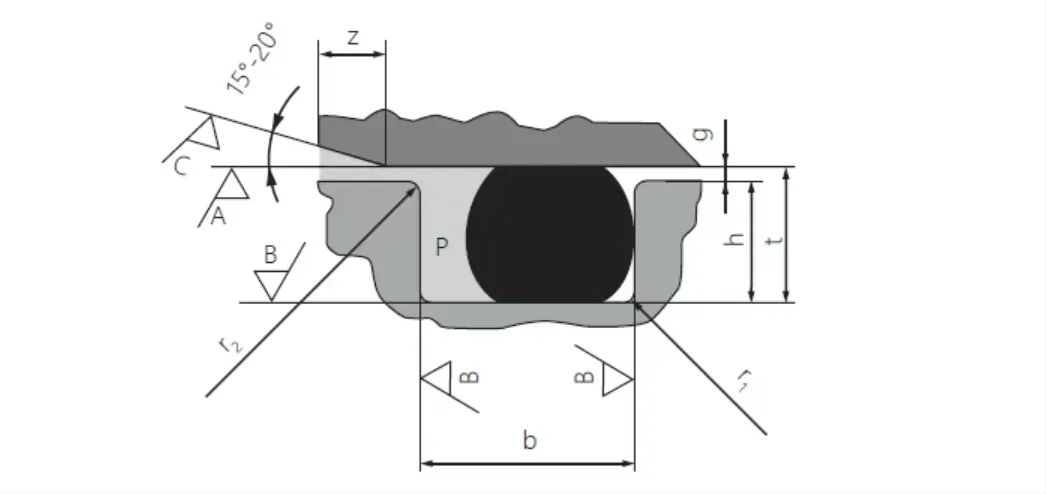
The pounds per square inch (PSI) rating of an O-ring refers to how much pressure it can withstand without leaking. All O-rings are used in sealing applications. They are used to seal the mating surfaces of pipes, hoses and other passages that carry pressurised substances. When choosing O-rings, you'll need to make sure that it has a high enough PSI rating to protect against leaks.
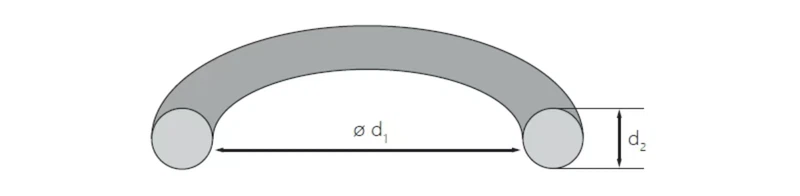
You should consider the internal diameter when choosing O-rings. Internal diameter is the distance between the two widest points of an O-ring. It essentially reflects the size of an O-ring. The internal diameter of an O-ring must accommodate the passages with which it's used. If you plan on using an O-ring to seal a pipe, for instance, the internal diameter must be roughly the same size as the pipe. If it's too big or too small, it won't fit-at least not without leaking.
In addition to the internal diameter, you should check the cross-section size when choosing O-rings. What is the cross-section exactly? The cross-section of an O-ring refers to its thickness. To measure the cross-section of an O-ring, you can turn it on its side and measure the O-ring's thickness. A larger cross-section will typically offer greater protection against leaks. With that said, the cross-section must still accommodate passages with which it's used. You'll need to consider the cross-section when choosing O-rings to ensure they fit.
You can find O-rings made of different materials. Some of them are made of rubber. Other O-rings are made of more advanced materials like polyethene or thermoplastic. Different materials, of course, have different properties. They can all protect fluids and gases from leaks. Nonetheless, their properties vary. When choosing O-rings, consider the material and whether it's suitable for your sealing application.
Don't forget to consider the hardness when choosing O-rings. Hardness is usually measured with a Shore A Durometer. A hardness rating of 40 indicates the O-ring is relatively soft, whereas a hardness rating of 90 indicates the O-ring is relatively hard.
Process of O-Ring

STEP 1: O Rings Moulding
The first step in the O Ring manufacturing process is selecting the correct tools for moulding. The correct tools are dependent on the size of the O Ring that is being manufactured. Smaller sizes are typically stored in a computerised system, with tools for larger O Rings stored in racking. Each O Ring is comprised of two halves, the top and bottom.
Step 2: Milling
Correct material selection is key to seal performance. Elastomers derive their performance characteristics from the ingredients and additives that are in them. Fillers. Additives and other ingredients are mixed into the elastomer material using a milling machine.
Step 3: Extrusion
The elastomer material arrives at the next stage as a sheet, which is cut into strips and inserted into an extruder. Once inside, the material is heated up to reduce its viscosity and forced through a die, which produces lengths of cord. The size of the die aperture is carefully selected based on the finished diameter of the O Ring that is required.
Step 4: Moulding
During the moulding stage, the cord is cut to size and placed into one-half of the heated mould tools, which are fixed to the two platens of the press. When the two halves of the tool close, the elastomer material is moulded into an O Ring shape. It is left in the press for a short length of time to start the curing process. When the press opens, the O Ring is carefully removed from the mould. This technique of manufacturing O-rings is called compression moulding. Larger O Rings, up to two and a half metres, are precision moulded on one of Europe's largest moulding presses at the facility.
Step 5: Flash
Once moulded, the O Rings often have excess material around the sides, where the two halves of the mould meet. This is known as flash. In the next production, called finishing, this flash is removed in a number of ways to produce a perfectly round O Ring Drumming. The O Rings are placed in a drum of rotating stones, which rub the excess flash off.
Step 6: Buffing
Larger O Rings are placed under a buffing wheel. The abrasive action rubs the flash off.
Step 7: Cyro
Small O Rings that are too delicate for any of the other finishing methods are placed under a drum. This rotates within a cryogenic environment. Liquid nitrogen cools the elastomer O Rings down until the flash is brittle and can be removed by shot blasting with grit.
Step 8: Curing
The De-flashed O Rings are placed in ovens to complete the curing process. The length of time.
What is the Standard for O-Ring Size?
AS 568 (also AS 568-A)
AS stands for 'Aerospace Standard' and is often described as 'American Standard' because the US Society of Automotive Engineers (SAE) established the AS568. AS 568, or more specifically AS 568-A, is probably the most widely used standard for O-ring sizes worldwide and is quite recognisable because of the O-ring thicknesses such as 1.78mm, 2.62mm, 3.53mm, 5.33mm, 6.99mm.
ISO 3601-1
ISO has adopted the dimensions from AS568 in the ISO3601 standard. The standard consists of 4 sections. Section 1 (ISO 3601-1) describes the sizes. The differences from AS568 are, for example, in Section 3 (ISO 3601-3) and deal with tolerance and surface quality.
DIN 3771
DIN stands for‘Deutsches Institut für Normung’.The DIN 3771 is an old standard that is less commonly specified but can often be found on older drawings. The O-ring sizes can still be frequently encountered, even outside Germany. Unlike many other O-ring standards, DIN 3771 does not use any additional numbering or code per size.
BS 1806 and BS 4518
BS stands for British Standard. There are two BS standards for O-ring sizes: BS 1806 and BS 4518 O-ring sizes according to the BS 1806 standard are largely in line with ISO 3601-1. The BS 4518 standard is mainly used within the UK.
French R
The French R standard overlaps with ISO3601 and AS568, but also has some typical dimensions within its range. The type numbering is identified by the R, such as R12.
JIS B 2401
The JIS standard stands for Japanese Industrial Standard, in which B 2401 is the Japanese O-ring standard. The O-ring sizes are identified by the addition of the letters P, G, S and V which are designated for different applications: P (dynamic), G (static), S (special) and V (vacuum).
Metric sizes (non-standardised)
Metric sizes are not standardised to the size itself. They are usually rounded off to millimetre dimensions or defined to half-millimetre accuracy.
Maintenance Tips for O-Ring
Do use compressed air or a soft brush
Frequently cleaning the rings is a vital part of maintenance. This is especially important for O-rings that provide a seal to machines. If you find any debris, grit, or contamination, you should clean it using a soft brush to avoid abrasions.
Do lubricate regularly
O-rings need substantial lubrication to function correctly. If not, cracks can occur and ultimately cause severe damage. This is especially significant for machines that require seals to be opened and closed. For this instance, you can use any silicone-based O-ring lubricant like WEICON Silicone Grease and apply the necessary amount.
Do be familiar with other maintenance products
Remember, there are various kinds of O-rings made for different purposes. They can be Neoprene, Viton, or NBR-based rings. What you need will determine the type of O-ring you should buy. Simplex offers O-rings made from various materials such as silicone, Viton, and nitrile rubber. Additionally, you may need products like adhesives and sealants while maintaining your O‑rings. Sealants block fluids between spaces, while adhesives bind two parts together.
Do store it properly
Knowing how to store O-rings is just as important as applying them. You should keep them in an airtight bag, away from sunlight. Using old O-rings can lead to severe consequences, so it is always better to be safe. Additionally, the rings could get brittle over time. If that happens, it is best to check out suppliers like Simplex for new ones.
Don't stretch out the O‑ring
It is crucial to apply O-rings carefully, as improper care can result in significant damage. Stretching the O-ring can cause detrimental effects such as abrasions, degradation, and flattening. These O-ring failures can lead to costly repairs, as they can also damage other components that you may need to replace.
Don't use tools with sharp edges
You should avoid using tools with pointy tips or sharp edges while working with O-rings. Sharp tools can easily damage the O-ring and affect its sealing capability. These tools must be handled with care and, depending on the application, can cause severe issues.
Don't expose the O-ring to extremely high or low-temperature environments
Exposing O-rings to extreme temperatures outside their ideal temperature range can cause major issues. The heat can degrade materials like rubber physically and chemically. Other reactions include hardening, swelling, and change in volume.
Don't expose the O-ring to chemicals
Chemical attacks and swells can occur if O-rings are exposed for a long time. Choosing the right O-ring material can help prevent these from happening while protecting it from degrading. Specific O-rings are compatible with certain chemicals, so researching this aspect is necessary.
O-Rings Factory in China
We are a major rubber sealing products with advanced research and development, manufacturing, and sales. We have approved the Quality and Environment System ISO9001:2015 and ISO 14001:2015. Our products are extensively applied to Food and Drinking Water, Sanitary and bathing products, electronic and electric appliances, hardware and machinery, and Auto parts, etc. We are professionally specialised in rubber O-rings, Y-seals, Shower gaskets, RO membrane seals, Silicone tubes, and other industries' customised rubber parts. To further increase the quality, all of the raw materials meet the ROHS, REACH, and PAHS, and most of our products have been approved by the NSF, FDA, LFGB, ACS, KTW-W270, WRAS, and UL.
Certificate


FAQ
As one of the most professional o-rings manufacturers and suppliers in China, we're featured by quality products and good service. Please rest assured to buy customized o-rings at competitive price from our factory.
pneumatic o rings, teflon o rings, compression set resistant o rings