




Molded Gaskets: Custom Rubber Sealing Solutions for OEM Applications
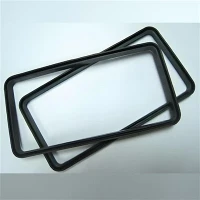
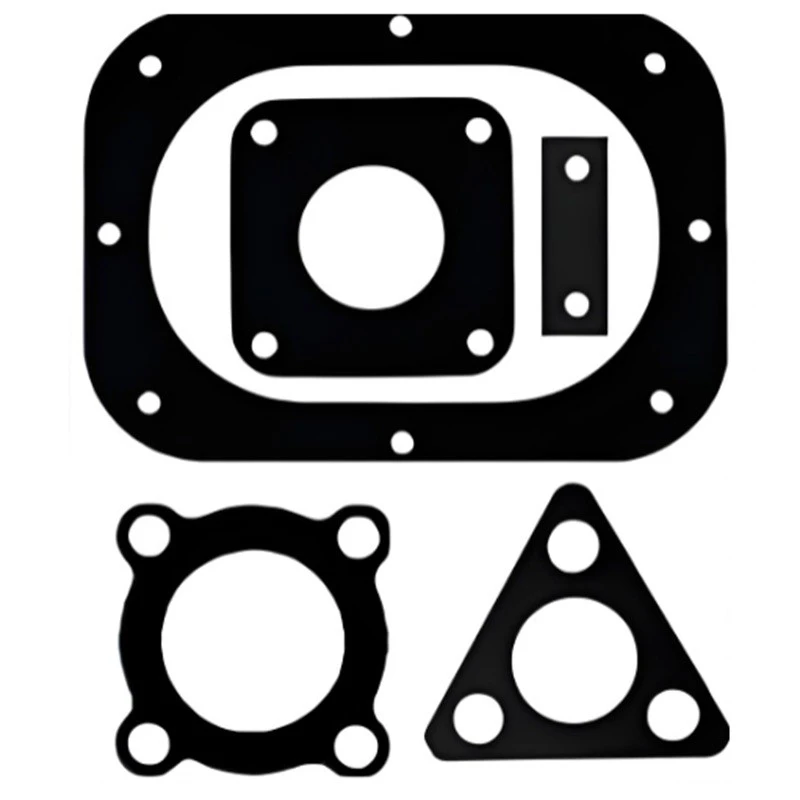
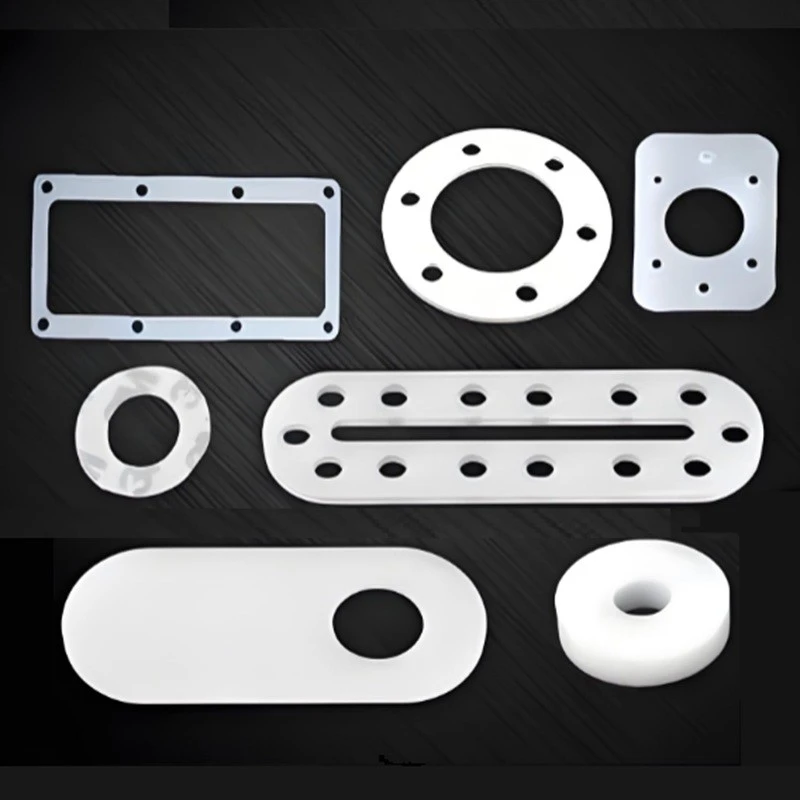
Custom molded gaskets are precision-engineered rubber sealing components produced by molding and curing elastomer compounds into a defined shape. Unlike simple flat-cut gaskets, molded gaskets can incorporate complex profiles, grooves, lips, holes, corners, and three-dimensional geometries to match the mating surfaces of a specific product.
For OEMs, equipment manufacturers, distributors, and industrial buyers, the advantage is straightforward: a properly designed molded rubber gasket can deliver consistent compression, reliable sealing, and repeatable dimensions across production batches.
Xiamen Jinshun Sealing Technology Co., Ltd. has manufactured customized rubber sealing products since 2002. We specialize in molded gaskets, rubber O-rings, Y-seals, silicone gaskets, RO membrane seals, silicone tubes, and custom rubber components for food and drinking water equipment, sanitary products, electronics, machinery, automotive applications, and other industries.
What Are Molded Gaskets?
A molded gasket is a sealing component manufactured by placing a selected rubber compound into a precision mold and applying controlled heat and pressure to cure it into the required geometry.

This manufacturing method allows buyers to specify much more than simply the gasket's outside diameter.
Depending on the application, a custom molded gasket manufacturer can produce:
- Complex three-dimensional profiles
- Custom inside and outside dimensions
- Different wall thicknesses
- Integrated sealing lips
- Mounting holes and openings
- Grooves and locating features
- Irregular or non-circular shapes
- Rubber-to-metal molded components
- Custom hardness and material compounds
The result is a gasket designed around the actual equipment rather than forcing the equipment to accommodate a standard sealing component.
Custom Molded Gasket Specifications
The material and physical properties below are representative ranges from the source specifications. Actual values depend on the compound, curing system, formulation, and production requirements.
| Property | NBR | FKM | Silicone | EPDM |
|---|---|---|---|---|
| Typical Hardness (Shore A) | 60–80 | 70–90 | 30–80 | 60–80 |
| Tensile Strength (MPa) | 10–20 | 14–30 | 5–10 | 7–25 |
| Elongation at Break (%) | 300–600 | 150–300 | 150–700 | 200–600 |
| Temperature Range (°C) | -30 to 120 | -20 to 250 | -50 to 250 | -50 to 150 |
| Typical Strength | Oil and abrasion resistance | Heat and chemical resistance | Flexibility and temperature resistance | Water, ozone and weather resistance |
| Common Applications | Oil/fluid sealing | High-temperature/chemical environments | Food, medical, low-temperature applications | Water, outdoor and general industrial applications |
Engineering note: These ranges should be used as preliminary material-selection guidance, not as guaranteed specifications for every compound. Final properties should be confirmed against the approved material datasheet and application conditions.
Why Choose Custom Molded Gaskets?
1. Designed for Your Exact Geometry
One of the biggest advantages of molded rubber gaskets is design flexibility.
A custom gasket can be manufactured according to your:
- CAD drawing
- Engineering specification
- Existing sample
- Mold design
- Dimensional requirements
- Assembly method
This is particularly useful when the sealing surface has an unusual shape or when a conventional O-ring or flat gasket cannot provide enough sealing control.
2. Consistent Sealing Performance
A molded gasket works by creating controlled contact and compression between mating components.
A properly engineered profile can help prevent the passage of:
- Water
- Air
- Gas
- Oil
- Dust
- Other compatible fluids
The gasket's geometry, hardness, compression, surface finish, and material must all work together. Simply increasing gasket hardness or compression does not automatically produce a better seal.
For OEM production, dimensional repeatability is particularly important because thousands of components may need to fit together in exactly the same way.
3. Wide Material Selection
There is no universal rubber compound for every sealing application.
Xiamen Jinshun can work with materials including:
- NBR / nitrile rubber
- FKM / fluoroelastomer
- Silicone rubber
- EPDM
- SBR
- Neoprene
- Butyl rubber
- Other application-specific rubber compounds
The correct choice depends on the actual operating environment.
For example, an oil-sealing application may favor NBR, while an application involving elevated temperatures or aggressive chemicals may require FKM. EPDM is commonly considered for water, weather, ozone, and polar-fluid applications, while silicone is useful where flexibility and temperature performance are important.

Molded Gasket Material Selection
NBR Molded Gaskets
NBR molded gaskets are widely used where resistance to mineral oils, lubricants, and fuels is important.
Typical applications include:
- Automotive components
- Hydraulic equipment
- Machinery
- Oil-handling equipment
- General industrial sealing
NBR is often an economical choice for general-purpose oil and fluid sealing.
FKM Molded Gaskets
FKM molded gaskets are selected when an application requires stronger resistance to elevated temperatures and demanding chemical environments.
Typical applications include:
- Automotive systems
- Chemical equipment
- Petroleum equipment
- Industrial machinery
High-temperature sealing applications
FKM generally costs more than standard elastomers, but its performance can justify the additional material cost when the operating environment is demanding.
Silicone Molded Gaskets
Silicone molded gaskets are valued for their flexibility and broad temperature capability.
They are commonly considered for:
- Food-related equipment
- Drinking-water equipment
- Medical equipment
- Electronics
- Appliances
- Sanitary products
For food, drinking-water, or medical applications, the specific silicone formulation and applicable certification must be confirmed rather than assumed.
EPDM Molded Gaskets
EPDM is a practical choice for applications involving water, weathering, ozone, and many polar fluids.
Common applications include:
- Water systems
- HVAC equipment
- Outdoor equipment
- Sanitary products
- Automotive cooling systems
- General industrial sealing
EPDM should generally not be selected simply because it has good temperature resistance; compatibility with the actual fluid must also be checked.
Molded Gasket Manufacturing Processes
Different molding processes suit different product geometries, materials, volumes, and tooling requirements.
Compression Molding
In compression molding, a measured amount of rubber compound is placed into a mold cavity. The mold closes, and heat and pressure cure the material into the required shape.
This method can be attractive for:
- Larger molded gaskets
- Lower to medium production volumes
- Products where tooling cost needs to be controlled
- Complex rubber profiles
Transfer Molding
Transfer molding places the rubber compound into a transfer chamber before it is forced into the mold cavities.
It can provide good dimensional consistency and is particularly useful for certain rubber-to-metal molded components and more detailed geometries.
Injection Molding
Rubber injection molding feeds the compound into the mold cavity under controlled conditions.
It is particularly suitable for higher-volume production where repeatability and cycle efficiency are important.
| Molding Method | Main Advantage | Suitable For |
|---|---|---|
| Compression molding | Lower tooling cost and material efficiency | Large or relatively simple molded gaskets |
| Transfer molding | Good consistency and complex designs | Detailed profiles and rubber-to-metal parts |
| Injection molding | Repeatability and production efficiency | Higher-volume OEM production |
The best molding process depends on the part geometry, rubber compound, annual volume, dimensional requirements, and tooling budget.
Custom Molded Gasket Manufacturing Process
A reliable molded gasket starts well before the rubber enters the mold.
Step 1: Application Review
We first review the customer's requirements, including:
- Gasket dimensions
- Sealing surface
- Operating temperature
- Working pressure
- Sealing medium
- Compression requirements
- Expected service conditions
- Annual quantity
- Certification requirements
Step 2: Drawing and Design Review
Customers can provide a 2D drawing, 3D CAD file, physical sample, or technical specification.
Our engineers review the geometry and identify potential manufacturing or sealing issues before tooling begins.
Step 3: Mold Development
A precision mold is developed according to the approved gasket design.
For OEM projects, appropriate mold design is important because tooling quality directly affects:
- Dimensional consistency
- Parting-line control
- Flash
- Production efficiency
- Repeatability
Step 4: Sample Production
Initial samples are manufactured for dimensional and application review.
This stage gives the customer an opportunity to confirm fit, compression, appearance, and assembly before moving into larger production quantities.
Step 5: Production and Quality Control
After sample approval, production is carried out under controlled manufacturing conditions.
Depending on the product requirements, inspection can include:
- Dimensional measurement
- Visual inspection
- Hardness testing
- Material verification
- Appearance inspection
- Sealing performance evaluation
Applications of Molded Rubber Gaskets
Custom molded gaskets are used across a wide range of industries.
Automotive
Automotive applications can include:
- Engines
- Transmissions
- Lighting assemblies
- Doors and windows
- Fluid systems
- Cooling systems
- Electrical enclosures
The selected rubber compound should be matched to temperature, fluid exposure, vibration, and service life requirements.
Electronics and Electrical Equipment
Molded rubber gaskets can protect electronic assemblies from:
- Moisture
- Dust
- Vibration
- Environmental contamination
They can also provide mechanical cushioning between components.
Food and Beverage Equipment
Food-processing and beverage equipment often requires carefully selected elastomer compounds and appropriate regulatory compliance.
Applications may include:
- Fluid connections
- Pumps
- Valves
- Beverage equipment
- Drinking-water equipment
- Kitchen appliances
Where direct food or drinking-water contact occurs, buyers should specify the required certification before production.
\Medical Equipment
Custom silicone and other compliant rubber compounds can be used in medical equipment where flexible, reliable sealing is required.
The exact material and certification requirements depend on the device and market.
Chemical and Industrial Equipment
Molded gaskets can be designed for industrial systems involving heat, pressure, fluids, and chemical exposure.
For these applications, chemical compatibility should be evaluated before selecting the elastomer.
Molded Gaskets vs. Cut Gaskets
Both molded and cut gaskets have their place. The right choice depends on the part design.
| Factor | Molded Gasket | Cut Gasket |
|---|---|---|
| Complex 3D geometry | Excellent | Limited |
| Integrated features | Excellent | Limited |
| Custom profiles | Excellent | Moderate |
| Tooling requirement | Usually required | Usually lower |
| High-volume repeatability | Excellent | Good |
| Large flat shapes | Possible | Often economical |
| Typical use | Complex OEM sealing components | Flat flange and sheet gasket applications |
If your gasket has a simple flat profile, a cut gasket may be more economical. If the component has a complex profile or requires controlled three-dimensional sealing features, custom molded gaskets can provide a better solution.
Quality and Compliance
Xiamen Jinshun Sealing Technology Co., Ltd. was established in 2002 and has developed its manufacturing capabilities around customized rubber sealing products.
Our quality and environmental management systems include:
- ISO 9001:2015
- ISO 14001:2015
Our raw materials are selected to meet applicable RoHS, REACH, and PAHs requirements. Depending on the product and intended application, selected products can also be supplied with certifications or compliance relevant to NSF, FDA, LFGB, ACS, KTW-W270, WRAS, and UL requirements.
For international OEM projects, certification should always be specified according to the exact product, material, application, and destination market.
Why Work With a Custom Molded Gasket Manufacturer?
Choosing the right supplier is about more than getting a competitive unit price.
For OEM buyers, a capable supplier should be able to support the project through:
Design → Material Selection → Tooling → Prototyping → Testing → Mass Production → Quality Control
This reduces the risk of discovering manufacturing problems after production has already started.
Xiamen Jinshun Sealing Technology Co., Ltd. supports customers looking for:
- Custom molded rubber gaskets
- OEM rubber components
- ODM rubber products
- Custom silicone gaskets
- Rubber-to-metal molded parts
- Custom O-rings and seals
- Prototype development
- Volume production
- Wholesale supply
- Long-term manufacturing partnerships
Molded Gaskets FAQs
What are molded gaskets?
Molded gaskets are rubber sealing components manufactured by molding and curing an elastomer compound into a specified shape. They can be customized in terms of geometry, dimensions, material, hardness, and other technical requirements.
What materials can be used for molded rubber gaskets?
Common materials include NBR, FKM, silicone, EPDM, SBR, neoprene, and butyl rubber. The correct material depends on the operating temperature, pressure, fluid, chemical exposure, mechanical movement, and regulatory requirements.
Can molded gaskets be made from silicone?
Yes. Silicone is widely used for molded gaskets where flexibility and temperature performance are important. Silicone molded gaskets can also be produced for applicable food, drinking-water, sanitary, and medical applications when the correct compliant compound is specified.
What is the difference between a molded gasket and an O-ring?
An O-ring has a standardized circular cross-section and is normally installed in a groove. A molded gasket can have almost any custom geometry, including irregular shapes, holes, lips, channels, and three-dimensional profiles.
Can you manufacture molded gaskets from a drawing?
Yes. A manufacturer can develop a custom molded gasket from a 2D drawing, 3D CAD file, sample, or detailed technical specification. Providing the application conditions along with the drawing helps the engineering team select the appropriate material and design.
What information is needed for a molded gasket quotation?
For an accurate quotation, provide the drawing or sample, material requirement, dimensions, hardness, operating temperature, pressure, sealing medium, estimated annual quantity, certification requirements, and destination market.
Are molded gaskets suitable for high-temperature applications?
They can be, but the maximum operating temperature depends on the selected elastomer and formulation. FKM and certain silicone compounds are commonly considered for higher-temperature applications, while the final rating must be confirmed against the specific material specification.
What certifications are available for molded rubber gaskets?
Depending on the product and material, applicable requirements may include FDA, NSF, LFGB, WRAS, ACS, KTW-W270, UL, RoHS, and REACH. Certification availability should be confirmed for the exact gasket and intended application.
Are custom molded gaskets suitable for mass production?
Yes. Injection, transfer, and compression molding can all be used for production, depending on the part design and quantity. For high-volume OEM programs, tooling and process selection can significantly influence unit cost and production consistency.
Custom Molded Gaskets Manufacturer in China
Need a reliable custom molded gasket manufacturer for an OEM product, industrial sealing application, or high-volume production program?
Send Xiamen Jinshun Sealing Technology Co., Ltd. your drawing, sample, dimensions, material preference, operating conditions, estimated quantity, and certification requirements.
Our team can help evaluate the sealing requirements, recommend an appropriate rubber compound, develop tooling, produce samples, and support volume manufacturing.
Looking for molded rubber gaskets, custom silicone gaskets, or other OEM rubber components? Contact Xiamen Jinshun today for a technical review and quotation.
Hot Tags: molded gaskets, molded rubber gaskets, custom molded gaskets, custom rubber gaskets, molded gasket manufacturer, molded rubber gasket manufacturer, custom gasket manufacturer, rubber gasket manufacturer China, custom rubber components, silicone molded gaskets, NBR molded gaskets, EPDM molded gaskets, FKM molded gaskets, custom silicone gasket, OEM rubber gaskets, ODM rubber components, rubber molding manufacturer, rubber-to-metal molded parts, industrial rubber gaskets, custom sealing solutions


