





Molded Rubber Gaskets: Custom Rubber Sealing Solutions for Industrial Applications
Product Introduction
When a standard gasket does not quite fit the job, a custom molded rubber gasket can make all the difference.
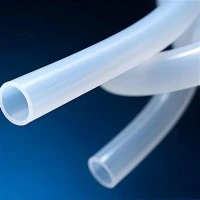
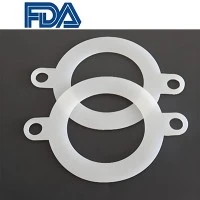
Xiamen Jinshun Sealing Technology Co., Ltd. has been manufacturing rubber sealing products since 2002, supplying custom molded rubber gaskets, rubber O-rings, Y-seals, silicone gaskets, RO membrane seals, silicone tubes, and other molded rubber components for international industrial customers.
From a simple sealing washer to a close-tolerance molded gasket with a complex profile, we work from your drawing, sample, dimensions, or application requirements to develop a practical sealing solution.
Our molded rubber gaskets are used across automotive, industrial equipment, food service, electronics, marine, medical, HVAC, construction, woodworking, and consumer-product applications.
With ISO 9001:2015 and ISO 14001:2015 management systems, in-house mold development capabilities, rubber molding equipment, and experience with multiple elastomer compounds, Jinshun Sealing is positioned to support both prototype development and repeat production.

What Are Molded Rubber Gaskets?
A molded rubber gasket is a sealing component manufactured by placing a selected rubber compound into a mold and applying controlled heat and pressure to form and cure the material.
Unlike flat-cut gaskets, molded rubber gaskets can be produced in three-dimensional shapes, including:
- Custom profiles
- Grooved sealing surfaces
- Circular and irregular shapes
- Rubber-to-metal components
- Close-tolerance sealing parts
- Special-purpose molded rubber components
- Complex geometries designed around a customer's assembly
The goal is straightforward: create a gasket that fits the mating components accurately and maintains a reliable seal under the actual operating conditions.
For OEM buyers, this is particularly important when the gasket must fit a specific housing, valve, pipe connection, machine component, or enclosure.
Custom Molded Rubber Gaskets for OEM and Industrial Buyers
At Jinshun Sealing, customization starts with understanding the application rather than simply choosing a rubber material.
Our engineering team can work from:
- 2D drawings
- 3D CAD files
- Physical samples
- Existing gasket dimensions
- Product specifications
- Application requirements
- Material requirements
- Assembly information
We can help evaluate the appropriate rubber compound, molding process, gasket geometry, mold design, and production method according to the customer's requirements.
This makes our service suitable for companies looking for a custom rubber gasket manufacturer, OEM sealing supplier, or long-term production partner in China.
Customization Options
| Customization Item | Available Options |
|---|---|
| Gasket design | Drawing, sample, CAD-based or custom design |
| Shape | Round, rectangular, irregular and application-specific profiles |
| Rubber material | Silicone, Nitrile, SBR, Neoprene, EPDM, Viton®, Butyl and Hypalon |
| Manufacturing process | Compression molding, transfer molding, injection molding |
| Mold development | Custom tooling based on product design |
| Tolerance | Manufactured according to customer drawings and specifications |
| Application | Industrial, automotive, HVAC, electronics, food service, marine, medical and more |
| Production | Prototype development and repeat OEM production |
Rubber Molding Processes
Different gasket designs require different molding methods. Choosing the right process can affect tooling cost, cycle time, dimensional consistency, material waste, and overall part cost.
Jinshun Sealing provides three major rubber molding processes.
1. Rubber Injection Molding
Injection molding is a strong choice for production runs where consistency and efficient cycle times are important.
The rubber compound is injected into the mold under controlled conditions before being cured into the required gasket shape.
Key advantages include:
- Fast production cycles
- High part-to-part consistency
- Excellent repeatability
- Reduced flash compared with some conventional molding methods
- Suitable for higher-volume molded rubber components
For OEM customers with stable annual demand, rubber injection molding can be an efficient solution for producing large quantities of custom rubber gaskets.
2. Rubber Transfer Molding
Transfer molding uses pressure to transfer the prepared rubber compound into the mold cavity.
It is particularly useful when the gasket design is more complex or when rubber-to-metal bonding is required.
Advantages include:
- Better consistency than conventional compression molding in many applications
- Suitable for more complex geometries
- Effective for rubber-to-metal molded components
- Practical for custom industrial sealing parts
If your component combines rubber with metal inserts, transfer molding may be worth considering during the design stage.
3. Rubber Compression Molding
Compression molding is a proven manufacturing method for custom rubber components and is especially useful for larger molded products or applications where tooling cost needs to be controlled.
The rubber compound is placed into the mold, compressed, heated, and cured to form the finished gasket.
Typical advantages include:
- Lower mold cost for many designs
- Lower material waste
- Suitable for larger molded rubber parts
- Flexible for custom and lower-volume production
- Practical for a wide range of rubber compounds
For some projects, compression molding can provide a good balance between tooling investment and part cost.
Molded Rubber Gasket Manufacturing Process
A reliable molded gasket starts well before the rubber enters the mold.
Our typical development process includes:
1. Drawing or sample review
We review dimensions, sealing surfaces, material requirements, tolerances, and application conditions.
2. Material selection
The rubber compound is selected according to temperature, fluid exposure, flexibility, mechanical requirements, and other operating conditions.
3. Mold design
A dedicated mold is developed around the required gasket geometry and production method.
4. Trial production
Initial molded samples are produced for dimensional and application evaluation.
5. Quality inspection
The finished parts are checked against the agreed specifications.
6. Mass production
After sample approval, production can proceed according to the customer's purchasing requirements.
This development approach helps reduce the risk of producing a large quantity of parts before the design has been properly validated.

Rubber Materials for Custom Molded Gaskets
Material selection is one of the most important decisions in gasket design.
A gasket that works well in a dry indoor application may not be suitable for hot water, oil, chemicals, outdoor exposure, or demanding mechanical conditions.
Jinshun Sealing works with a range of elastomer materials for different sealing requirements.
| Rubber Material | Typical Characteristics | Common Application Considerations |
|---|---|---|
| Silicone | Flexible and suitable for a broad range of applications | Food service, medical-related components, electronics and general sealing |
| Nitrile (NBR) | Good oil and fuel resistance | Automotive, machinery, hydraulic and general industrial sealing |
| EPDM | Good resistance to water, weather and many environmental conditions | Water systems, HVAC, automotive and outdoor applications |
| Neoprene | Balanced mechanical and environmental performance | Industrial, marine and general-purpose sealing |
| SBR | Economical general-purpose elastomer | General industrial applications |
| Viton® / FKM | High-performance fluoroelastomer | Higher-temperature and chemically demanding applications |
| Butyl | Useful where low gas permeability is important | Specialized industrial sealing |
| Hypalon | Specialized elastomer for demanding environments | Selected industrial and environmental applications |
Important: The best material depends on the complete application. Temperature, pressure, chemical exposure, compression, movement, installation conditions, and service life should all be considered before finalizing the compound.
How to Choose the Right Molded Rubber Gasket
Choosing a gasket based only on price or rubber type can create problems later.
For OEM and engineering applications, we recommend evaluating at least these factors:
1. Operating Temperature
Determine the actual minimum and maximum operating temperatures.
Remember that the temperature of the gasket itself may differ from the surrounding air or fluid temperature.
2. Contact Medium
What will the gasket contact?
Examples include:
- Water
- Steam
- Hydraulic fluids
- Oils
- Fuels
- Cleaning agents
- Chemicals
- Air
- Food-contact substances
Material compatibility should be checked before production.
3. Pressure
The gasket must maintain contact with the mating surfaces under the expected system pressure.
4. Compression
A molded rubber gasket normally relies on controlled compression to create the sealing force.
Too little compression can cause leakage. Excessive compression may damage the rubber or create unnecessary assembly problems.
5. Movement
Is the gasket static or dynamic?
A static flange gasket has different requirements from a gasket exposed to reciprocating, rotating, or vibrating movement.
6. Dimensional Tolerance
For precision assemblies, gasket dimensions and tolerances should be considered together with the mating components.
A few tenths of a millimeter can matter in a small sealing interface, depending on the application.
7. Production Quantity
Production volume influences the most economical molding process and tooling strategy.
For example, injection molding can become increasingly attractive for repeat, higher-volume production, while compression molding may be advantageous for certain larger or lower-volume parts.
Applications of Molded Rubber Gaskets
Custom molded rubber gaskets are used in many industries because they can be designed around the exact geometry of an assembly.
Automotive
Molded rubber sealing components can be used in:
- Automotive fluid systems
- Engine-related components
- Cooling systems
- Electrical assemblies
- Pumps and valves
- General automotive sealing applications
Industrial Equipment
Industrial machinery often requires custom gaskets because housings, covers, ports, and mating surfaces are rarely identical from one machine design to another.
Our molded rubber components can be designed for machinery, equipment housings, pumps, valves and other industrial assemblies.
HVAC
Rubber gaskets help seal connections and interfaces in heating, ventilation and air-conditioning equipment.
Material selection should take into account temperature, moisture, refrigerant or fluid exposure, and the specific assembly design.
Electronics
Custom rubber gaskets can provide sealing, cushioning, isolation, and protection around electronic assemblies and housings.
Food Service
For food-related applications, the rubber compound should be selected according to the required regulatory and application requirements. Jinshun Sealing supplies rubber materials and components for applications where food-contact specifications may be required.
Marine Applications
Marine equipment can face water, humidity, salt exposure, vibration, and temperature changes. A suitable rubber compound and gasket geometry can help maintain reliable sealing in these environments.
Medical Applications
Custom molded rubber components can be produced for selected medical and healthcare-related applications, subject to the required material, specification, and regulatory requirements.
Why Work With Xiamen Jinshun Sealing?
Selecting a gasket supplier is not only about buying rubber parts. For OEM buyers, the real value comes from reliable engineering support, repeatability, communication, and production capability.
Xiamen Jinshun Sealing Technology Co., Ltd. was established in 2002 and has developed extensive experience in rubber sealing products and customized rubber components.
Our capabilities include:
20+ years of manufacturing experience
Established in 2002, Jinshun Sealing has long-term experience in rubber sealing product development and manufacturing.
ISO 9001:2015 and ISO 14001:2015
Our quality and environmental management systems are certified to these standards.
Custom mold development
We can support customers from initial design and mold development through finished-gasket production.
Multiple rubber molding processes
Injection, transfer, and compression molding provide flexibility when selecting a manufacturing route.
Multiple elastomer options
Silicone, NBR, EPDM, Neoprene, SBR, Viton®, Butyl and Hypalon are among the material options available.
International B2B experience
Our products are supplied to customers in industries including automotive, industrial equipment, food service, electronics, marine, medical, HVAC, construction and consumer products.
Broader sealing product capability
In addition to molded rubber gaskets, our product range includes rubber O-rings, Y-seals, shower gaskets, RO membrane seals, silicone tubes and other customized rubber components.
Quality and Compliance
For international OEM buyers, material and product compliance can be just as important as dimensions and price.
Xiamen Jinshun Sealing Technology Co., Ltd. operates under ISO 9001:2015 and ISO 14001:2015 management systems.
Our supplied materials are selected with applicable requirements such as RoHS, REACH and PAHS in mind, while selected products have been approved or supplied to requirements associated with certifications and standards including:
- NSF
- FDA
- LFGB
- ACS
- KTW-W270
- WRAS
- UL
The applicable certification depends on the specific material, product design, and intended application. Buyers should confirm the exact compliance requirement before placing an order.
Custom Molded Rubber Gaskets: From Drawing to Production
One of the advantages of working with a specialized rubber manufacturer is that you do not necessarily need to start with a perfect gasket design.
If you have a sample or drawing but are unsure about the best manufacturing process, material, or mold structure, our team can review the requirements with you.
For an RFQ, useful information includes:
| Information | Why It Matters |
|---|---|
| 2D drawing or 3D CAD | Defines geometry and dimensions |
| Physical sample | Helps reproduce an existing component |
| Rubber material | Establishes basic performance requirements |
| Working temperature | Helps determine material suitability |
| Working pressure | Influences gasket design |
| Contact medium | Helps determine chemical compatibility |
| Annual quantity | Helps select an economical production process |
| Tolerance requirements | Determines manufacturing and inspection requirements |
| Application | Provides context for material and design selection |
If some information is unavailable, send us what you have. Our engineering team can start from the available drawing, sample, or application description.
Molded Rubber Gaskets vs. Cut Rubber Gaskets
The right production method depends on the part.
| Factor | Molded Rubber Gasket | Cut Rubber Gasket |
|---|---|---|
| Shape | 3D and complex profiles possible | Generally better for flat profiles |
| Custom geometry | Excellent | Limited by sheet and cutting process |
| Rubber-to-metal integration | Possible with suitable molding process | Generally not the same manufacturing approach |
| Large flat gasket | Possible but process-dependent | Often suitable |
| Tooling | Requires mold development | Usually lower tooling requirements |
| High-volume repeat production | Suitable | Depends on design and quantity |
| Dimensional control | Designed around mold geometry | Depends on cutting process and material |
For a simple flat gasket, die-cutting may be the most economical answer.
For a three-dimensional sealing profile or a part requiring molded features, custom molded rubber gaskets can be a better fit.
Common Questions About Molded Rubber Gaskets
What are molded rubber gaskets used for?
Molded rubber gaskets are used to seal interfaces between components and help prevent the unwanted movement of liquids, gases, air, or other media through a joint. They are widely used in automotive, industrial, HVAC, electronics, marine, food-service, medical and construction applications.
Can you manufacture custom rubber gaskets from a drawing?
Yes. Jinshun Sealing can develop custom molded rubber gaskets based on customer drawings, CAD files, specifications, or physical samples.
What rubber materials can be used for molded gaskets?
Available options include Silicone, Nitrile (NBR), EPDM, SBR, Neoprene, Viton®/FKM, Butyl and Hypalon. The appropriate compound depends on the operating conditions.
Which rubber molding process should I choose?
There is no single process that is best for every gasket. Injection molding is attractive for consistent, repeat production; transfer molding is useful for certain complex and rubber-to-metal parts; compression molding can be economical for larger or lower-volume components. Our engineers can review the design and recommend a suitable process.
Can you make molded rubber gaskets with tight tolerances?
Yes. Jinshun Sealing specializes in close-tolerance molded rubber products. The achievable tolerance depends on the material, geometry, mold design, size, and customer specification.
Can you develop the mold for a custom rubber gasket?
Yes. Mold development can be included as part of the custom manufacturing process, starting from a drawing, CAD model, or physical sample.
Do you provide OEM and ODM rubber gasket manufacturing?
Yes. We support customized OEM/ODM rubber sealing projects for international buyers, including product development, mold development, material selection, and production.
Can you manufacture rubber-to-metal molded gaskets?
Yes. Transfer molding is particularly suitable for selected rubber-to-metal molded components. The exact bonding system and material combination should be determined according to the application.
What information should I send for a gasket quotation?
Ideally, provide a drawing or sample, required material, dimensions and tolerances, operating temperature, pressure, contact medium, application, and estimated order quantity. If you do not have all of these details, send the information available and we can discuss the remaining requirements.
Do you supply other custom rubber components?
Yes. In addition to molded rubber gaskets, Jinshun Sealing manufactures rubber O-rings, Y-seals, silicone gaskets, RO membrane seals, silicone tubes and other customized rubber components.
Get A Quote For Custom Molded Rubber Gaskets
A good gasket starts with the right material, geometry, molding process, and production plan.
If you are sourcing custom molded rubber gaskets from China, send Xiamen Jinshun Sealing Technology Co., Ltd. your drawing, CAD file, sample, dimensions, or even a description of the sealing problem.
We can help you evaluate:
- Rubber material
- Gasket design
- Molding process
- Mold development
- Production requirements
- Tolerance specifications
- Application compatibility
- OEM production requirements
Whether you need a small development project or a long-term supply partner, our goal is simple: make the sealing part fit your application and make production practical for your business.
Contact Xiamen Jinshun Sealing Technology Co., Ltd. today for a custom molded rubber gasket quotation.
Send us your drawing or sample and tell us your application, required material, quantity, and target delivery schedule. Our engineering and sales team will review the project and provide a practical solution for your requirements.


