


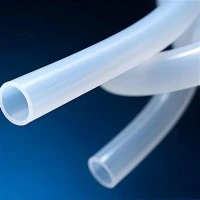

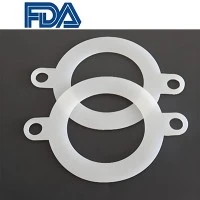


Silicone VMQ O-Rings
Silicone VMQ O-rings are used where a wide operating temperature range, low-temperature flexibility, and clean material performance matter more than mechanical strength or oil resistance. The supplied VMQ compound range is -60°C to 230°C, with FDA and LFGB compliance available for food-contact applications, including FDA compliance to 21 CFR 177.2600.
Core Product Points
- -60°C to 230°C service range
- VMQ silicone rubber construction
- FDA 21 CFR 177.2600 compliant options
- LFGB compliant options available
- RoHS and REACH compliant
- Suitable for static sealing applications
- Red or translucent standard colors
- OEM and ODM production available
Product Overview & Custom Silicone O-Ring Capabilities
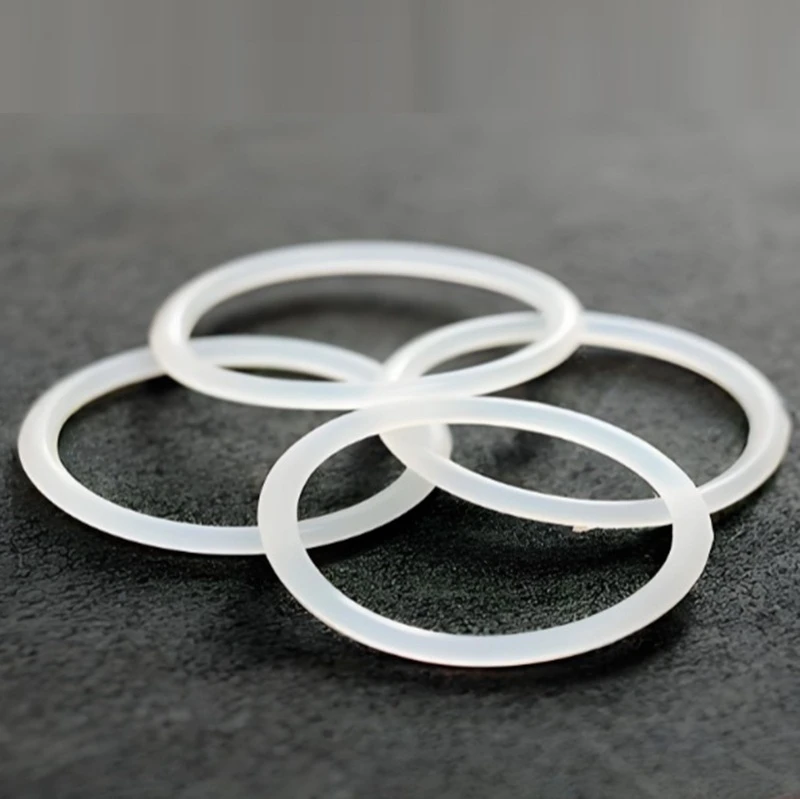
Silicone VMQ O-rings are round-profile elastomeric seals manufactured from silicone rubber based on silicon, oxygen, hydrogen, and carbon chemistry. Their main engineering advantage is temperature flexibility: VMQ remains suitable across a wider temperature window than many general-purpose elastomers, particularly where both high-temperature exposure and low-temperature flexibility are required.
For food, beverage, sanitary, and selected medical-contact equipment, silicone compounds can be specified to meet applicable material requirements. Jinshun Sealing supplies silicone O-rings with FDA and LFGB compliance, with the supplied product specification identifying FDA 21 CFR 177.2600 as the relevant food-contact requirement.
The material is available in red, translucent, or customer-specified colors. OEM and ODM production can be arranged according to drawing, dimensional requirements, material grade, color, and application conditions.
One point should be made clear during material selection: silicone is not a universal replacement for NBR, FKM, or EPDM. VMQ has relatively low tensile strength, tear resistance, and abrasion resistance. It also has poor oil resistance and higher gas permeability. For this reason, silicone VMQ O-rings are normally selected for the temperature, hygiene, and flexibility characteristics of the application rather than for high mechanical loading or oil service.

Where VMQ Silicone Performs Well
The material is particularly relevant when an O-ring must retain flexibility over a broad temperature range while maintaining a clean, stable sealing interface.
Typical requirements include:
- High-temperature static sealing
- Low-temperature sealing environments
- Food-contact equipment
- Beverage processing equipment
- Sanitary fluid systems
- Medical and hygiene-related equipment
- General static sealing assemblies
- Equipment requiring translucent or colored silicone seals
Technical Specifications & Material Parameters
The following values are based on the supplied product specification. Mechanical properties such as tensile strength, elongation, hardness, and compression set are compound- and formulation-dependent and should be confirmed against the selected grade before production.
| Parameter | Silicone VMQ O-Rings |
|---|---|
| Material | Silicone rubber (VMQ) |
| Material family | Silicone elastomer |
| Working temperature | -60°C to 230°C |
| Profile | Round O-ring |
| Primary sealing mode | Static sealing |
| Standard colors | Red, translucent |
| Custom color | Available per requirement |
| Food-contact compliance | FDA compliant |
| FDA reference | 21 CFR 177.2600 |
| Food-contact standard | LFGB available |
| Chemical compliance | RoHS, REACH |
| OEM / ODM | Available |
| Hardness | Specify by selected VMQ compound |
| Tensile strength | Compound dependent |
| Elongation at break | Compound dependent |
| Compression set | Compound dependent |
| Dimensional standard | Customer drawing / specification |
| Size range | Customer specification |
| Surface finish | Customer specification |
Temperature Capability
The -60°C to 230°C range is one of the main reasons engineers specify VMQ silicone rubber. Low-temperature flexibility is useful where conventional elastomers may become significantly harder, while the upper operating limit supports many elevated-temperature static sealing applications.
The actual permissible temperature should always be evaluated together with compression, pressure, medium, exposure time, and seal geometry. A maximum material temperature is not automatically a maximum continuous service temperature for every O-ring design.
Dimensional Control
For production orders, the O-ring cross-section and inside diameter should be defined from the actual mating-groove geometry rather than selected from size alone. Groove width, groove depth, squeeze, gland fill, shaft or bore dimensions, and thermal expansion all affect sealing performance.
For OEM projects, Jinshun can work from customer drawings and specified dimensions. Where a standard O-ring size is required, the applicable dimensional standard should be stated in the purchasing specification.
Factory-Direct Inquiry: Send your O-ring drawing, dimensions, VMQ grade, hardness requirement, temperature range, and contact medium to Jinshun Sealing. We can review the material and dimensional requirements before quotation.
Material Selection: When VMQ Is the Right Choice
Choosing silicone simply because the application involves high temperature can lead to the wrong seal. VMQ has a distinct property balance that needs to match the operating medium and mechanical load.
Advantages of Silicone VMQ
Wide temperature range:
The supplied compound specification covers -60°C to 230°C, making VMQ suitable for applications with large temperature swings.
Low-temperature flexibility:
Silicone remains flexible at low temperatures, which is useful for static seals exposed to cold environments.
Food-contact options:
FDA and LFGB compliant grades can be specified where the sealing material contacts food or beverage products.
Clean material options:
RoHS and REACH compliance is available for the supplied product specification.
Color identification:
Red and translucent versions are available, with customer-specific colors also possible.
Engineering Limitations
Silicone VMQ should not be selected solely on temperature.
| Requirement | VMQ Silicone Suitability |
|---|---|
| High temperature | Good |
| Low temperature flexibility | Good |
| Food-contact applications | FDA/LFGB grades available |
| Static sealing | Suitable |
| Oil resistance | Poor |
| Abrasion resistance | Relatively poor |
| Tear resistance | Relatively poor |
| Tensile strength | Lower than conventional rubber |
| Gas permeability | Relatively high |
| High mechanical loading | Requires application review |
For oil, fuel, aggressive mechanical wear, or high dynamic loading, an engineer may need to consider another elastomer such as NBR, FKM, or a specified specialty compound.
Material Review Request: If your medium contains oil, fuel, cleaning chemicals, or other aggressive fluids, send the fluid name, concentration, temperature, pressure, and exposure time. Jinshun can evaluate whether VMQ is appropriate before you commit to tooling.
Quality Control & Manufacturing Considerations
For silicone VMQ O-rings, quality control is not limited to checking the finished outside diameter. Material selection, molding conditions, curing, dimensional stability, flash control, and surface condition all influence the final seal.
Jinshun Sealing has been operating since 2002 and maintains ISO 9001:2015 and ISO 14001:2015 quality and environmental management systems.
Production Control Points
1. Compound identification
The selected VMQ compound must match the approved material specification. Food-contact projects should also maintain the required compliance documentation.
2. Mold condition
O-ring cavities must maintain the specified cross-section and dimensional geometry. Mold wear can gradually affect ID, OD, and cross-section consistency.
3. Curing control
Silicone properties depend strongly on the curing system and processing conditions. Production parameters should remain within the approved process window.
4. Flash and surface inspection
The sealing surface should be checked for visible defects, excessive flash, cuts, voids, contamination, or other molding abnormalities.
5. Dimensional inspection
Critical dimensions should be checked against the approved drawing or purchasing specification using suitable inspection equipment.
6. Compliance traceability
For food-contact applications, material documentation and applicable compliance records should remain traceable to the production material.
[Image Suggestion - Under Quality Control: Silicone O-ring molding and dimensional inspection process with production samples | Alt: Silicone VMQ O-ring molding and quality inspection at China rubber seal factory | Filename: silicone-vmq-oring-quality-inspection.jpg]
Typical Application Scenarios
Food and Beverage Equipment
FDA and LFGB compliant silicone VMQ O-rings can be used in selected food-contact sealing applications where the compound and complete assembly meet the applicable requirements.
Typical equipment includes:
- Beverage dispensing equipment
- Food processing machinery
- Food-contact fluid connections
- Sanitary processing assemblies
- Sealing points exposed to elevated temperatures
Medical and Hygiene Equipment
Silicone's low-temperature flexibility and broad temperature range make VMQ useful in selected medical and hygiene-related sealing applications. The exact grade should be specified according to the intended contact medium, sterilization method, temperature, and regulatory requirements.
Heating and High-Temperature Equipment
Static silicone O-rings are also used where the sealing interface experiences elevated temperatures but does not impose severe abrasion or mechanical loading.
General Industrial Sealing
VMQ can be specified for static sealing in equipment where temperature flexibility is more important than resistance to petroleum oils, abrasion, or high mechanical stress.
FDA and LFGB Compliance for Food-Contact O-Rings
Compliance should be assessed at the material and application level rather than treating the phrase "food grade" as a complete technical specification.
For food-contact projects, the purchasing specification should identify:
- The exact silicone compound.
- The applicable food-contact requirement.
- The intended food or beverage medium.
- Operating temperature.
- Cleaning and sanitation conditions.
- Required compliance documentation.
- O-ring dimensions and sealing conditions.
Jinshun's supplied silicone VMQ O-ring specification identifies FDA compliance to 21 CFR 177.2600 and LFGB as available food-industry requirements. The final compliance documentation should correspond to the actual compound and finished product supplied for the project.
OEM & ODM Silicone VMQ O-Ring Supply
Jinshun Sealing supplies customized rubber sealing products for international manufacturers and industrial buyers. For a silicone VMQ O-ring project, the technical quotation can be based on the customer's:
- 2D drawing or 3D CAD file
- ID and cross-section
- Material requirement
- Shore hardness requirement
- Operating temperature
- Fluid or food-contact medium
- Color
- Applicable certification
- Annual quantity
- Packaging and labeling requirements
This information gives the engineering and production teams enough detail to evaluate the seal before tooling and mass production.
Silicone VMQ O-Rings: Engineering Selection Checklist
Before approving a purchase order, confirm these parameters:
| Engineering Item | Buyer Should Specify |
|---|---|
| Elastomer | Silicone / VMQ |
| Temperature | Minimum and maximum operating temperature |
| Medium | Water, food, beverage, air, chemicals, etc. |
| Pressure | Operating and peak pressure |
| Movement | Static or dynamic |
| Groove | ID, OD, depth, width, squeeze |
| Hardness | Required Shore A |
| Color | Red, translucent, or custom |
| Compliance | FDA, LFGB, RoHS, REACH as applicable |
| Standard | Drawing or applicable O-ring standard |
| Quantity | Trial, production, or annual volume |
| Documentation | Material and compliance records |
A complete specification reduces the risk of selecting a silicone O-ring that has the correct temperature range but the wrong mechanical or chemical performance.
Frequently Asked Questions
Can Silicone VMQ O-Rings operate from -60°C to 230°C?
Yes. The supplied VMQ specification states a temperature range of -60°C to 230°C. Actual service limits depend on compound formulation, compression, pressure, medium, exposure duration, and seal geometry, so the application should be reviewed before final material approval.
Are Silicone VMQ O-Rings suitable for food-contact applications?
Yes, selected compounds are available with FDA compliance to 21 CFR 177.2600 and LFGB requirements. Buyers should specify the exact compound and application, then obtain the corresponding compliance documentation for the finished sealing product.
Can Jinshun manufacture custom-size silicone VMQ O-rings?
Yes. Jinshun supports OEM and ODM silicone VMQ O-rings based on customer dimensions, drawings, colors, material requirements, and application conditions. Send the ID, cross-section, hardness, temperature, medium, annual quantity, and compliance requirements for engineering review.
Request A Silicone VMQ O-Ring Quote
Send Jinshun Sealing your drawing, dimensions, VMQ material requirement, hardness, temperature range, sealing medium, color, certification requirements, and estimated order quantity. Our engineering team can review the specification and prepare a factory-direct quotation for your silicone VMQ O-ring project.
Xiamen Jinshun Sealing Technology Co., Ltd.
Established in 2002 | ISO 9001:2015 | ISO 14001:2015
Silicone O-Rings | Rubber O-Rings | Y-Seals | Silicone Gaskets | RO Membrane Seals | Custom Rubber Parts
For OEM, private-label, distributor, and wholesale inquiries, contact Jinshun Sealing with your sealing specification and drawing.


