




Buna N Rubber Hose Manufacturer | Custom NBR Rubber Hose
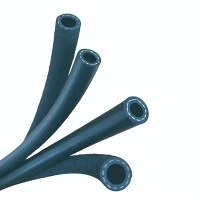
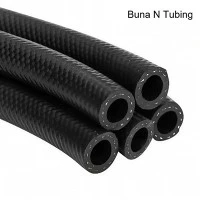
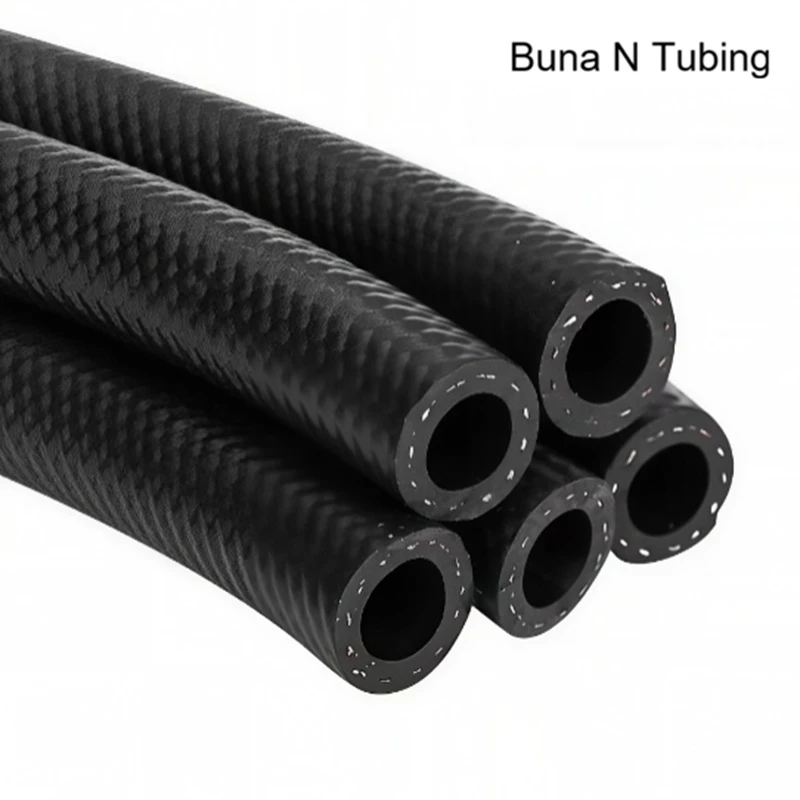
Buna N rubber hose, also known as NBR rubber hose or nitrile rubber hose, is designed for applications that require reliable contact with petroleum-based oils, fuels and lubricants. Made with a nitrile butadiene rubber (NBR) compound, it offers good oil resistance, abrasion resistance, mechanical strength and air tightness. It is widely used in automotive equipment, machinery, fuel handling systems and industrial fluid transfer.
For importers, distributors, hose manufacturers and industrial equipment buyers, selecting the right Buna N rubber hose means looking beyond the material name. Acrylonitrile content, hose construction, reinforcement, working pressure, temperature and the actual fluid being transferred all affect service performance. Jinshun Sealing Technology supports rubber material and sealing product requirements for industrial applications. Contact our team to discuss your project specifications and sourcing needs.
1. What Is Buna N Rubber Hose?
Buna N rubber hose is a flexible hose made with nitrile butadiene rubber (NBR), a synthetic elastomer produced by polymerizing butadiene and acrylonitrile. It is also commonly called nitrile rubber hose.
NBR is especially useful in applications where ordinary rubber may swell, soften or lose mechanical performance after prolonged contact with petroleum-based fluids. This makes it a common material choice for fuel lines, oil transfer hoses, lubrication systems and industrial equipment.
The acrylonitrile (ACN) content in an NBR compound affects its performance:
- Higher ACN content: Generally improves resistance to oils, fuels and hydrocarbons, but reduces flexibility at low temperatures.
- Lower ACN content: Generally provides better low-temperature flexibility, but may offer lower resistance to certain oils and fuels.
- Balanced ACN content: Helps manufacturers select a compound that meets the required balance between oil resistance, flexibility and operating temperature.
The finished hose may contain several layers, depending on its intended application:
| Hose component | Main function |
|---|---|
| Inner tube | Contacts the transferred fluid and provides the required chemical compatibility |
| Reinforcement layer | Supports the hose under working pressure; may use textile, wire or other reinforcement |
| Outer cover | Protects against abrasion, weather exposure and external damage, depending on the compound |
| End fittings | Connect the hose to equipment, pipes or fluid systems |
Important: NBR is the rubber material, not a complete hose performance specification. A hose's pressure rating, flexibility, temperature range and service life depend on its compound formulation and overall construction.
2. Key Properties of Buna N Rubber Hose
2.1 Good Resistance to Oils and Fuels
Oil resistance is the main reason manufacturers choose Buna N rubber hose. NBR generally performs well when exposed to many petroleum-based oils, mineral oils, diesel fuels, gasoline and lubricants.
It is commonly used in applications such as:
- Automotive fuel and oil systems
- Hydraulic and lubrication equipment
- Industrial oil transfer lines
- Machinery and engine components
- Petroleum-based fluid handling systems
However, resistance varies with fuel composition, aromatic content, temperature, exposure time and the specific NBR formulation. Always confirm compatibility with the actual fluid before selecting a hose.
2.2 Abrasion Resistance and Mechanical Strength
NBR compounds offer good resistance to wear and mechanical stress. This is useful in equipment where hoses experience repeated movement, vibration or contact with surrounding components.
The finished hose's abrasion performance also depends on the outer cover material, reinforcement design, wall thickness and installation conditions.
2.3 Operating Temperature
NBR can operate across a useful temperature range, but there is no single temperature rating that applies to every Buna N rubber hose.
A typical NBR hose compound may be specified for approximately -40°C to +105°C. Some specially formulated products may tolerate higher temperatures for limited periods, potentially around +120°C. These figures are indicative only; the hose manufacturer's rated continuous and intermittent limits should always take priority.
| Parameter | Typical NBR hose consideration |
|---|---|
| Common temperature range | Approximately -40°C to +105°C for some formulations |
| Higher-temperature exposure | Certain compounds may tolerate intermittent exposure near +120°C |
| Oil resistance | Generally good with many petroleum-based oils and lubricants |
| Fuel resistance | Depends on fuel composition and NBR formulation |
| Abrasion resistance | Generally good; also depends on hose cover construction |
| Air tightness | NBR compounds generally provide good gas impermeability |
| Low-temperature flexibility | Decreases as ACN content increases |
| Ozone and weather resistance | Generally limited without suitable formulation or protective cover |
| Electrical insulation | Not normally selected where high electrical insulation is required |
These values are material-level guidance, not guaranteed ratings for every finished hose. Buyers should request product-specific technical data before approving a design or placing a production order.
2.4 Chemical Compatibility
NBR provides good resistance to many petroleum-based fluids, but it should not be treated as a universal chemical-resistant rubber.
Its suitability for acids, alkalis, solvents and other chemicals depends on the chemical concentration, temperature, exposure duration and compound formulation.
| Fluid or chemical group | General NBR compatibility | Selection notes |
|---|---|---|
| Mineral oils | Generally good | Common application for NBR |
| Lubricating oils | Generally good | Confirm compatibility with additives |
| Diesel fuel | Often good | Check the fuel specification and operating temperature |
| Gasoline | Formulation-dependent | Fuel composition can affect swelling and service life |
| Hydraulic oils | Often good with compatible grades | Confirm the hydraulic fluid type |
| Water | Formulation-dependent | Consider water temperature and applicable contact requirements |
| Dilute acids and alkalis | Depends on concentration and formulation | Test before use |
| Ketones and many strong solvents | Often poor | Consider another elastomer |
| Ozone and outdoor exposure | Generally limited | A suitable protective cover may be needed |
For chemical transfer applications, buyers should provide the chemical name, concentration, operating temperature and expected exposure conditions. This information helps determine whether NBR is suitable or whether another material should be considered.

3. Common Applications of NBR Rubber Hose
Buna N rubber hose is used in industries where oil resistance and mechanical durability are important. The correct hose construction depends on the fluid, pressure, temperature and installation environment.
Automotive and Transportation
NBR is widely used in automotive components that come into contact with fuels, lubricants and petroleum-based fluids.
Potential applications include:
- Fuel transfer and delivery systems
- Engine oil lines
- Lubrication systems
- Oil-resistant connection hoses
- Industrial vehicle and equipment fluid lines
The hose must meet the vehicle manufacturer's requirements for fuel compatibility, pressure, temperature, vibration and applicable automotive standards.
Oil, Gas and Industrial Machinery
Industrial equipment often requires hoses that can handle oils and lubricants under repeated operating cycles.
Common applications include:
- Oil transfer equipment
- Lubrication lines
- Machinery maintenance systems
- Hydraulic equipment using compatible fluids
- Pump and compressor connections
For pressurized systems, buyers should specify the required working pressure, pressure surges, hose dimensions and reinforcement structure. NBR material alone does not determine the pressure rating.
Chemical and Process Equipment
NBR hoses may be used for selected industrial fluids where compatibility has been confirmed. However, NBR is not suitable for every chemical.
Before specifying an NBR hose for a chemical process, check the fluid's composition, concentration, temperature and exposure time. For aggressive solvents or chemicals outside NBR's compatibility range, another elastomer or hose construction may be more appropriate.
Pharmaceutical and Food Processing Equipment
Some specially formulated NBR compounds may be used in selected auxiliary or non-direct-contact equipment applications. However, ordinary Buna N rubber hose should not automatically be considered suitable for pharmaceutical processing or food contact.
For direct food or pharmaceutical contact, buyers should verify the applicable material regulations, migration or extraction data, manufacturing controls and finished-hose documentation. A general statement that a hose is made from NBR is not evidence of food-contact or pharmaceutical suitability.
4. How to Select the Right Buna N Rubber Hose
Choosing a hose based only on its material can lead to premature failure, leakage or an unsuitable installation. Procurement and engineering teams should confirm the following details before ordering.
| Selection factor | Information to provide | Why it matters |
|---|---|---|
| Fluid type | Oil, diesel, gasoline, lubricant or other media | Determines material compatibility |
| Operating temperature | Minimum, normal and maximum temperature | Affects flexibility, swelling and service life |
| Working pressure | Normal and maximum operating pressure | Determines reinforcement and hose construction |
| Hose dimensions | Inner diameter, outer diameter and length | Ensures fit and flow requirements |
| Reinforcement | Textile, wire or other structure | Affects pressure resistance and flexibility |
| Installation conditions | Static, moving, vibrating or exposed installation | Helps determine mechanical and cover requirements |
| Outer cover | Indoor, outdoor, abrasion or weather exposure | Helps protect the hose during service |
| End connections | Fitting type, size and connection method | Ensures compatibility with the equipment |
| Compliance requirements | Applicable industry or customer specifications | Supports qualification and incoming inspection |
For custom projects, it is useful to provide a sample, technical drawing or existing hose specification. This gives the manufacturer a clearer basis for evaluating dimensions, material and construction requirements.
5. Buna N Rubber Hose vs. Other Common Rubber Materials
NBR is a practical choice for many oil-handling applications, but it is not the best material for every operating environment. Comparing elastomers helps engineers and purchasing teams narrow down suitable options.
| Material | Main strength | Main limitation | Common applications |
|---|---|---|---|
| NBR (Buna N) | Resistance to many petroleum-based oils and fuels | Limited ozone and weather resistance; low-temperature flexibility varies | Fuel lines, oil hoses, lubrication systems |
| EPDM | Good weather, ozone, hot water and steam resistance in suitable grades | Generally unsuitable for petroleum oils and fuels | Water hoses, outdoor seals, heating systems |
| Silicone | Wide temperature capability and flexibility in suitable grades | Generally weaker resistance to petroleum oils and abrasion than NBR | Temperature-sensitive equipment, selected fluid and air lines |
| FKM | Strong resistance to many fuels, oils and chemicals at elevated temperatures | Higher material cost; low-temperature performance depends on grade | Automotive, chemical and industrial sealing |
| CR (Neoprene) | Balanced weather, ozone and moderate oil resistance | Not equivalent to NBR for many petroleum-fluid applications | Industrial hoses, outdoor equipment and general-purpose products |
The final selection should be based on the actual fluid and operating conditions rather than material names alone.
6. Custom NBR Rubber Hose and Manufacturing Requirements
For OEM equipment manufacturers, distributors and industrial buyers, hose specifications need to match the equipment design and intended service conditions.
When discussing a custom Buna N rubber hose, prepare the following information:
- Material: NBR compound and required oil-resistance level
- Dimensions: Inner diameter, outer diameter, wall thickness and total length
- Hardness: Required Shore A range, if specified
- Temperature: Continuous and intermittent operating limits
- Pressure: Working pressure, maximum pressure and pressure-cycle requirements
- Reinforcement: Required structure and reinforcement material
- Cover: Abrasion, ozone, weather or other environmental requirements
- Connections: Fitting type, end configuration and assembly requirements
- Compliance: Applicable customer, industry and destination-market requirements
Not every application needs the same NBR formulation. A fuel hose, an oil lubrication hose and a general industrial hose may require different compound and construction designs.
Jinshun Sealing Technology has manufactured rubber sealing products since 2002, supporting industrial customers with rubber component development and production. Our product range includes O-rings, rubber gaskets, silicone components and other custom rubber sealing parts. For projects involving NBR materials or related sealing components, share your drawings, samples or material requirements so our team can review the application and confirm product suitability.
Need NBR rubber components for your equipment or fluid system?
Send your technical drawing, sample or specification to wb6@jinshunxm.com to discuss your project requirements.
7. Quality Control and Material Compliance
For industrial procurement, material consistency and product traceability matter as much as the initial specification. A qualified supplier should be able to explain how materials and finished products are checked against the agreed requirements.
When evaluating an NBR hose or related rubber component, buyers can ask about:
- Material identification: Confirmation of the specified NBR compound or grade.
- Dimensional inspection: Verification of inner diameter, outer diameter, wall thickness and length.
- Hardness testing: Shore A measurement where required by the specification.
- Visual inspection: Checks for cracks, surface defects, bubbles and other visible issues.
- Performance testing: Relevant oil-immersion, tensile, elongation, pressure or leakage tests, according to the product and application.
- Documentation: Material declarations, inspection records and applicable compliance documents.
Jinshun Sealing Technology operates under ISO 9001:2015 and ISO 14001:2015 management systems. Specific material declarations and product compliance documents should be confirmed for the selected product and production batch. Company-level management system certification does not mean that every rubber product or hose carries an individual product approval.
8. Request a Quote for Buna N Rubber Hose and NBR Components
Are you sourcing Buna N rubber hose, NBR rubber components or oil-resistant sealing products for an industrial or OEM project?
To help assess your requirements, please provide:
- Product type and intended application
- Fluid or media in contact with the rubber
- Required dimensions or technical drawing
- Operating temperature and pressure
- Required material grade or hardness
- Estimated order quantity
- Destination market and applicable compliance requirements
Jinshun Sealing Technology works with industrial buyers and product manufacturers seeking rubber sealing components for equipment and fluid systems. Contact us to discuss your specifications and request a quotation.
Email: wb6@jinshunxm.com
Frequently Asked Questions About Buna N Rubber Hose
1. What is the difference between Buna N and NBR rubber hose?
There is no basic material difference. Buna N is a commonly used name for nitrile rubber, also known as NBR. Both terms refer to rubber made from butadiene and acrylonitrile. The finished hose performance depends on the compound and hose construction.
2. What temperature can a Buna N rubber hose withstand?
Some NBR hose formulations operate at approximately -40°C to +105°C, while selected products may tolerate intermittent temperatures near +120°C. The actual limit depends on the compound, reinforcement, fluid and exposure time. Always follow the manufacturer's rated temperature range.
3. Is Buna N rubber hose suitable for gasoline, diesel and hydraulic oil?
NBR is commonly used with many petroleum-based fluids, including diesel, lubricating oils and selected gasoline and hydraulic oil formulations. Compatibility is not universal. Confirm the exact fluid composition, additives, operating temperature and hose manufacturer's compatibility data before use.


