


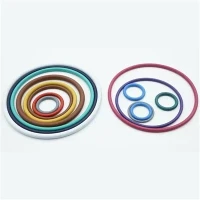

As a supplier of Rubber V Rings, I've witnessed firsthand how the surface finish of these crucial sealing components can significantly impact their performance. In this blog, I'll delve into the science behind surface finish and explore its various effects on the functionality of Rubber V Rings.
Understanding Surface Finish
Surface finish refers to the texture and quality of the outer layer of a Rubber V Ring. It encompasses factors such as roughness, waviness, and lay. These characteristics are determined by the manufacturing process, including molding, machining, and post - processing treatments.
The roughness of a surface is typically measured in terms of Ra (arithmetical mean deviation of the roughness profile). A lower Ra value indicates a smoother surface. Waviness, on the other hand, is a more long - wavelength deviation from the ideal surface, and lay refers to the direction of the predominant surface pattern.
Impact on Sealing Performance
One of the most critical aspects of a Rubber V Ring is its ability to create an effective seal. The surface finish plays a vital role in this regard.
A smooth surface finish on a Rubber V Ring can enhance its sealing performance. When the surface is smooth, it can conform more closely to the mating surfaces, whether it's a shaft or a housing. This close contact minimizes the gaps through which fluids or gases could leak. For example, in hydraulic systems, a well - finished Rubber V Ring can prevent the leakage of hydraulic fluid, ensuring the efficient operation of the system.
Conversely, a rough surface finish can lead to leakage. Roughness peaks can prevent the complete contact between the V Ring and the mating surface, creating pathways for fluid or gas to escape. In applications where high - pressure sealing is required, such as in industrial compressors, even a small amount of leakage due to a poor surface finish can result in significant energy losses and reduced system efficiency.
Friction and Wear
The surface finish also affects the friction and wear characteristics of Rubber V Rings. A smooth surface generally results in lower friction coefficients. When a Rubber V Ring has a low - friction surface, it can move more easily against the mating surface, reducing the amount of energy required for operation. This is particularly important in dynamic sealing applications, such as in reciprocating pumps or rotating shafts.
Lower friction also means less wear on the Rubber V Ring. As the ring moves against the mating surface, excessive friction can cause abrasion, leading to material loss and a shorter service life. By having a smooth surface finish, the wear rate can be significantly reduced, increasing the durability of the V Ring.
However, in some cases, a slightly rougher surface finish may be beneficial. For example, in applications where a certain amount of grip is required, such as in some types of power transmission systems, a rougher surface can provide better adhesion between the V Ring and the mating surface, preventing slippage.


Chemical Resistance
The surface finish can influence the chemical resistance of Rubber V Rings. A smooth surface is less likely to trap contaminants and chemicals. When a Rubber V Ring is exposed to aggressive chemicals, a rough surface can provide crevices where these chemicals can accumulate. Over time, these trapped chemicals can react with the rubber material, causing degradation and reducing the ring's performance.
A smooth surface finish allows for easier cleaning and reduces the risk of chemical attack. This is especially important in applications where the V Ring is in contact with corrosive substances, such as in chemical processing plants or wastewater treatment facilities.
Compatibility with Lubricants
In many applications, Rubber V Rings are used in conjunction with lubricants. The surface finish can affect the compatibility between the V Ring and the lubricant. A smooth surface finish can promote better lubricant distribution. The lubricant can spread more evenly over a smooth surface, providing better protection against friction and wear.
On the other hand, a rough surface can cause the lubricant to pool in the valleys, leading to uneven lubrication. This can result in localized areas of high friction and increased wear. Additionally, some rough surface finishes may absorb the lubricant, reducing its effectiveness over time.
Manufacturing Considerations
As a supplier, we take great care in controlling the surface finish of our Rubber V Rings. The manufacturing process is carefully optimized to achieve the desired surface characteristics.
Molding is one of the primary methods for producing Rubber V Rings. The quality of the mold surface directly affects the surface finish of the final product. A high - precision mold with a smooth surface will produce V Rings with a better surface finish. After molding, post - processing treatments such as grinding or polishing can be used to further improve the surface quality.
However, these additional processes add to the manufacturing cost. Therefore, we need to strike a balance between the desired surface finish and the cost - effectiveness of production. We work closely with our customers to understand their specific requirements and recommend the most suitable surface finish for their applications.
Applications and Surface Finish Requirements
Different applications have different surface finish requirements for Rubber V Rings.
In automotive applications, such as in engine seals or transmission systems, a high - quality surface finish is essential. These systems require reliable sealing, low friction, and long - term durability. A smooth surface finish helps to meet these requirements, ensuring the proper functioning of the vehicle.
In the food and beverage industry, Rubber V Rings need to have a smooth surface finish to meet hygiene standards. A smooth surface is easier to clean and sanitize, preventing the growth of bacteria and other contaminants.
In the aerospace industry, where reliability and performance are of utmost importance, the surface finish of Rubber V Rings is carefully controlled. These rings are used in critical applications such as fuel systems and hydraulic actuators, where any leakage or failure can have serious consequences.
Conclusion
The surface finish of a Rubber V Ring has a profound impact on its performance in terms of sealing, friction, wear, chemical resistance, and compatibility with lubricants. As a supplier, we understand the importance of providing V Rings with the appropriate surface finish for different applications.
If you're in the market for high - quality V Type Seal, V-shaped Sealing Ring, or V Cup Seal, we're here to help. Our team of experts can assist you in selecting the right Rubber V Ring with the optimal surface finish for your specific needs. Whether you're looking for a smooth finish for high - pressure sealing or a slightly rougher finish for better grip, we have the solutions. Contact us today to start a procurement discussion and find the perfect Rubber V Ring for your application.
References
- "Sealing Technology Handbook" by John S. Blake
- "Rubber Technology and Manufacture" by Michael Morton
- Various industry research papers on rubber sealing components and surface finish analysis.