


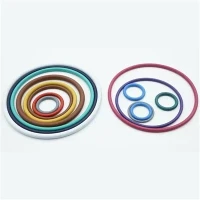

Hey there! As a supplier of NBR O-rings, I've seen firsthand how crucial it is to ensure the correct installation position of these little but mighty components. In this blog, I'll share some tips and tricks on how to make sure your NBR O-rings are installed in the right place every time.
Why the Correct Installation Position Matters
First off, let's talk about why getting the installation position right is so important. NBR O-rings are used in a wide range of applications, from automotive engines to industrial machinery. Their main job is to create a seal between two components, preventing the leakage of fluids or gases. If an O-ring is installed incorrectly, it won't be able to form a proper seal, which can lead to all sorts of problems, like leaks, reduced efficiency, and even equipment failure.
For example, in a hydraulic system, a poorly installed O-ring can cause fluid to leak out, which not only wastes resources but can also damage other parts of the system. In a food processing plant, an incorrectly placed O-ring can allow contaminants to enter the production line, posing a risk to food safety. So, as you can see, getting the installation position right is essential for the proper functioning and safety of your equipment.
Understanding NBR O-Rings
Before we dive into the installation process, let's take a quick look at what NBR O-rings are. NBR stands for Nitrile Butadiene Rubber, which is a synthetic rubber known for its excellent resistance to oil, fuel, and other petroleum-based fluids. Nitrile Butadiene Rubber O Rings are widely used in various industries because of their durability, flexibility, and cost-effectiveness.
These O-rings come in different sizes, shapes, and hardness levels, so it's important to choose the right one for your application. The size of the O-ring is determined by its inner diameter, outer diameter, and cross-sectional diameter. The shape can vary from standard round O-rings to square or rectangular ones, depending on the specific requirements of the sealing application. The hardness, measured on the Shore A scale, affects the O-ring's ability to withstand pressure and deformation.
Pre-Installation Checks
Now that we have a basic understanding of NBR O-rings, let's talk about the pre-installation checks you should perform. These checks are crucial for ensuring that the O-ring is in good condition and that the installation site is suitable for the O-ring.
Inspect the O-Ring
First, carefully examine the O-ring for any signs of damage, such as cuts, tears, or deformities. Even a small defect can compromise the O-ring's sealing ability, so it's important to replace any damaged O-rings. Also, check the O-ring's size and hardness to make sure it matches the specifications of your application.
Clean the Installation Site
Next, clean the installation site thoroughly to remove any dirt, debris, or old sealant. A dirty installation site can prevent the O-ring from forming a proper seal and can also cause premature wear and tear. Use a suitable cleaning agent and a clean cloth to wipe the surface clean. Make sure the surface is dry before proceeding with the installation.
Check the Groove Dimensions
The groove where the O-ring will be installed should have the correct dimensions. The groove width should be slightly wider than the O-ring's cross-sectional diameter to allow for proper compression. The groove depth should be such that the O-ring is compressed by the right amount when the components are assembled. If the groove dimensions are incorrect, the O-ring may not seal properly or may be over-compressed, leading to premature failure.


Installation Process
Once you've completed the pre-installation checks, it's time to install the NBR O-ring. Here are the steps to follow:
Lubricate the O-Ring
Applying a suitable lubricant to the O-ring can make the installation process easier and can also help prevent damage to the O-ring. Choose a lubricant that is compatible with the NBR material and the fluid or gas that the O-ring will be in contact with. Silicone-based lubricants are often a good choice for NBR O-rings. Apply a thin layer of lubricant to the O-ring, making sure to cover the entire surface.
Position the O-Ring
Carefully place the O-ring into the groove, making sure it is centered and not twisted. Use a pair of clean, dry hands or a suitable tool, such as a pick or a spatula, to position the O-ring. Be gentle to avoid damaging the O-ring.
Compress the O-Ring
Once the O-ring is in place, assemble the components and apply the appropriate amount of pressure to compress the O-ring. The compression ratio, which is the percentage of the O-ring's cross-sectional diameter that is compressed, should be within the recommended range for the specific application. Too much compression can cause the O-ring to extrude or deform, while too little compression can result in a poor seal.
Post-Installation Checks
After the installation is complete, it's important to perform some post-installation checks to ensure that the O-ring is installed correctly and is functioning properly.
Check for Leaks
Inspect the installation site for any signs of leakage. If there are any leaks, disassemble the components and check the O-ring for damage or improper installation. Make any necessary adjustments and reinstall the O-ring.
Check the O-Ring's Position
Make sure the O-ring is still in the correct position and has not shifted or twisted during the assembly process. If the O-ring is not in the right place, it may not seal properly, so it's important to correct the position if necessary.
Monitor the O-Ring's Performance
Keep an eye on the O-ring's performance over time. Look for any signs of wear, damage, or leakage. If you notice any problems, replace the O-ring as soon as possible to prevent further damage to the equipment.
Tips for Ensuring the Correct Installation Position
Here are some additional tips for ensuring the correct installation position of NBR O-rings:
Follow the Manufacturer's Instructions
Always follow the manufacturer's instructions for installing the O-ring. The manufacturer's instructions will provide specific guidelines on the installation process, including the recommended lubricant, compression ratio, and installation tools.
Use the Right Tools
Using the right tools can make the installation process easier and can also help prevent damage to the O-ring. Make sure you have the appropriate tools, such as a pick, a spatula, or a O-ring installation tool, on hand before you start the installation.
Train Your Staff
If you have employees who are responsible for installing NBR O-rings, make sure they are properly trained. Provide them with the necessary training on the installation process, the importance of the correct installation position, and the signs of a poorly installed O-ring.
Conclusion
Ensuring the correct installation position of NBR O-rings is crucial for the proper functioning and safety of your equipment. By following the pre-installation checks, the installation process, and the post-installation checks outlined in this blog, you can minimize the risk of O-ring failure and ensure that your equipment operates efficiently.
If you're in the market for high-quality NBR O-rings, look no further. As a leading supplier of Buna Nitrile O Rings and Ring Nbr, we offer a wide range of O-rings to meet your specific needs. Our O-rings are made from the highest quality materials and are manufactured to the strictest standards. Contact us today to discuss your requirements and get a quote. We're here to help you find the perfect O-ring solution for your application.
References
- "Sealing Technology Handbook" by John S. Blair
- "O-Ring Handbook" by Parker Hannifin Corporation