


Hey there! As a supplier of molded rubber seals, I've been getting a ton of questions lately about the noise-reduction properties of these nifty little products. So, I thought I'd take a deep dive into the topic and share what I've learned.
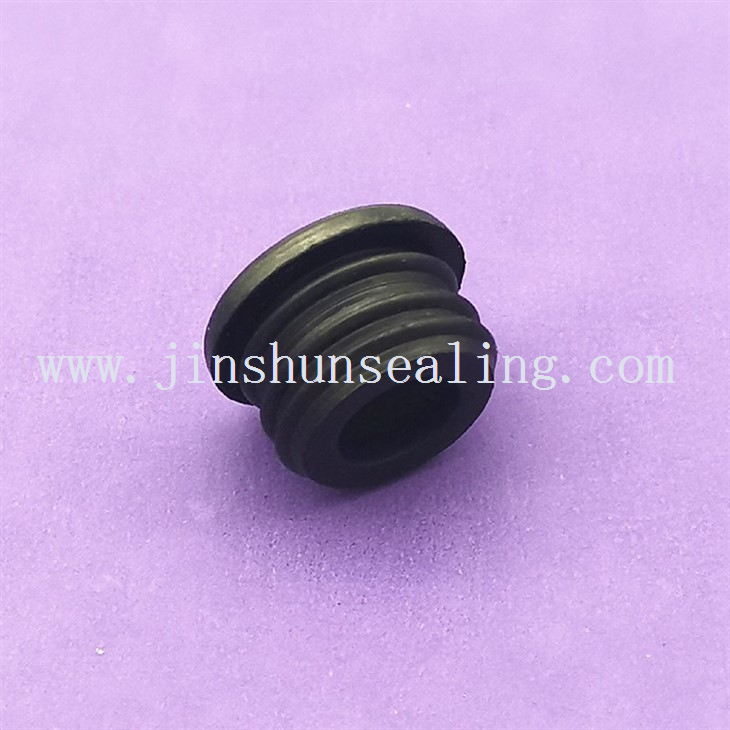

First off, let's talk about what molded rubber seals are. They're custom-made rubber components that are designed to fit specific applications. These seals can be found in all sorts of industries, from automotive and aerospace to consumer goods and industrial machinery. They're used to prevent the leakage of fluids or gases, protect against dust and debris, and yes, reduce noise.
So, how do molded rubber seals actually reduce noise? Well, it all comes down to their material properties and design. Rubber is a viscoelastic material, which means it has both viscous and elastic properties. When a rubber seal is subjected to vibration or sound waves, it can deform and absorb some of the energy. This energy absorption helps to dampen the vibrations and reduce the noise that's transmitted through the seal.
One of the key factors that affects the noise-reduction performance of a molded rubber seal is its hardness. Hardness is measured on the Shore scale, and seals with a lower Shore hardness are generally more flexible and better at absorbing vibrations. For example, a seal with a Shore A hardness of 30-40 will be more effective at reducing noise than a seal with a Shore A hardness of 70-80.
Another important factor is the shape and design of the seal. Seals that are designed to fit tightly around the edges of a component can help to create a barrier that prevents sound waves from passing through. For example, a lip seal or a gasket that forms a tight seal around a flange can be very effective at reducing noise.
In addition to hardness and design, the type of rubber material used in the seal can also have a big impact on its noise-reduction properties. Some rubber materials, such as neoprene, are known for their excellent sound-dampening properties. Neoprene Gasket Seal is a great option if you're looking for a seal that can help reduce noise. Neoprene is a synthetic rubber that's resistant to oil, chemicals, and weathering, making it a popular choice for a wide range of applications.
Another rubber material that's commonly used for noise reduction is EPDM (ethylene propylene diene monomer). EPDM is a versatile rubber that's known for its excellent weather resistance, electrical insulation properties, and low compression set. It's also a good choice for reducing noise, especially in outdoor or high-temperature applications.
Now, let's take a look at some specific applications where molded rubber seals can help reduce noise.
Automotive Industry
In the automotive industry, noise reduction is a major concern. Engine noise, road noise, and wind noise can all make for an unpleasant driving experience. Molded rubber seals are used in a variety of applications to help reduce noise in vehicles. For example, door seals, window seals, and trunk seals can all help to create a barrier that prevents outside noise from entering the cabin. Engine mounts and suspension bushings are also made from rubber, and they help to absorb vibrations and reduce noise from the engine and the road.
Aerospace Industry
In the aerospace industry, noise reduction is also critical. Aircraft engines are extremely noisy, and the noise can be a major source of discomfort for passengers and crew. Molded rubber seals are used in a variety of applications to help reduce noise in aircraft. For example, engine mounts, vibration isolators, and acoustic seals are all used to absorb vibrations and reduce noise from the engines. Seals are also used in the cabin to prevent outside noise from entering, making for a more comfortable flying experience.
Industrial Machinery
In industrial machinery, noise can be a major safety hazard. Excessive noise can cause hearing loss, stress, and other health problems for workers. Molded rubber seals are used in a variety of applications to help reduce noise in industrial machinery. For example, seals are used in pumps, compressors, and motors to prevent the leakage of fluids and gases and to reduce noise from the machinery. Mounting pads and vibration isolators are also made from rubber, and they help to absorb vibrations and reduce noise from the equipment.
Consumer Goods
In consumer goods, noise reduction is also important. For example, in household appliances such as refrigerators, washing machines, and dishwashers, molded rubber seals are used to reduce noise and vibrations. Seals are also used in electronics such as computers and televisions to prevent the leakage of electromagnetic radiation and to reduce noise from the internal components.
So, there you have it! That's a quick overview of the noise-reduction properties of molded rubber seals. As you can see, these little seals can make a big difference when it comes to reducing noise in a variety of applications.
If you're in the market for molded rubber seals and you're looking for a supplier that can provide high-quality products with excellent noise-reduction properties, look no further. We've got a wide range of Neoprene Gasket Seal, Rubber Diaphragm, and Rubber Bumper options to choose from, and we can work with you to customize the seals to meet your specific needs.
Whether you're in the automotive, aerospace, industrial, or consumer goods industry, we've got the expertise and the products to help you reduce noise and improve the performance of your equipment. So, don't hesitate to get in touch with us to discuss your requirements and start the procurement process. Let's work together to find the perfect molded rubber seals for your application!
References
- "Rubber Seals and Gaskets Handbook" by John H. Bickers
- "The Science of Rubber Compounding" by Fred W. Goodrich
- "Noise Control Engineering: Principles and Applications" by Clarence W. Kostenbauder