


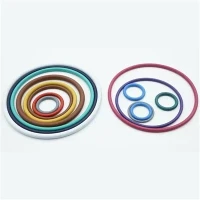

Hey there! As a supplier of O - Rings, I often get asked about the wear - resistance properties of these little but crucial components. So, in this blog, I'm gonna break down what makes O - Rings resistant to wear and why it matters.
First off, let's understand what O - Rings are. They're basically circular seals made from various materials, and they're used in a ton of different applications, from automotive engines to household appliances. Their main job is to prevent the leakage of fluids or gases, and to do that effectively, they need to be able to withstand wear over time.
Material Matters
The material of an O - Ring plays a huge role in its wear - resistance. There are several common materials used to make O - Rings, each with its own set of properties.
Nitrile Rubber (NBR)
Nitrile rubber is one of the most widely used materials for O - Rings. It's known for its excellent resistance to oil and fuel, which makes it a top choice for automotive and industrial applications. When it comes to wear, NBR O - Rings can handle a fair amount of friction. They have good tensile strength and tear resistance, which means they can endure the rubbing and scraping that happens in a sealing environment. For example, in a hydraulic system where there's constant movement of parts, a NBR O - Ring can maintain its shape and sealing ability for a relatively long time.
Fluorocarbon Rubber (FKM)
FKM O - Rings, also known as Viton O - Rings, are another popular option. They're highly resistant to high temperatures and chemicals, which is great for applications in the chemical processing and aerospace industries. In terms of wear, FKM has a high hardness and good abrasion resistance. It can stand up to harsh operating conditions where other materials might break down quickly. For instance, in a high - temperature engine environment, an FKM O - Ring will keep its integrity better than a softer rubber material.


Silicone Rubber
Silicone O - Rings are known for their flexibility and resistance to extreme temperatures. They're often used in food and medical applications because they're non - toxic. However, their wear - resistance isn't as high as NBR or FKM. Silicone is a relatively soft material, so it can wear down faster when exposed to high levels of friction. But in applications where the friction is low and the temperature range is wide, silicone O - Rings are a great choice.
Design and Manufacturing
The design and manufacturing process of O - Rings also impact their wear - resistance.
Cross - Section Shape
The cross - section of an O - Ring can vary. The most common shape is a perfect circle, but there are also square, rectangular, and D - shaped cross - sections. The shape affects how the O - Ring distributes stress when it's compressed. A well - designed cross - section can reduce the pressure on certain areas of the O - Ring, which in turn reduces wear. For example, a square - cross - section O - Ring might be better suited for a specific application where the sealing surface has a flat profile, as it can make better contact and distribute the load more evenly.
Precision Manufacturing
When it comes to manufacturing, precision is key. O - Rings need to be made to exact specifications. Any imperfections in the molding process, like uneven thickness or rough surfaces, can lead to premature wear. High - quality manufacturing ensures that the O - Ring has a smooth surface finish, which reduces friction and wear. At our company, we use advanced manufacturing techniques to produce O - Rings with tight tolerances, ensuring that they meet the highest standards of wear - resistance.
Operating Conditions
The environment in which an O - Ring operates has a significant impact on its wear.
Temperature
Temperature can affect the physical properties of the O - Ring material. High temperatures can cause the rubber to harden and become brittle, which makes it more prone to cracking and wear. On the other hand, low temperatures can make the rubber lose its flexibility, reducing its sealing ability. For example, in a cold climate, an O - Ring that's not designed for low - temperature use might shrink and leak. That's why it's important to choose the right O - Ring material based on the operating temperature range.
Pressure
The pressure applied to an O - Ring can also cause wear. High - pressure applications put more stress on the O - Ring, which can lead to extrusion and deformation. To prevent this, we can use backup rings or choose an O - Ring material with high compression set resistance. For instance, in a high - pressure hydraulic system, a properly selected O - Ring with a backup ring can withstand the pressure without excessive wear.
Fluid Compatibility
The fluid that the O - Ring comes into contact with can either enhance or degrade its wear - resistance. Some fluids can swell or dissolve the rubber material, weakening it and causing it to wear faster. For example, if an NBR O - Ring is used in contact with a solvent that it's not compatible with, the O - Ring will start to break down. That's why it's crucial to select an O - Ring material that's compatible with the fluid in the application.
Importance of Wear - Resistance
The wear - resistance of O - Rings is super important for several reasons.
Reliability
In any application, reliability is key. A worn - out O - Ring can lead to leaks, which can cause equipment failure, safety hazards, and costly downtime. For example, in an automotive engine, a leaking O - Ring can lead to a loss of coolant or oil, which can damage the engine. By using wear - resistant O - Rings, we can ensure that the equipment operates smoothly and reliably for a longer time.
Cost - Effectiveness
Choosing wear - resistant O - Rings can save money in the long run. While they might be more expensive upfront, they last longer and require less frequent replacement. This reduces the overall maintenance cost and downtime. For a manufacturing plant, using high - quality, wear - resistant O - Rings in their production equipment can lead to significant cost savings over time.
Conclusion
So, as you can see, the wear - resistance properties of O - Rings are determined by a combination of factors, including the material, design, manufacturing, and operating conditions. At our company, we understand the importance of providing O - Rings that can withstand wear and tear. We offer a wide range of O - Rings made from different materials to suit various applications. If you're looking for a reliable O - Ring supplier, we've got you covered.
If you're interested in our products, like the Oil Seal 60x80x8, or have any questions about O - Rings and their wear - resistance, don't hesitate to reach out. We're here to help you find the perfect O - Ring for your needs and get you the best value for your money. Contact us today to start a conversation about your O - Ring requirements!
References
- "Sealing Technology Handbook" by Peter Swain
- "Rubber Seals and Their Applications" by John Wilson
- Industry research reports on O - Ring materials and performance