


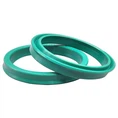
Hey there! As a supplier of rubber bushings, I'm super stoked to walk you through the manufacturing process of these nifty little components. Rubber bushings are widely used in all sorts of industries, from automotive to machinery, because they're great at reducing noise, vibration, and harshness (NVH). So, let's dive right in and see how these essential parts are made.
Raw Materials Selection
First things first, we gotta pick the right raw materials. The main ingredient for rubber bushings is, obviously, rubber. There are different types of rubber out there, each with its own set of properties. For instance, Natural Rubber (NR) is known for its high elasticity and good tear resistance. It's a great choice when you need a bushing that can handle a lot of stretching and bending without getting damaged.
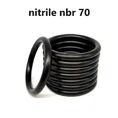
On the other hand, we have Synthetic Rubbers like Styrene-Butadiene Rubber (SBR), which is more affordable and offers good abrasion resistance. It's often used in applications where cost is a big factor, but you still need a bushing that can stand up to wear and tear. Then there's Nitrile Rubber (NBR), which is super resistant to oil and fuel. If your bushing is gonna be in an environment where it'll come into contact with these substances, NBR is the way to go.
We also need to add some other stuff to the rubber to improve its properties. These additives include things like fillers, which make the rubber stronger and more rigid, and vulcanizing agents, which help to cross-link the rubber molecules and give it its final shape and strength.
Mixing the Rubber Compounds
Once we've selected the right raw materials, it's time to mix them together. This is done in a big machine called a mixer. The mixer has two large rotors that rotate in opposite directions, kneading and blending the rubber and additives together.
The mixing process is really important because it determines the quality and consistency of the rubber compound. We have to make sure that all the ingredients are evenly distributed throughout the rubber. If there are any clumps or uneven areas, it can affect the performance of the final product.
The mixing usually takes a while, depending on the type of rubber and the additives we're using. We also have to control the temperature and the speed of the mixer to ensure that the rubber doesn't overheat or burn. Once the mixing is done, we end up with a nice, homogeneous rubber compound that's ready for the next step.
Shaping the Rubber
There are a few different ways to shape the rubber into the form of a bushing. One of the most common methods is extrusion. In extrusion, the rubber compound is forced through a die, which is a specially shaped tool. The die gives the rubber its initial shape, usually a long, continuous tube.
After extrusion, we can cut the tube into the appropriate lengths to make individual bushings. Extrusion is a great method because it's relatively fast and can produce a high volume of bushings. But it's not always suitable for more complex shapes.
For more intricate bushing designs, we use a process called molding. There are different types of molding, such as compression molding and injection molding. In compression molding, the rubber compound is placed in a mold cavity, and then a press applies pressure to squeeze the rubber into the shape of the mold.


Injection molding, on the other hand, is a bit more advanced. It involves injecting the rubber compound into the mold under high pressure. This method is great for producing high-precision bushings with complex shapes. You can check out our Rubber Moulded Components page to see some of the cool stuff we can make with molding techniques.
Vulcanization
After the rubber is shaped into the bushing, the next crucial step is vulcanization. This is where the rubber really gets its strength and durability. Vulcanization is a chemical process that involves heating the rubber in the presence of a vulcanizing agent, usually sulfur.
The heat causes the sulfur atoms to form cross-links between the rubber molecules. These cross-links make the rubber more rigid, elastic, and resistant to heat, chemicals, and wear. The vulcanization process takes place in a vulcanizing press, which applies pressure and heat to the bushings for a specific period of time.
The temperature and time of vulcanization are carefully controlled to ensure that the rubber reaches its optimal properties. If the vulcanization is too short, the rubber won't be fully cross-linked, and it'll be weak and prone to damage. If it's too long, the rubber can become over-vulcanized, which can make it brittle and less flexible.
Finishing and Quality Control
Once the vulcanization is complete, the bushings go through a finishing process. This may involve trimming any excess rubber or flash that was left over from the molding or extrusion process. We also might add some surface treatments to improve the appearance or performance of the bushings.
After finishing, it's time for quality control. We have a bunch of tests and inspections to make sure that the bushings meet our high standards. We check things like the dimensions, hardness, and elasticity of the bushings. We also test them for their resistance to various environmental factors, such as heat, cold, and chemicals.
If a bushing fails any of these tests, it gets sent back for rework or discarded. We don't want to send out any subpar products to our customers.
Other Related Rubber Products
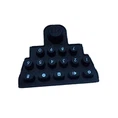
While we're on the topic of rubber components, we also offer other cool products like Rubber Keymat and Suction Cup. These products are made using similar manufacturing processes, but they have their own unique requirements and applications.
Rubber keymats are commonly used in electronic devices, like keyboards and remote controls. They provide a soft and tactile interface for users to interact with the device. Suction cups, on the other hand, are used for a variety of purposes, from holding objects in place to creating a seal.
Wrapping Up and Invitation to Contact
So, there you have it – a detailed look at the manufacturing process of rubber bushings. It's a complex and precise process, but we've got the expertise and the equipment to make high-quality bushings that meet your needs.
Whether you're in the automotive industry, the machinery business, or any other field that requires rubber bushings, we're here to help. If you're interested in our products, or if you have any questions about our manufacturing process, don't hesitate to reach out. We're always happy to chat and discuss your specific requirements.
Let's work together to find the perfect rubber bushing solutions for your projects. Looking forward to hearing from you!
References
- Morrison, I. (2007). Rubber Technology: Compounding, Vulcanization, and Applications. CRC Press.
- Morton, M. (2013). Rubber Technology. Springer.