


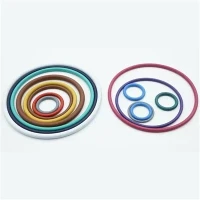

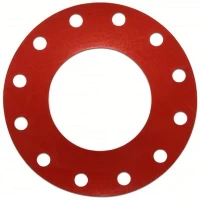
Hey there! As a supplier of Rubber V Rings, I often get asked about the shear strength of these little but crucial components. So, let's dive right in and have a chat about what shear strength means for Rubber V Rings.
First off, what exactly is shear strength? In simple terms, shear strength is the ability of a material to resist forces that cause its internal structure to slide or deform in a parallel direction. When it comes to Rubber V Rings, this property is super important because they are often used in applications where they face lateral or tangential forces.
Imagine a Rubber V Ring in a hydraulic system. It's constantly being pushed and pulled from different directions as the hydraulic fluid moves. The shear strength of the rubber determines how well it can withstand these forces without getting damaged or losing its sealing capabilities. If the shear strength is too low, the ring might start to tear or deform, which can lead to leaks and a whole bunch of other problems.
Now, the shear strength of Rubber V Rings depends on several factors. One of the main factors is the type of rubber used. Different types of rubber have different molecular structures, which directly affect their mechanical properties, including shear strength. For example, nitrile rubber is known for its good resistance to oil and fuel, and it also has a decent shear strength. On the other hand, silicone rubber is more flexible and heat-resistant, but its shear strength might not be as high as nitrile rubber in some cases.
The hardness of the rubber also plays a big role. Generally, harder rubbers tend to have higher shear strength. This is because the molecules in harder rubbers are more tightly packed, making it more difficult for them to slide past each other when a shear force is applied. However, it's a bit of a balancing act. If the rubber is too hard, it might not be able to conform to the surfaces it's supposed to seal, which can also lead to sealing issues.
Another factor is the design of the V Ring itself. The shape and dimensions of the ring can affect how the shear forces are distributed within the rubber. A well-designed V Ring will distribute the forces evenly, reducing the stress on any one part of the ring and increasing its overall shear strength. For instance, a V Ring with a proper taper and thickness can better handle shear forces compared to a poorly designed one.
So, how do we measure the shear strength of Rubber V Rings? There are several testing methods available. One common method is the shear test, where a sample of the rubber is placed between two plates, and a force is applied parallel to the plates to cause shear deformation. The maximum force the sample can withstand before failure is then measured, and this value is used to determine the shear strength.
Now, let's talk about why the shear strength of Rubber V Rings matters in real-world applications. In automotive engines, for example, Rubber V Rings are used to seal various components, such as the crankshaft and camshaft. These components are constantly rotating, and the V Rings need to withstand the shear forces generated by this rotation. If the shear strength is not sufficient, the rings can wear out quickly, leading to oil leaks and reduced engine performance.
In industrial machinery, Rubber V Rings are used in pumps, compressors, and other equipment. They need to seal against high-pressure fluids and gases, and the shear strength helps them maintain a tight seal even under extreme conditions. A failure of a V Ring due to low shear strength can result in costly downtime and repairs.
As a supplier of Rubber V Rings, I understand the importance of providing products with the right shear strength for different applications. That's why we use high-quality rubbers and advanced manufacturing processes to ensure that our V Rings have excellent shear strength and other mechanical properties.
If you're in the market for Rubber V Rings, it's essential to consider the shear strength along with other factors like chemical resistance, temperature resistance, and hardness. You can check out our V Type Seal, V Cup Seal, and V-shaped Sealing Ring products to see if they meet your requirements.
We're always here to help you choose the right Rubber V Rings for your specific needs. Whether you're working on a small DIY project or a large industrial application, we have the expertise and the products to support you. If you have any questions or want to discuss your requirements further, don't hesitate to reach out. We can have a detailed chat about the shear strength and other properties of our Rubber V Rings and how they can benefit your project.
In conclusion, the shear strength of Rubber V Rings is a critical property that determines their performance and durability in various applications. By understanding the factors that affect shear strength and choosing the right V Rings, you can ensure the reliability and efficiency of your equipment. So, if you're looking for high-quality Rubber V Rings with excellent shear strength, give us a shout, and let's start a conversation about your procurement needs.
References:


- "Rubber Technology Handbook" by Werner Hofmann
- "Sealing Technology: A Practical Guide" by John P. Blair