



As a V-Seals supplier, I often receive inquiries from customers about the suitability of our products in corrosive environments. This is a crucial question, as many industrial applications involve exposure to various corrosive substances. In this blog post, I will delve into the factors that determine whether V-Seals can be used in such challenging conditions and provide insights based on our experience and industry knowledge.
Understanding V-Seals
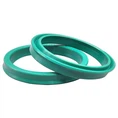
Before discussing their performance in corrosive environments, let's briefly review what V-Seals are. V-Seals, also known as V-shaped sealing rings or V Rings, are a type of mechanical seal designed to prevent the leakage of fluids or gases. They typically consist of a series of V-shaped elastomeric rings stacked together to form a seal. The V shape allows the seal to conform to the surface of the shaft or housing, providing a reliable and effective sealing solution.
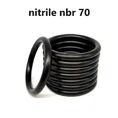
Our company offers a range of V-Seals, including the Spring V Seal, V-shaped Sealing Ring, and V Ring 40. These products are made from high-quality elastomeric materials, such as nitrile rubber (NBR), fluorocarbon rubber (FKM), and ethylene propylene diene monomer (EPDM), which offer different levels of chemical resistance and mechanical properties.


Factors Affecting the Use of V-Seals in Corrosive Environments
The ability of V-Seals to withstand corrosive environments depends on several factors, including the type of corrosive substance, the temperature and pressure conditions, and the material of the seal. Let's take a closer look at each of these factors:
Type of Corrosive Substance
Different corrosive substances have varying levels of aggressiveness towards elastomeric materials. Some common corrosive substances encountered in industrial applications include acids, alkalis, solvents, and chemicals. The chemical resistance of the elastomeric material used in the V-Seal is crucial in determining its performance in the presence of these substances.
For example, nitrile rubber (NBR) is a widely used elastomeric material that offers good resistance to oils, fuels, and some chemicals. However, it has limited resistance to strong acids and alkalis. On the other hand, fluorocarbon rubber (FKM) is highly resistant to a wide range of chemicals, including acids, alkalis, and solvents, making it suitable for use in more aggressive corrosive environments. Ethylene propylene diene monomer (EPDM) is another elastomeric material that offers good resistance to weathering, ozone, and some chemicals, but it has limited resistance to oils and fuels.
Temperature and Pressure Conditions
The temperature and pressure conditions in the application also play a significant role in the performance of V-Seals in corrosive environments. High temperatures can accelerate the chemical reactions between the corrosive substance and the elastomeric material, leading to degradation and loss of sealing performance. Similarly, high pressures can cause the seal to deform or extrude, resulting in leakage.
It is important to select a V-Seal material that can withstand the temperature and pressure conditions of the application. For example, FKM has a high temperature resistance, making it suitable for use in applications where the temperature exceeds 200°C. NBR, on the other hand, has a lower temperature resistance, typically up to 120°C.
Material of the Seal
In addition to the elastomeric material, the design and construction of the V-Seal can also affect its performance in corrosive environments. For example, the use of a spring-loaded design can help to maintain the sealing force and prevent the seal from deforming under pressure. The surface finish of the seal can also affect its resistance to corrosion, as a smooth surface is less likely to accumulate corrosive substances.
Case Studies
To illustrate the performance of our V-Seals in corrosive environments, let's look at some case studies:
Case Study 1: Chemical Processing Industry
A chemical processing plant was experiencing leakage problems with their existing seals in a pipeline carrying a corrosive acid solution. The plant contacted us for a solution, and we recommended our V-shaped Sealing Ring made from FKM. The FKM material offered excellent resistance to the acid solution, and the V-shaped design provided a reliable sealing solution. After installing our V-Seals, the leakage problem was eliminated, and the plant was able to operate more efficiently.
Case Study 2: Oil and Gas Industry
An oil and gas company was looking for a seal solution for a valve in a pipeline carrying a mixture of oil, gas, and water. The valve was exposed to high pressures and temperatures, as well as corrosive substances such as hydrogen sulfide (H2S) and carbon dioxide (CO2). We recommended our Spring V Seal made from FKM, which offered excellent resistance to the corrosive substances and the high-pressure and high-temperature conditions. The spring-loaded design of the seal helped to maintain the sealing force and prevent leakage. After installing our V-Seals, the valve was able to operate reliably, and the company was able to reduce maintenance costs and downtime.
Conclusion
In conclusion, V-Seals can be used in corrosive environments, but it is important to select the right material and design for the specific application. The type of corrosive substance, the temperature and pressure conditions, and the material of the seal are all important factors to consider when choosing a V-Seal. By working with a reputable V-Seal supplier, such as our company, you can ensure that you get the right seal for your application and avoid costly downtime and maintenance.
If you are interested in learning more about our V-Seals or need help selecting the right seal for your application, please contact us. Our team of experts will be happy to assist you and provide you with the information and support you need.
References
- "Elastomers for Sealing Applications," Rubber World, Vol. 232, No. 3, pp. 32-37, 2005.
- "Chemical Resistance of Elastomers," Elastomer Technology Handbook, 3rd Edition, pp. 234-256, 2012.
- "Sealing Technology for Corrosive Environments," Proceedings of the International Conference on Sealing Technology, pp. 123-132, 2018.