



Do unitized seals require lubrication? That's a question I've been asked a bunch of times as a unitized seal supplier. And it's not a simple yes or no answer. So, let's dig into this topic and see what's what.


First off, let's understand what unitized seals are. They're basically single - piece seals that combine different sealing elements into one compact unit. This design makes them super convenient as they're easy to install and maintain. They're used in a wide range of applications, from automotive engines to industrial machinery.
Now, onto the big question: lubrication. Lubrication can play a huge role in the performance and lifespan of seals. In general, there are a few key benefits of lubricating seals.
One major advantage is reducing friction. When a seal is in use, it rubs against other surfaces. This friction can cause wear and tear, which over time, can lead to seal failure. Lubricating the seal creates a thin film between the seal and the mating surface, reducing the amount of direct contact and thus, the friction. Less friction means less heat generation too. And excessive heat can damage the rubber or other materials that seals are made of.
Another benefit is enhancing the sealing performance. A well - lubricated seal can better conform to the surface it's sealing against. It fills in the tiny gaps and irregularities, creating a more effective barrier against leaks. Whether it's keeping fluids in or contaminants out, lubrication helps the seal do its job more efficiently.
But here's the thing, not all unitized seals need lubrication. It depends on a few factors.
The first factor is the application. In some applications, the environment itself provides natural lubrication. For example, in a hydraulic system, the hydraulic fluid acts as a lubricant. The seal is constantly in contact with this fluid, so there's no need for additional lubrication. The same goes for some food - processing equipment where food products or cleaning agents can serve as a lubricant.
The type of material the seal is made of also matters. Some rubber compounds are formulated to have low - friction properties on their own. These self - lubricating materials can perform well without external lubrication. For instance, certain types of PTFE (polytetrafluoroethylene) - coated rubber seals have a very smooth surface that reduces friction significantly.
The operating conditions are another crucial factor. If a unitized seal is operating under low - speed and low - pressure conditions, the friction generated is usually minimal. In such cases, lubrication may not be necessary. However, for high - speed and high - pressure applications, the friction and heat can be substantial, and lubrication becomes more of a must.
Let's talk about the potential drawbacks of using lubrication on unitized seals. One issue is contamination. If the wrong type of lubricant is used, it can react with the seal material, causing swelling, hardening, or degradation. This can actually reduce the seal's lifespan. Also, the lubricant itself can attract dirt and debris, which can damage the seal.
There's also the cost factor. Buying and applying lubricant adds to the overall cost of using the seal. In some cases, the cost of lubrication might not be worth the small performance improvement it provides.
If you've determined that your unitized seal does need lubrication, there are some important things to keep in mind. First, choose the right lubricant. The lubricant should be compatible with the seal material. For example, silicone - based lubricants are great for many rubber seals, but they can cause problems with some plastics. Always check the manufacturer's recommendations.
The method of application is also crucial. You need to apply the lubricant evenly to ensure proper coverage. Too much lubricant can lead to leaks or attract more contaminants, while too little won't provide the desired benefits.
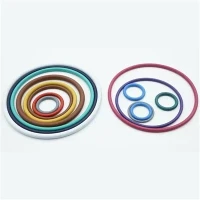
As a unitized seal supplier, I can offer a wide range of high - quality seals to meet your specific needs. If you're looking for flat seals, check out our Flat Rubber Seal Ring. These are great for applications where a simple and effective sealing solution is required.
For more complex sealing needs, our Molded Rubber Seals are a top choice. They're custom - molded to fit specific geometries and can provide excellent sealing performance.
And if you're in the market for diaphragm pump valves, we've got you covered too. Take a look at our Diaphragm Pump Valve.
Whether your unitized seals require lubrication or not, we can provide seals that are reliable and durable. If you're interested in learning more about our products or have any questions regarding seal lubrication, don't hesitate to reach out. We're here to help you make the best decision for your application. Contact us to start a discussion about your procurement needs.
References
- Sealing Technology Handbook, various industry - specific editions
- Rubber and Elastomer Materials for Sealing Applications, industry research papers