



Hey there! I'm a supplier of rubber gaskets, and I often get asked how to determine the correct thickness of a rubber gasket. It's a crucial question because the right thickness can make or break the performance of the gasket in its application. In this blog, I'll share some insights on how you can figure out the perfect thickness for your needs.
Understanding the Basics of Rubber Gasket Thickness
First off, let's talk about why gasket thickness matters. A rubber gasket's main job is to create a seal between two surfaces, preventing the leakage of fluids or gases. If the gasket is too thin, it might not be able to fill the gaps properly, leading to leaks. On the other hand, if it's too thick, it could get compressed too much, losing its elasticity and sealing ability over time.
The thickness of a rubber gasket is usually measured in millimeters (mm) or inches. Common thicknesses range from as thin as 0.5 mm to as thick as 10 mm or more, depending on the application.
Factors Affecting Gasket Thickness
Pressure
One of the most important factors to consider is the pressure that the gasket will be subjected to. Higher pressures generally require thicker gaskets. For example, in a high-pressure hydraulic system, you'll need a thick and sturdy gasket to withstand the force without blowing out. If the pressure is low, like in a simple household plumbing application, a thinner gasket might do the job just fine.
Surface Roughness
The roughness of the surfaces that the gasket will seal against also plays a role. If the surfaces are very rough, a thicker gasket can better conform to the irregularities and create a tight seal. Smooth surfaces, on the other hand, may allow for the use of a thinner gasket.
Temperature
Temperature can affect the performance of a rubber gasket. Extreme temperatures can cause the rubber to expand or contract, which can impact the gasket's sealing ability. In high-temperature applications, a thicker gasket may be needed to maintain its integrity and prevent leaks due to thermal expansion.
Chemical Compatibility
The chemicals that the gasket will come into contact with are another consideration. Some chemicals can degrade rubber over time. If the gasket is exposed to harsh chemicals, a thicker gasket may provide better resistance and a longer service life.
Methods to Determine the Correct Thickness
Manufacturer's Recommendations
A great place to start is by checking the manufacturer's recommendations. Most gasket manufacturers provide guidelines on the appropriate thickness for different applications. They have conducted extensive testing and have a lot of knowledge about how their gaskets perform under various conditions.
Engineering Calculations
For more complex applications, engineering calculations may be necessary. These calculations take into account factors like pressure, temperature, and surface area to determine the optimal gasket thickness. If you're working on a large industrial project, it might be a good idea to consult with an engineer who specializes in gasket applications.
Trial and Error
In some cases, especially for small-scale or less critical applications, you can use a trial-and-error approach. Start with a gasket of a reasonable thickness based on the general guidelines and see how it performs. If there are leaks or other issues, you can adjust the thickness accordingly.
Examples of Different Applications and Gasket Thickness
Automotive Applications
In automotive engines, gaskets are used in various places, such as the cylinder head gasket. The thickness of a cylinder head gasket is typically in the range of 1.2 mm to 2.0 mm. This thickness is chosen to withstand the high pressure and temperature inside the engine while maintaining a proper seal.
Plumbing Applications
For household plumbing, like sealing under a sink drain, a Drain Stopper Gasket might be around 1.5 mm to 3 mm thick. This thickness is sufficient to create a watertight seal between the drain pipe and the sink.
Industrial Applications
In industrial settings, such as PHE Gaskets used in plate heat exchangers, the thickness can vary depending on the size and pressure of the exchanger. Thicker gaskets, around 3 mm to 5 mm, are often used to handle the high pressures and temperature differentials.
Special Considerations for Different Types of Rubber Gaskets
Bumper Gaskets
Bumper Gaskets are used to absorb shock and provide a cushioning effect. The thickness of a bumper gasket depends on the amount of shock it needs to absorb. Thicker gaskets can absorb more energy, so if you're dealing with a high-impact situation, you'll want a thicker gasket.
O-Rings
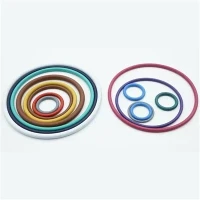
O-rings are a common type of rubber gasket. Their thickness is usually determined by the size of the groove they fit into and the pressure they need to seal against. O-rings come in a variety of standard sizes, and it's important to choose the right size and thickness for your application.
Tips for Measuring and Installing Gaskets
When measuring a gasket, make sure to use a precise measuring tool, like a caliper. This will ensure that you get an accurate measurement and choose the right thickness.
During installation, be careful not to over-compress the gasket. Over-compression can lead to premature failure. Follow the manufacturer's installation instructions and use the correct torque values if you're using bolts or screws to secure the gasket.
Conclusion
Determining the correct thickness of a rubber gasket is a combination of understanding the application requirements, considering the influencing factors, and following the appropriate methods. Whether it's for automotive, plumbing, or industrial applications, getting the thickness right is essential for a proper seal and long-lasting performance.
If you're in the market for rubber gaskets and need help determining the right thickness for your specific needs, don't hesitate to reach out. We're here to assist you in making the best choice for your project.


References
- ASTM International. (20XX). Standards related to rubber gaskets.
- Rubber Manufacturers Association. (20XX). Technical guidelines for rubber gasket applications.