


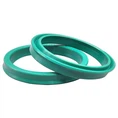
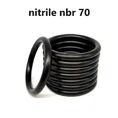

Rubber seals are essential components in a wide range of industries, from automotive and aerospace to plumbing and manufacturing. Their ability to prevent the leakage of fluids and gases is crucial for the proper functioning of various systems. One of the key factors that significantly influences the performance of rubber seals is their hardness. In this blog post, I'll share my insights as a rubber seals supplier on how the hardness of rubber seals affects their performance.
Understanding Rubber Hardness
Before delving into the impact of hardness on performance, it's important to understand how rubber hardness is measured. The most common method is the Shore durometer scale, which measures the resistance of a rubber material to indentation. The scale ranges from 0 to 100, with lower numbers indicating softer rubber and higher numbers indicating harder rubber. For example, a rubber seal with a Shore hardness of 30A is much softer than one with a Shore hardness of 90A.
Sealing Performance
The primary function of a rubber seal is to create a tight seal between two surfaces, preventing the leakage of fluids or gases. The hardness of the rubber plays a critical role in achieving this.
Softer rubber seals (lower Shore hardness) are more flexible and can conform easily to irregular surfaces. This makes them ideal for applications where the mating surfaces are not perfectly smooth or where there is some degree of misalignment. For instance, in automotive engines, softer seals can better adapt to the vibrations and movements of engine components, ensuring a reliable seal. They can also provide a better seal at lower compression forces, which is beneficial in applications where the clamping force is limited.
On the other hand, harder rubber seals (higher Shore hardness) are less likely to deform under pressure. This makes them suitable for high - pressure applications. In hydraulic systems, where pressures can reach several thousand pounds per square inch, a hard rubber seal can maintain its shape and integrity, preventing fluid leakage. However, harder seals may require higher compression forces to create an effective seal, and they may not conform as well to uneven surfaces as softer seals.
Wear Resistance
Wear resistance is another important aspect of rubber seal performance. Harder rubber seals generally have better wear resistance than softer ones. In applications where the seal is subject to constant friction, such as in reciprocating pumps or sliding doors, a harder rubber seal will last longer. The increased hardness makes the seal more resistant to abrasion, cutting, and tearing.
For example, in a Diaphragm Pump Valve, the seal is constantly moving back and forth, rubbing against other components. A hard rubber seal can withstand this repeated friction without significant wear, ensuring the long - term performance of the pump.
Softer rubber seals, while less wear - resistant, may be preferred in some cases where the application requires a certain degree of flexibility and where the wear rate is not a major concern. For example, in a low - duty cycle application where the seal is not in constant motion, a softer seal may be sufficient.
Chemical Resistance
The hardness of rubber can also influence its chemical resistance. Generally, harder rubber compounds can offer better resistance to certain chemicals. This is because the molecular structure of harder rubbers is more tightly packed, making it more difficult for chemical agents to penetrate the rubber.
In industrial applications where the seal comes into contact with aggressive chemicals, such as in chemical processing plants, a harder rubber seal may be a better choice. However, it's important to note that chemical resistance also depends on the specific type of rubber compound used. Different rubber materials, such as nitrile rubber, silicone rubber, and fluorocarbon rubber, have different levels of chemical resistance regardless of their hardness.
Temperature Resistance
Temperature can have a significant impact on the performance of rubber seals, and hardness plays a role in this as well. Harder rubber seals tend to have better dimensional stability at high temperatures. They are less likely to soften and deform under heat, which is crucial in applications where the seal is exposed to elevated temperatures, such as in engine compartments or industrial ovens.


Conversely, at low temperatures, harder rubber seals may become brittle and lose their flexibility. Softer rubber seals are generally more flexible at low temperatures and can maintain their sealing performance in cold environments. For example, in refrigeration systems, a softer rubber seal can still provide an effective seal even at sub - zero temperatures.
Compression Set
Compression set is the permanent deformation of a rubber seal after it has been compressed for a period of time. A lower compression set is desirable as it means the seal will return to its original shape after the compression force is removed, maintaining its sealing performance.
Softer rubber seals typically have a higher compression set compared to harder ones. This is because the softer rubber is more easily deformed and may not fully recover its shape. In applications where the seal is constantly under compression, such as in a gasket for a pressure vessel, a harder rubber seal with a lower compression set may be required to ensure long - term sealing performance.
Applications and Recommendations
Based on the above factors, different applications require rubber seals of different hardness.
- Automotive Industry: In automotive engines, softer rubber seals are often used for gaskets and O - rings. They can conform to the irregular surfaces of engine components and handle the vibrations. For example, a Diaphragm Rubber Seal in a fuel injection system may be made of a relatively soft rubber to ensure a good seal. However, in high - pressure brake lines, harder rubber seals are preferred to withstand the high pressures.
- Plumbing Industry: In plumbing applications, softer rubber seals are commonly used for faucets and pipe connections. They can easily adapt to the uneven surfaces of pipes and fittings, preventing water leakage. For example, a rubber washer in a sink faucet is usually made of a soft rubber compound.
- Aerospace Industry: Aerospace applications demand high - performance seals. Harder rubber seals are often used in hydraulic systems and high - pressure fuel lines to ensure reliability under extreme conditions.
As a rubber seals supplier, I recommend carefully considering the specific requirements of your application when choosing the hardness of the rubber seal. Factors such as pressure, temperature, chemical exposure, and surface conditions should all be taken into account.
Contact for Procurement
If you are in need of high - quality rubber seals, I invite you to reach out for a detailed discussion. Our team of experts can help you select the most suitable rubber seal based on your specific application requirements. Whether you need a Rubber Draught Seal for a building project or a specialized diaphragm seal for an industrial pump, we have the expertise and products to meet your needs. Contact us today to start the procurement process and ensure the optimal performance of your systems.
References
- "Rubber Technology Handbook" by Werner Hofmann
- "Sealing Technology" by John Neale
- Industry research reports on rubber seal applications in various sectors.