


Hey there! As a supplier of molded rubber seals, I often get asked about how to calculate the sealing force of these nifty little components. It's a crucial aspect, especially when you're looking to ensure a proper and long - lasting seal in various applications. So, let's dive right in and break down the process.
Understanding the Basics of Sealing Force
First off, what exactly is sealing force? Well, it's the force that the rubber seal exerts on the mating surfaces to prevent the leakage of fluids or gases. Think of it as the muscle that keeps everything in place and stops any unwanted stuff from getting out or in.
The sealing force depends on a bunch of factors. The material of the rubber is a biggie. Different rubber compounds have different properties like hardness, elasticity, and compression set. For instance, a softer rubber will deform more easily and might provide a better initial seal, but it could also have a higher compression set over time. On the other hand, a harder rubber might need more force to deform but could maintain its shape better in the long run.
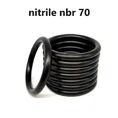
The geometry of the seal also plays a huge role. Whether it's an O - ring, a gasket, or a more complex custom - molded shape, the size, cross - section, and overall design affect how the seal will interact with the mating surfaces. A larger cross - section might require more force to compress, but it could also provide a larger contact area for a better seal.
The Role of Compression
Compression is at the heart of calculating the sealing force. When you install a rubber seal, you're essentially squeezing it between two surfaces. The amount of compression you apply is measured as a percentage of the original cross - sectional thickness of the seal.
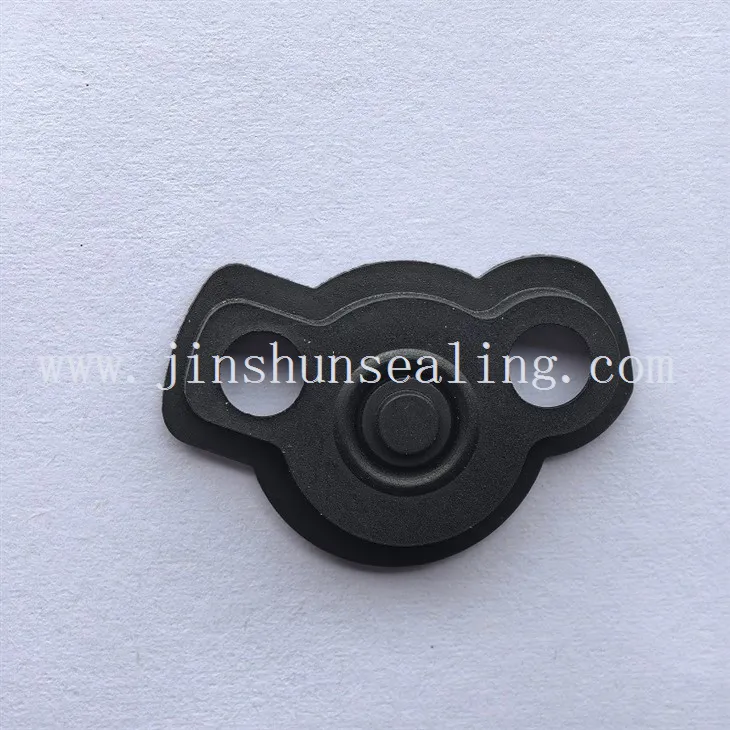

Let's say you have an O - ring with an original cross - sectional thickness of 10 mm. If you compress it to a thickness of 8 mm, the compression is 20% (since (10 - 8)/10 = 0.2 or 20%). The relationship between compression and sealing force is pretty straightforward in theory: the more you compress the seal, the higher the sealing force. But there's a catch. If you over - compress the seal, you can damage it, cause excessive wear, or even lead to a loss of sealing ability over time.
To calculate the force required for a certain amount of compression, you need to know the modulus of elasticity of the rubber material. The modulus of elasticity is a measure of how stiff the material is. It's usually given in units of pressure (like psi or MPa). You can find the modulus of elasticity in the material data sheets provided by the rubber manufacturer.
The formula for the force due to compression is F = k * Δx, where F is the force, k is the spring constant of the rubber (which is related to the modulus of elasticity), and Δx is the change in thickness due to compression. However, in real - world applications, this formula is often a bit more complex because rubber is a non - linear material, especially at higher levels of compression.
Contact Pressure and Sealing Force
Another important concept is contact pressure. Contact pressure is the pressure that the seal exerts on the mating surfaces. It's related to the sealing force but also depends on the contact area between the seal and the surfaces.
The contact pressure needs to be high enough to prevent leakage but not so high that it causes damage to the seal or the mating parts. To calculate the contact pressure, you divide the sealing force by the contact area. For example, if the sealing force is 100 N and the contact area is 10 cm², the contact pressure is 10 N/cm².
You can estimate the contact area based on the geometry of the seal. For an O - ring, the contact area is usually a circular band around the circumference of the O - ring. For gaskets, it's the area of the flat surface that makes contact with the mating parts.
Factors Affecting Sealing Force in Real - World Applications
In real - world scenarios, there are other factors that can affect the sealing force. Temperature is a major one. Rubber expands and contracts with changes in temperature. At high temperatures, the rubber becomes softer and more compliant, which can reduce the sealing force. At low temperatures, the rubber becomes stiffer, and you might need more force to achieve the same level of compression.
Fluid compatibility is also crucial. If the rubber is not compatible with the fluid it's sealing, it can swell, shrink, or degrade over time. This can change the dimensions and properties of the seal, which in turn affects the sealing force.
Vibration and dynamic loading can also have an impact. If the seal is subjected to vibrations or dynamic forces, the sealing force can fluctuate. This can lead to premature wear and a loss of sealing ability.
Using Our Products for Optimal Sealing Force
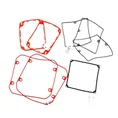
As a supplier of molded rubber seals, we offer a wide range of products that are designed to provide optimal sealing force in different applications. Our Rubber Draught Seal is perfect for applications where you need to prevent air leakage, like in doors and windows. It's made from high - quality rubber compounds that are designed to maintain their shape and sealing force over time.
Our Rubber Diaphragm is another great option. Diaphragms are used in various applications, such as pumps and valves, where they need to provide a flexible yet reliable seal. We can customize the diaphragm to meet your specific requirements in terms of size, shape, and material properties to ensure the right sealing force.
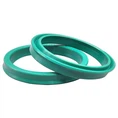
And if you're looking for a more heavy - duty solution, our Unitized Seal is the way to go. Unitized seals are designed to provide a high - performance seal in demanding applications, like automotive engines and industrial machinery. They're engineered to withstand high pressures, temperatures, and dynamic loads while maintaining a consistent sealing force.
How We Can Help You Calculate Sealing Force
We understand that calculating the sealing force can be a complex process, especially if you're not familiar with the technical details. That's why our team of experts is here to help. We can assist you in selecting the right rubber material and seal design for your application. We'll take into account all the factors we've discussed, like compression, contact pressure, temperature, and fluid compatibility.
We can also provide you with detailed technical data and simulations to help you understand how the seal will perform under different conditions. Whether you're a small - scale manufacturer or a large industrial company, we're committed to providing you with the best - in - class molded rubber seals and the support you need to ensure a successful sealing solution.
Time to Connect and Discuss
If you're in the market for molded rubber seals and want to learn more about calculating the sealing force for your specific application, don't hesitate to reach out. We're always ready to have a chat, answer your questions, and help you find the perfect seal for your needs. Whether it's a simple O - ring or a complex custom - molded part, we've got you covered.
References
- "Rubber Technology Handbook" by Werner Hofmann
- "Sealing Technology" by John H. Bickford
- Material data sheets from rubber manufacturers