


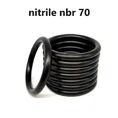


As a supplier of NBR O - rings, I am often asked about the chemical resistance of these essential sealing components. NBR, or Nitrile Butadiene Rubber, is one of the most widely used elastomers in the O - ring industry due to its excellent balance of properties, especially its chemical resistance.
Understanding NBR O - rings
NBR O - rings are made from a synthetic rubber compound that is a copolymer of acrylonitrile and butadiene. The acrylonitrile content in the NBR can vary, typically ranging from 18% to 50%. This variation affects the physical and chemical properties of the O - ring, with higher acrylonitrile content generally leading to better oil and fuel resistance, but reduced low - temperature flexibility.
Chemical Resistance of NBR O - rings
- Resistance to Oils and Fuels
NBR O - rings are renowned for their outstanding resistance to a wide range of oils and fuels. They can withstand contact with mineral oils, such as automotive engine oils, hydraulic oils, and gear oils. In engines, NBR O - rings are used to seal oil passages, preventing leaks and ensuring the proper lubrication of engine components. The high acrylonitrile content in NBR gives it a polar nature, which makes it less likely to swell or be degraded by non - polar oils.
When it comes to fuels, NBR O - rings can handle gasoline, diesel, and some blends of biofuels. However, as biofuel blends become more prevalent and contain higher percentages of ethanol or other additives, the chemical resistance of NBR needs to be carefully evaluated. For example, higher ethanol content can cause NBR to swell, which may lead to sealing failure over time. But for traditional fuel applications, NBR remains a reliable choice.
If you are looking for an NBR O - ring for oil or fuel sealing applications, our 30mm O Ring Seal is a great option. It has been tested and proven to provide excellent sealing performance in these environments.
-
Resistance to Aliphatic Hydrocarbons
Aliphatic hydrocarbons are a group of organic compounds that include alkanes, alkenes, and alkynes. NBR O - rings show good resistance to many aliphatic hydrocarbons. They can be used in applications where they come into contact with solvents like hexane, heptane, and cyclohexane. This makes NBR suitable for the chemical and petrochemical industries, where these solvents are commonly handled. -
Resistance to Water and Aqueous Solutions
NBR has moderate resistance to water and some aqueous solutions. In general, it can withstand short - term exposure to fresh water without significant degradation. However, long - term immersion in water may cause some swelling and loss of physical properties. When it comes to aqueous solutions, the chemical resistance of NBR depends on the nature of the dissolved substances. For example, NBR is relatively resistant to mild acids and alkalis at low concentrations. But strong acids and alkalis can cause chemical degradation of NBR. -
Limitations in Chemical Resistance
Despite its many advantages, NBR has some limitations in terms of chemical resistance. It is not suitable for use in contact with highly polar solvents such as ketones (e.g., acetone), esters, and aromatic hydrocarbons (e.g., benzene, toluene). These solvents can cause NBR to swell rapidly, leading to a loss of physical integrity and sealing ability. Additionally, NBR is also sensitive to ozone, which can cause cracking and degradation of the rubber over time.
Impact of Acrylonitrile Content on Chemical Resistance
As mentioned earlier, the acrylonitrile content in NBR plays a crucial role in its chemical resistance. Lower acrylonitrile content (around 18% - 25%) NBR compounds offer better low - temperature flexibility and some resistance to polar solvents, but they have relatively poor resistance to oils and fuels. On the other hand, high acrylonitrile content (45% - 50%) NBR compounds have excellent oil and fuel resistance but are stiffer at low temperatures and may have reduced resistance to some polar environments.
For applications that require a balance between oil resistance and low - temperature flexibility, an NBR with an acrylonitrile content of around 33% - 40% is often a good choice. Our NBR75 product is formulated with an optimized acrylonitrile content to provide a good combination of chemical and physical properties.
Applications Based on Chemical Resistance
-
Automotive Industry
In the automotive sector, NBR O - rings are used in a variety of applications. They are found in fuel systems, including fuel injectors, fuel pumps, and fuel filters, where they provide a reliable seal against gasoline or diesel. NBR O - rings are also used in the engine lubrication system to prevent oil leaks. For example, they are used to seal the oil pan, valve covers, and engine gaskets. -
Hydraulic Systems
Hydraulic systems rely on NBR O - rings to seal cylinders, valves, and fittings. The excellent oil resistance of NBR makes it ideal for these applications, where the O - rings are constantly in contact with hydraulic oil under high pressure. NBR O - rings help to maintain the integrity of the hydraulic system, preventing fluid leaks and ensuring efficient operation. -
Industrial Equipment
In industrial settings, NBR O - rings are used in a wide range of equipment, such as pumps, compressors, and valves. They can seal against various fluids, including oils, water, and some chemicals, depending on the specific application requirements. For example, in a chemical processing plant, NBR O - rings may be used to seal connections in pipes carrying mild chemical solutions.

NBR CORD for Custom O - ring Applications
In addition to pre - formed O - rings, we also offer NBR CORD. NBR cord is a convenient option for customers who need to create custom - sized O - rings. The cord can be cut to the desired length, and the ends can be joined to form a complete O - ring. This is particularly useful for applications where standard O - ring sizes are not available or where a specific shape is required.
Conclusion
The chemical resistance of NBR O - rings is a key factor in their widespread use across various industries. Their ability to withstand oils, fuels, and some chemicals makes them a reliable choice for many sealing applications. However, it is essential to carefully consider the specific chemical environment in which the O - ring will be used and select the appropriate NBR compound with the right acrylonitrile content.
If you are in the market for high - quality NBR O - rings or NBR cord, we are here to help. Our products are manufactured to the highest standards, ensuring excellent chemical resistance and sealing performance. Whether you need a standard size O - ring or a custom - made solution, we can provide you with the right product for your application. Contact us today to discuss your procurement needs and we can work together to find the best sealing solutions for your projects.
References
- "Elastomers and Their Compounds" by O. Larsen
- "Sealing Technology Handbook" by Tom Irvine
- Technical data sheets from major NBR O - ring manufacturers