


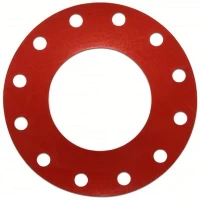

Hey there! As a supplier of Rubber V Rings, I often get asked about the density of these nifty little components. So, I thought I'd take some time to break it down for you in this blog post.
First off, let's talk about what density actually means. In simple terms, density is the mass of an object divided by its volume. For Rubber V Rings, density plays a crucial role in determining their performance and suitability for different applications.
The density of rubber can vary widely depending on several factors. One of the main factors is the type of rubber used. There are many different types of rubber, each with its own unique properties and density. For example, natural rubber typically has a density ranging from about 0.91 to 0.93 g/cm³. Synthetic rubbers, on the other hand, can have a wider range of densities. Neoprene, a popular synthetic rubber, has a density of around 1.23 g/cm³, while nitrile rubber has a density that usually falls between 0.95 and 1.2 g/cm³.
Another factor that affects the density of Rubber V Rings is the additives and fillers used during the manufacturing process. Manufacturers often add various substances to rubber to enhance its properties. For instance, adding carbon black can increase the rubber's strength and abrasion resistance, but it can also increase its density. Other additives like plasticizers can decrease the density by making the rubber more flexible.
The manufacturing process itself can also influence the density of Rubber V Rings. The way the rubber is mixed, molded, and cured can all have an impact. If the rubber is not mixed properly, there may be variations in density throughout the ring. Similarly, the curing process, which involves heating the rubber to a specific temperature for a certain period, can affect the final density.
Now, why does the density of Rubber V Rings matter? Well, it has a direct impact on their performance. A higher density rubber may be more durable and resistant to wear and tear, making it suitable for applications where the ring will be subjected to high pressure or friction. For example, in industrial machinery where there are moving parts, a high - density Rubber V Ring can provide a better seal and last longer.
On the other hand, a lower density rubber may be more flexible and have better shock - absorbing properties. This can be beneficial in applications where the ring needs to conform to irregular surfaces or where it will be exposed to vibrations. For instance, in automotive applications, a lower density Rubber V Ring may be used to seal components that experience some level of movement.
As a supplier, I understand that choosing the right density of Rubber V Rings is crucial for our customers. That's why we offer a wide range of options to meet different needs. Whether you need a high - density ring for heavy - duty industrial use or a low - density one for a more delicate application, we've got you covered.
If you're in the market for Rubber V Rings, it's important to consider the specific requirements of your application. Think about the pressure, temperature, and chemical environment the ring will be exposed to. Also, consider the amount of movement or vibration it will experience. Based on these factors, you can determine the most appropriate density for your needs.
We also offer other types of V seals that you might be interested in. Check out our V Cup Seal, Rubber V Seal, and Spring V Seal options. These seals have their own unique features and can be used in a variety of applications.
If you have any questions about the density of Rubber V Rings or need help choosing the right product for your application, don't hesitate to reach out. We're here to assist you in making the best decision for your project. Our team of experts can provide you with detailed information and guidance to ensure you get the perfect Rubber V Rings for your needs.
In conclusion, the density of Rubber V Rings is an important factor that can significantly affect their performance. By understanding the factors that influence density and how it relates to your application, you can make an informed decision when purchasing these seals. Whether you're in the industrial, automotive, or any other sector, we're confident that we can provide you with high - quality Rubber V Rings that meet your requirements. So, why wait? Contact us today to start discussing your procurement needs and let's find the perfect solution together.
References:


- "Rubber Technology: Compounding, Mixing, and Vulcanization" by J. van Ooij
- "Handbook of Elastomers" edited by I. Franta