


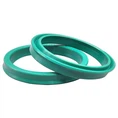
V - seals play a crucial role in various mechanical and industrial applications, serving as essential components to prevent leakage of fluids and contamination by external particles. As a V - seals supplier, I have in - depth knowledge about the materials used in manufacturing these versatile seals. In this blog, I will explore the different materials commonly employed to make V - seals and discuss their unique properties and applications.
Natural Rubber
Natural rubber, also known as elastomer NR, is one of the oldest and most widely used materials for V - seals. It is derived from the milky latex of rubber trees, mainly the Hevea brasiliensis. This material offers several advantages. Firstly, it has excellent elasticity, which means it can stretch and return to its original shape easily. This property allows V - seals made of natural rubber to fit snugly around shafts and other components, providing an effective sealing solution.
Secondly, natural rubber has good abrasion resistance in normal operating conditions. It can withstand moderate levels of friction without significant wear, which is important for long - term sealing performance. Additionally, it has a relatively low cost of production compared to some synthetic materials, making it a cost - effective option for many applications.
However, natural rubber also has some limitations. It is not resistant to oils, solvents, and chemicals. Exposure to these substances can cause the rubber to swell, degrade, and lose its sealing properties. Moreover, it has poor resistance to high temperatures and ozone. In high - temperature environments, natural rubber can become soft and lose its shape, while ozone can cause cracking on the surface of the seal over time. Natural rubber V - seals are commonly used in applications where the environment is relatively clean and free from harsh chemicals, such as in some low - pressure water systems.
Nitrile Rubber (NBR)
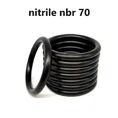
Nitrile rubber, or NBR, is a synthetic rubber that is widely used in V - seal manufacturing. It is a copolymer of butadiene and acrylonitrile. One of the main advantages of NBR is its excellent oil resistance. It can withstand contact with various types of oils, including mineral oils, synthetic oils, and hydraulic oils, without significant swelling or degradation. This makes it an ideal material for V - seals used in automotive engines, transmissions, and hydraulic systems.
Nitrile rubber also has good abrasion resistance and mechanical strength. It can maintain its shape and performance even under high - pressure and high - speed conditions. Additionally, it has a wide temperature range of use, typically from - 40°C to 120°C, depending on the specific formulation. This allows NBR V - seals to be used in a variety of environments, from cold storage facilities to hot industrial processes.
However, NBR has limited resistance to certain chemicals, such as polar solvents and strong oxidizing agents. It also has relatively poor resistance to ozone compared to some other synthetic rubbers. Despite these limitations, NBR remains one of the most popular materials for V - seals due to its excellent oil - sealing properties and cost - effectiveness. You can find more about nitrile rubber V Ring Rubber Seals, which often utilize NBR in their design.
Fluoroelastomers (FKM)
Fluoroelastomers, also known as FKM, are a family of synthetic rubbers that offer exceptional resistance to heat, chemicals, and oils. They are composed of carbon, fluorine, and sometimes hydrogen atoms, which give them their unique properties. FKM V - seals can operate at extremely high temperatures, with some formulations capable of withstanding temperatures up to 300°C. This makes them suitable for applications in high - temperature environments, such as in aerospace engines, chemical processing plants, and foundries.
In addition to high - temperature resistance, FKM has excellent chemical resistance. It can withstand contact with a wide range of chemicals, including acids, bases, solvents, and fuels. This resistance makes it an ideal choice for sealing applications in the chemical and petrochemical industries.
However, fluoroelastomers are relatively expensive compared to other rubber materials. The manufacturing process is also more complex, which increases the cost of production. Furthermore, their low - temperature flexibility is limited, and they can become brittle at very cold temperatures. For more information on FKM - based V - seals, you can refer to V Seal 101.
Silicone Rubber
Silicone rubber is another material used for V - seals. It is known for its excellent high - temperature and low - temperature properties. Silicone can operate at temperatures ranging from - 60°C to 230°C, making it suitable for applications in extreme temperature environments, such as in aerospace, automotive, and food processing industries.
Silicone rubber also has good electrical insulation properties, which is useful in applications where electrical isolation is required. It is resistant to ozone, weathering, and UV radiation, making it a durable choice for outdoor applications. Additionally, silicone is non - toxic and odorless, which makes it suitable for use in food and medical applications.
However, silicone rubber has relatively poor tear strength and abrasion resistance compared to other rubber materials. It is also not resistant to some solvents and fuels. These limitations restrict its use in applications where high mechanical stress and exposure to harsh chemicals are common.


Polyurethane (PU)
Polyurethane is a versatile material that is used in the production of V - seals. It offers excellent abrasion resistance, high mechanical strength, and good elasticity. These properties make polyurethane V - seals suitable for applications where there is high - speed movement and significant friction, such as in hydraulic cylinders and pneumatic systems.
Polyurethane also has good oil and chemical resistance, although its resistance may vary depending on the specific formulation. It can withstand contact with many common oils and some mild chemicals. Additionally, it has a relatively long service life, which reduces the need for frequent replacement.
However, polyurethane is sensitive to hydrolysis in high - humidity environments and at elevated temperatures. Exposure to water can cause the material to degrade, leading to a loss of its mechanical properties.
Selection of Materials for V - Seals
When selecting the material for V - seals, several factors need to be considered. The first is the operating environment, including temperature, pressure, and the presence of chemicals. For example, in high - temperature and chemical - rich environments, fluoroelastomers may be the best choice, while in normal - temperature and oil - based systems, nitrile rubber may be sufficient.
The mechanical requirements of the application, such as dynamic or static sealing, speed, and abrasion, also play a crucial role. Applications with high - speed movement and significant friction require materials with high abrasion resistance, such as polyurethane.
Cost is another important factor. While high - performance materials like fluoroelastomers offer excellent properties, they are also more expensive. Therefore, a balance needs to be struck between performance and cost.
As a V - seals supplier, I can provide you with a wide range of V - seals made from different materials to meet your specific needs. Whether you need V Ring 40 or other types of V - seals, I am here to assist you.
If you are in the market for high - quality V - seals, I encourage you to reach out for a procurement discussion. I can help you select the most suitable material for your application and provide you with competitive pricing and reliable product delivery.
References
- Boyle, John M. Elastomers and Their Compounds. Springer Science & Business Media, 2009.
- Morton, Maurice. Rubber Technology. Springer Science & Business Media, 2007.
- Rodgers, Penny. Polymeric Materials: Science and Engineering. Prentice Hall, 2004.