


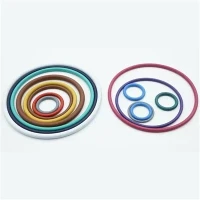

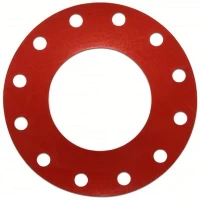
Do rubber bushings have a specific coefficient of friction? This is a question that often arises in the engineering and automotive industries, where rubber bushings are widely used. As a supplier of rubber bushings, I have encountered this query numerous times from clients and industry professionals. In this blog post, I will delve into the concept of the coefficient of friction for rubber bushings, exploring its significance, influencing factors, and practical implications.
Understanding the Coefficient of Friction
The coefficient of friction is a fundamental concept in tribology, the science of friction, wear, and lubrication. It is defined as the ratio of the force of friction between two surfaces in contact to the normal force pressing the surfaces together. In the case of rubber bushings, the coefficient of friction determines how easily the bushing slides or rotates against the mating surfaces, such as metal shafts or housings.
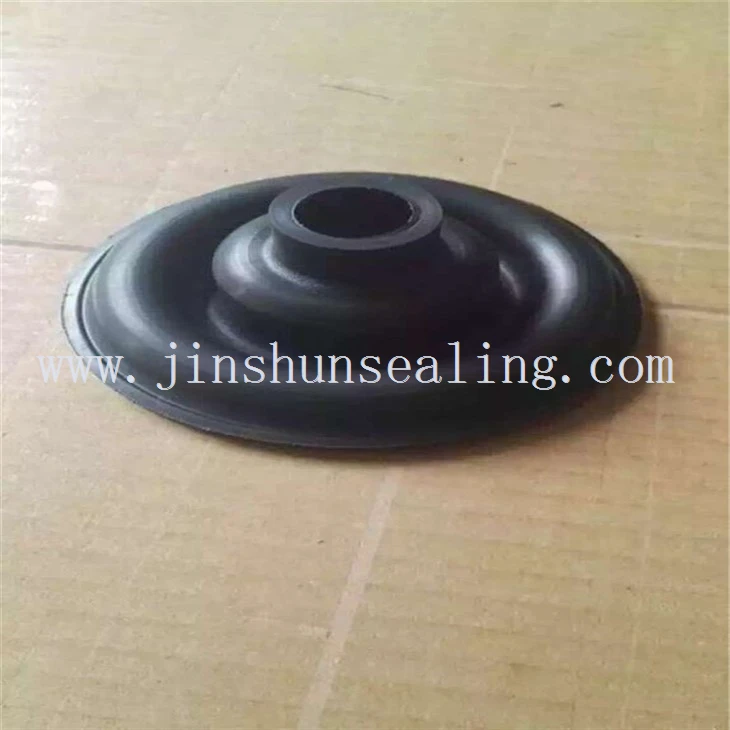

There are two main types of coefficients of friction: static and kinetic. The static coefficient of friction (μs) is the ratio of the maximum force required to initiate motion between two surfaces at rest to the normal force. Once the surfaces start moving, the kinetic coefficient of friction (μk) comes into play, which is the ratio of the force required to maintain a constant velocity between the surfaces to the normal force. Generally, the static coefficient of friction is higher than the kinetic coefficient of friction, meaning it takes more force to start an object moving than to keep it moving.
The Coefficient of Friction for Rubber Bushings
Rubber is a unique material with distinct tribological properties. Unlike rigid materials such as metals, rubber is highly elastic and can deform significantly under load. This elasticity allows rubber bushings to conform to the shape of the mating surfaces, increasing the contact area and influencing the coefficient of friction.
The coefficient of friction for rubber bushings is not a fixed value but rather depends on several factors, including:
- Rubber Material: Different types of rubber compounds have different coefficients of friction. For example, natural rubber typically has a higher coefficient of friction than synthetic rubbers such as neoprene or silicone. The hardness of the rubber also plays a role, with softer rubbers generally having higher coefficients of friction due to their ability to conform more easily to the mating surfaces.
- Surface Roughness: The roughness of the mating surfaces can significantly affect the coefficient of friction. A smoother surface will generally result in a lower coefficient of friction, while a rougher surface can increase the friction due to increased interlocking between the rubber and the surface.
- Load and Pressure: The normal force applied to the rubber bushing can influence the coefficient of friction. At low loads, the coefficient of friction may be relatively high due to the rubber's ability to conform to the surface irregularities. However, as the load increases, the rubber may deform more, reducing the contact area and potentially decreasing the coefficient of friction.
- Temperature and Environment: The temperature and environmental conditions can also affect the coefficient of friction. Rubber is sensitive to temperature changes, and its properties can vary significantly with temperature. For example, at high temperatures, the rubber may become softer and more viscous, which can increase the coefficient of friction. Additionally, the presence of contaminants such as dirt, oil, or moisture can also affect the friction between the rubber and the mating surfaces.
Measuring the Coefficient of Friction for Rubber Bushings
Measuring the coefficient of friction for rubber bushings can be challenging due to the complex nature of rubber materials and the influence of various factors. There are several methods available for measuring the coefficient of friction, including:
- Sliding Friction Tests: In these tests, a rubber sample is placed in contact with a mating surface, and a force is applied to slide the sample across the surface. The force required to initiate and maintain the sliding motion is measured, and the coefficient of friction is calculated based on the ratio of the frictional force to the normal force.
- Rotational Friction Tests: For rubber bushings used in rotational applications, rotational friction tests can be performed. In these tests, the bushing is mounted on a shaft, and a torque is applied to rotate the shaft. The torque required to initiate and maintain the rotation is measured, and the coefficient of friction is calculated based on the relationship between the torque, the normal force, and the radius of the bushing.
- Dynamic Friction Tests: These tests are designed to simulate real-world operating conditions, where the rubber bushing may be subjected to dynamic loads and vibrations. Dynamic friction tests can provide more accurate information about the coefficient of friction under realistic conditions.
Practical Implications of the Coefficient of Friction for Rubber Bushings
The coefficient of friction for rubber bushings has several practical implications in various applications, including:
- Automotive Suspension Systems: In automotive suspension systems, rubber bushings are used to isolate vibrations and provide a smooth ride. The coefficient of friction between the bushing and the mating components can affect the handling and performance of the vehicle. A higher coefficient of friction can provide better stability and control, but it may also increase the energy consumption and wear of the components.
- Industrial Machinery: Rubber bushings are widely used in industrial machinery to reduce noise, vibration, and shock. The coefficient of friction can influence the efficiency and reliability of the machinery. For example, in conveyor systems, a proper coefficient of friction between the bushing and the conveyor rollers is essential to ensure smooth operation and prevent slippage.
- Electrical and Electronic Devices: Rubber bushings are also used in electrical and electronic devices to provide insulation and protection. The coefficient of friction can affect the assembly and disassembly of the components. A lower coefficient of friction can make it easier to install and remove the bushings, while a higher coefficient of friction can provide better retention and stability.
Our Offerings as a Rubber Bushings Supplier
As a leading supplier of rubber bushings, we understand the importance of the coefficient of friction in various applications. We offer a wide range of rubber bushings made from different materials and with different hardness levels to meet the specific requirements of our customers. Our products are designed and manufactured using advanced technology and high-quality materials to ensure consistent performance and reliability.
In addition to rubber bushings, we also provide other Industrial Rubber Parts, such as Rubber Keymat and Epdm Components. Our team of experts is available to provide technical support and assistance to help you select the right products for your applications.
If you are interested in learning more about our rubber bushings or other rubber products, or if you have any questions or concerns about the coefficient of friction, please do not hesitate to contact us. We are committed to providing our customers with the best products and services, and we look forward to the opportunity to work with you.
References
- Bowden, F. P., & Tabor, D. (1950). The Friction and Lubrication of Solids. Oxford University Press.
- Bhushan, B. (2013). Tribology and Mechanics of Magnetic Storage Devices. Springer Science & Business Media.
- Kragelsky, I. V., Alisin, V. F., & Kombalov, M. V. (1982). Wear of Materials. Pergamon Press.