


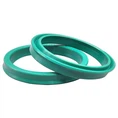
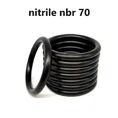

Nitrile oil seals are a staple in various industrial applications, known for their versatility and cost - effectiveness. However, when it comes to salt - water environments, their performance is a topic that demands in - depth exploration. As a supplier of nitrile oil seals, I've witnessed firsthand the challenges and opportunities these seals face in such harsh conditions.
Understanding Nitrile Rubber
Nitrile rubber, also known as NBR (Nitrile Butadiene Rubber), is a synthetic rubber copolymer of acrylonitrile (ACN) and butadiene. The proportion of acrylonitrile in the compound significantly influences its properties. Higher acrylonitrile content generally leads to better oil resistance, while lower content enhances flexibility and low - temperature performance.
In normal operating conditions, nitrile oil seals offer excellent resistance to mineral oils, hydraulic fluids, and lubricants. They are widely used in automotive engines, gearboxes, and industrial machinery due to their good mechanical properties, including high tensile strength, abrasion resistance, and resilience.
Salt - Water Environment: A Harsh Challenge
Salt - water environments are extremely corrosive. The presence of sodium chloride and other salts in seawater creates an electrolyte that accelerates the corrosion process. Additionally, the constant motion of water, waves, and the possibility of exposure to other contaminants like sand and debris add to the complexity.
When nitrile oil seals are exposed to salt water, several factors come into play that can affect their performance.
Chemical Degradation
The salt in seawater can react with the nitrile rubber over time. Although nitrile rubber is resistant to many chemicals, prolonged exposure to salt water can cause swelling and softening of the rubber. This is because the salt ions can penetrate the rubber matrix, disrupting the molecular structure. As the rubber swells, its mechanical properties change. The seal may lose its shape, leading to a decrease in sealing effectiveness. The swelling can also cause the seal to become more prone to tearing and abrasion, reducing its service life.
Oxidation
Oxygen in the air and water can cause oxidation of the nitrile rubber. Salt water can act as a catalyst, accelerating this oxidation process. Oxidation leads to the formation of brittle layers on the surface of the seal. These brittle layers can crack under stress, allowing salt water and contaminants to penetrate further into the system. Once the seal is cracked, it loses its ability to prevent leakage, which can lead to equipment failure and increased maintenance costs.
Abrasion
In salt - water environments, there is often the presence of sand and other abrasive particles. These particles can be carried by the water and cause significant abrasion to the nitrile oil seals. As the seal rubs against the shaft or other mating surfaces, the abrasive particles can wear away the rubber, reducing its thickness and integrity. This abrasion can also create small grooves and scratches on the seal surface, which can further compromise its sealing performance.
Performance Evaluation in Salt - Water Applications
To assess how nitrile oil seals perform in salt - water environments, various tests are conducted.
Immersion Tests
Immersion tests involve submerging the nitrile oil seals in salt - water solutions for extended periods. During these tests, parameters such as changes in weight, volume, hardness, and tensile strength are measured. For example, if a seal shows a significant increase in weight and volume after immersion, it indicates swelling due to salt - water absorption. A decrease in hardness and tensile strength can suggest chemical degradation of the rubber.
Dynamic Tests
Dynamic tests simulate the actual operating conditions of the seals. They involve rotating shafts or reciprocating pistons with nitrile oil seals installed. The seals are exposed to salt - water spray or submerged in salt - water while in motion. These tests help evaluate the sealing performance under dynamic conditions, including leakage rates and the ability to withstand abrasion.
Mitigating the Effects in Salt - Water Environments
Although nitrile oil seals face challenges in salt - water environments, there are several strategies to improve their performance.
Material Selection
Choosing the right grade of nitrile rubber is crucial. Seals with a higher acrylonitrile content may offer better resistance to swelling in salt water. However, this needs to be balanced with other requirements such as flexibility and low - temperature performance. Some manufacturers also offer specially formulated nitrile rubbers that are more resistant to salt - water corrosion. These formulations may include additives that prevent oxidation and reduce the penetration of salt ions.
Surface Treatments
Applying surface treatments to the nitrile oil seals can enhance their performance in salt - water environments. For example, a coating of a corrosion - resistant material can act as a barrier between the rubber and the salt water. This coating can prevent the direct contact of salt ions with the rubber, reducing the risk of chemical degradation. Additionally, some surface treatments can improve the abrasion resistance of the seals.
Design Optimization
The design of the nitrile oil seal can also be optimized for salt - water applications. For instance, seals with a larger cross - section may be more resistant to abrasion and swelling. The lip design of the seal can be modified to provide better sealing performance under dynamic conditions. A well - designed lip can maintain contact with the shaft even when the seal is exposed to salt - water and abrasive particles.
Our Product Offerings
As a supplier of nitrile oil seals, we offer a wide range of products suitable for various applications, including those in salt - water environments. Our Inner Oil Seal is designed with precision to provide excellent sealing performance. It is made from high - quality nitrile rubber that has been tested for resistance to salt - water corrosion.


Our Oil Seal 20x34x7 is another popular product. It is engineered to withstand the harsh conditions of salt - water environments, with features such as a robust lip design and a durable rubber compound.
We also provide Oil Seal Washer that can be used in conjunction with our nitrile oil seals. These washers help to improve the sealing effectiveness and protect the seals from damage.
Contact Us for Your Nitrile Oil Seal Needs
If you are looking for reliable nitrile oil seals for your salt - water applications, we are here to help. Our team of experts can provide you with detailed information about our products and assist you in selecting the right seal for your specific requirements. Whether you need a small quantity for a prototype or a large - scale order for industrial production, we can meet your needs. Contact us today to start a discussion about your nitrile oil seal procurement.
References
- ASTM International. "Standard Test Methods for Rubber Property - Determination of Liquid Immersion Effects." ASTM D471.
- Morton, M. "Rubber Technology." Van Nostrand Reinhold Company, 1973.
- Kraus, G. "Reinforcement of Elastomers." Hanser Publishers, 1984.