


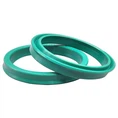
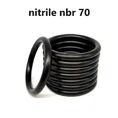
As a seasoned O - Rings supplier, I've witnessed firsthand the importance of anti - static properties in various industrial applications. O - Rings are used in a wide range of industries, from automotive to electronics, and the presence of static electricity can cause numerous problems, including product damage, safety hazards, and reduced efficiency. In this blog, I'll share some effective strategies on how to improve the anti - static properties of O - Rings.
Understanding the Problem of Static Electricity in O - Rings
Before delving into the solutions, it's crucial to understand how static electricity forms in O - Rings. Static electricity is generated when two materials come into contact and then separate. In the case of O - Rings, friction during installation, operation, or removal can lead to the build - up of static charges. This build - up can attract dust and debris, which may compromise the sealing performance of the O - Ring. Moreover, in some sensitive environments such as electronics manufacturing, a static discharge can damage delicate components.
Material Selection
One of the most fundamental ways to improve the anti - static properties of O - Rings is through careful material selection.
Conductive Elastomers
Conductive elastomers are a popular choice for anti - static O - Rings. These materials contain conductive fillers such as carbon black, carbon nanotubes, or metal particles. Carbon black is a common and cost - effective filler. It forms a conductive network within the elastomer matrix, allowing static charges to dissipate. When the O - Ring is in contact with other surfaces, the conductive pathway provided by the carbon black helps to prevent the build - up of static electricity.
Carbon nanotubes, on the other hand, offer superior conductivity compared to carbon black. Their high aspect ratio and excellent electrical properties make them an ideal choice for applications where high - performance anti - static properties are required. However, they are more expensive than carbon black.
Metal - filled elastomers are also an option. Metals like silver, copper, or nickel can be used as fillers. Silver - filled elastomers, for example, have extremely high conductivity and are often used in applications where the highest level of anti - static protection is needed, such as in aerospace and military electronics.
Anti - Static Additives
In addition to conductive fillers, anti - static additives can be incorporated into the elastomer formulation. These additives work by migrating to the surface of the O - Ring and creating a thin, conductive layer. This layer helps to dissipate static charges and prevent their build - up. Anti - static additives are particularly useful for elastomers that are not easily filled with conductive particles or for applications where a more subtle anti - static effect is required.
Surface Treatment
Surface treatment is another effective method to enhance the anti - static properties of O - Rings.
Coating
Applying a conductive coating to the surface of the O - Ring is a common surface treatment technique. Conductive coatings can be made of materials such as conductive polymers or metal - based compounds. Conductive polymer coatings are flexible and can conform well to the shape of the O - Ring. They provide a continuous conductive layer on the surface, allowing static charges to be quickly dissipated.


Metal - based coatings, such as those containing silver or nickel, offer high conductivity. However, they may be more brittle than polymer coatings and require careful application to ensure good adhesion to the O - Ring surface.
Plasma Treatment
Plasma treatment is a more advanced surface treatment method. It involves exposing the O - Ring to a low - temperature plasma environment. The plasma contains ions, electrons, and free radicals that can modify the surface chemistry of the O - Ring. This treatment can increase the surface energy of the O - Ring, making it more hydrophilic and allowing for better interaction with anti - static agents. Plasma treatment can also improve the adhesion of conductive coatings if they are subsequently applied.
Manufacturing Process Optimization
The manufacturing process of O - Rings can also impact their anti - static properties.
Mixing and Molding
During the mixing process, it's important to ensure that the conductive fillers or anti - static additives are evenly dispersed throughout the elastomer matrix. Uneven dispersion can lead to inconsistent anti - static performance. Advanced mixing techniques, such as high - shear mixing, can be used to achieve a more uniform distribution of the additives.
In the molding process, controlling the temperature, pressure, and curing time is crucial. Improper molding conditions can affect the structure and properties of the O - Ring, including its anti - static performance. For example, over - curing can cause the elastomer to become brittle and may reduce the effectiveness of the conductive network formed by the fillers.
Application - Specific Considerations
Different applications may have specific requirements for the anti - static properties of O - Rings.
Automotive Industry
In the automotive industry, O - Rings are used in various systems, including fuel systems, hydraulic systems, and electrical systems. In fuel systems, static electricity can pose a significant safety hazard as it may ignite fuel vapors. Therefore, O - Rings used in fuel systems need to have excellent anti - static properties. Conductive elastomers with high chemical resistance are often used in these applications.
Electronics Industry
In the electronics industry, O - Rings are used in electronic enclosures to provide sealing and protection against dust and moisture. Static electricity can damage sensitive electronic components, so anti - static O - Rings are essential. O - Rings with low outgassing properties are also preferred to prevent contamination of the electronic components. You can find more relevant products like Silicone Hose Flexible on our website.
Food and Beverage Industry
In the food and beverage industry, O - Rings need to meet strict hygiene standards. When improving their anti - static properties, it's important to use materials and additives that are food - grade and safe for contact with food products. Anti - static additives that are approved for food contact can be used, and the manufacturing process should ensure that there is no risk of contamination. And we also offer Oil Seal 60x80x8 which may be suitable for some related applications.
Conclusion
Improving the anti - static properties of O - Rings is a multi - faceted process that involves material selection, surface treatment, manufacturing process optimization, and application - specific considerations. By carefully choosing the right materials, applying appropriate surface treatments, and optimizing the manufacturing process, we can produce O - Rings with excellent anti - static performance.
If you are in need of high - quality anti - static O - Rings for your specific application, please feel free to contact us for procurement and further discussion. We are committed to providing you with the best solutions to meet your requirements.
References
- "Elastomer Technology Handbook" by John M. Margolis
- "Conductive Polymers and Plastics: Fundamentals, Applications and New Developments" by A. F. Diaz and J. I. Scheinbeim
- "Surface Engineering for Advanced Materials" edited by Rajiv S. Mishra and Brajendra K. Mishra