


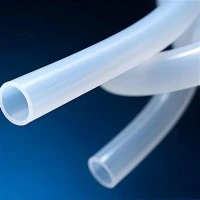


Shore Hardness of Silicone Rubber: A Practical Guide for Custom Silicone Products
Introduction
When engineers, product managers, or buyers talk about silicone rubber, one term always comes up early: Shore hardness. It sounds technical, but in reality, it answers a very simple question-how soft or how firm does your silicone product need to be?
As a custom silicone product supplier, Xiamen Jinshun Sealing Technology works closely with global brands to fine-tune silicone hardness for seals, gaskets, tubes, and molded parts. This guide explains what Shore hardness really means, how it's measured, and why choosing the right hardness directly affects performance, lifespan, and cost.
Table of Contents
- What Is Shore Hardness?
- Shore Hardness Scales Explained
- Why Shore Hardness Matters in Silicone Rubber
- Typical Shore Hardness Ranges for Silicone Products
- How Shore Hardness Is Measured
- Shore Hardness by Industry Application
- Future Trends in Silicone Hardness Control
- FAQs
- Call to Action
Shore hardness measures a material's resistance to indentation-basically, how easily it can be pressed or deformed. The test is performed using a durometer, which presses a standardized pin into the material under controlled force.
- The result is a number from 0 to 100
- Lower numbers = softer, more flexible silicone
- Higher numbers = firmer, more rigid silicone
This system was developed by Albert F. Shore and remains the global standard for rubber and elastomer testing.

Different materials require different hardness scales. Silicone rubber is most commonly measured using Shore A, but other scales exist.
Common Shore Scales for Silicone & Elastomers
| Shore Scale | Typical Materials | Use Case |
|---|---|---|
| Shore OO | Very soft gels, foams | Cushioning, medical pads |
| Shore A | Silicone rubber, elastomers | Seals, gaskets, tubes |
| Shore D | Hard plastics | Structural components |
For most custom silicone rubber products, Shore A is the industry standard.
Shore hardness is not just a technical spec-it directly affects how your product works in real life.
- Too soft → poor dimensional stability, faster wear
- Too hard → poor sealing, difficult installation
- Just right → reliable performance, long service life
That's why professional silicone manufacturers never recommend hardness blindly. It must match the application environment, pressure, temperature, and movement.
Below is a practical reference table used by engineers and OEM buyers.
Silicone Rubber Shore A Guide
| Shore A Hardness | Feel | Common Applications |
|---|---|---|
| 10–20A | Very soft, gel-like | Medical prosthetics, skin-contact parts |
| 20–30A | Soft, flexible | Food-grade molds, flexible gaskets |
| 40–50A | Balanced | O-rings, general-purpose seals |
| 60A | Firm | Pipe seals, vibration dampers |
| 70A | Very firm | Keypads, structural gaskets |
| 80–90A | Hard | Wear-resistant pads, friction parts |
As a custom silicone product supplier, Jinshun can compound silicone anywhere from 10A to 90A, tailored to your exact working conditions.
Shore hardness testing follows ASTM D2240 standards.
Key Testing Rules
- Sample thickness ≥ 6 mm
- Reading taken within 1 second
- Constant pressure, no sudden movement
- Correct durometer type (Shore A for silicone)
Common Measurement Errors
- Testing thin samples → false high readings
- Using Shore D instead of Shore A
- Uneven surface or contaminated sample
Accurate testing ensures batch consistency, which is critical for OEM production and global supply chains.
Automotive Industry
- 30–40A: Flexible gaskets and dust seals
- 50–60A: Engine bay seals and vibration isolators
Medical & Healthcare
- 10–20A: Prosthetics and skin-contact silicone
Focus on comfort, biocompatibility, and flexibility
Electronics & Electrical
- 20–30A: Waterproof enclosure seals
- 40–50A: Insulation and vibration damping
The correct Shore hardness improves sealing reliability, reduces failure rates, and lowers long-term maintenance costs.
Silicone technology is evolving fast. New developments include:
- Multi-durometer silicone parts in one mold
- Hardness-stable silicone across wide temperature ranges
- Digital durometers for higher testing accuracy
- Data-driven material formulation for faster OEM development
These trends allow manufacturers like Jinshun to deliver more precise, application-specific silicone solutions.
Q1: What Shore hardness is best for silicone O-rings?
Most silicone O-rings fall between 40A and 70A, depending on pressure and sealing requirements.
Q2: Can I customize Shore hardness for my product?
Yes. Jinshun offers fully customized silicone compounds for OEM and ODM projects.
Q3: Does softer silicone mean lower quality?
No. Softness depends on function, not quality. The right hardness is what matters.
Q4: Is Shore A always used for silicone rubber?
In most cases, yes. Very soft gels may use Shore OO, while hard plastics use Shore D.
Looking for a reliable Custom Silicone Product Supplier who understands material science-not just molding?
👉 Visit https://www.jinshunsealing.com/
👉 Send us your drawings, samples, or performance requirements
👉 Get expert advice and a fast OEM & ODM quotation
Jinshun Sealing Technology-precision silicone, engineered for real-world performance.