


A Guide to Nitrile O-Rings and Seals
[2026-11-23] | By Xiamen Jinshun Sealing Technology Co., Ltd. Annie Xu ywb6@jinshunxm.com
Nitrile O-rings and seals are widely used in industrial equipment because they offer good resistance to petroleum-based oils, fuels and lubricants at a competitive cost. Also known as NBR or Buna-N rubber seals, they are common in automotive systems, hydraulic equipment, pumps, valves, water meters and general machinery.
But NBR is not suitable for every sealing application. Its performance depends on the rubber formulation, acrylonitrile content, hardness, temperature, fluid compatibility and sealing conditions. Choosing the wrong compound can lead to swelling, hardening, cracking or leakage.
This guide explains how nitrile O-rings work, what makes NBR a practical sealing material, where it performs well, and when another elastomer may be a better choice.
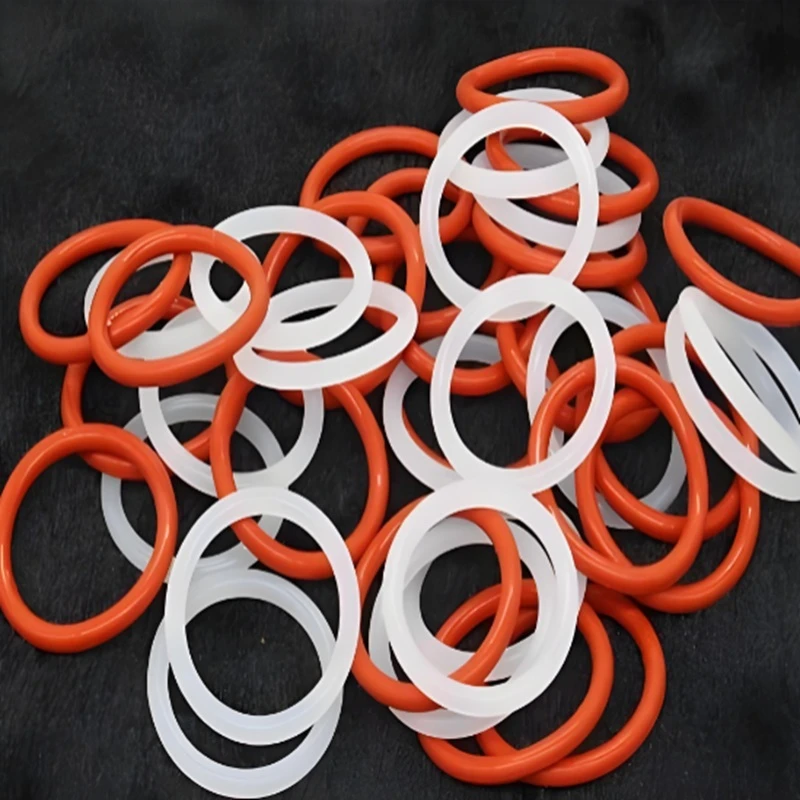
1. What Are Nitrile O-Rings and Seals?
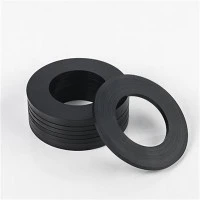
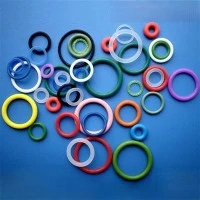
Nitrile O-rings are circular rubber sealing components made from nitrile butadiene rubber (NBR), a synthetic elastomer produced from acrylonitrile and butadiene.
An O-ring is normally installed in a machined groove between two mating surfaces. When the assembly is compressed, the rubber deforms and fills the clearance between the surfaces, creating a seal that helps prevent liquid or gas leakage.
NBR is widely selected because it combines oil resistance, mechanical strength, abrasion resistance and reasonable material cost.
How NBR Composition Affects Performance
The acrylonitrile (ACN) content in an NBR compound has a direct effect on its material properties.
- Higher ACN content: Generally improves resistance to oils and fuels, but reduces low-temperature flexibility.
- Lower ACN content: Generally improves flexibility at lower temperatures, but may provide less resistance to certain oils and fuels.
- Medium ACN content: Provides a balance of oil resistance and flexibility for many general industrial applications.
The right ACN level depends on the working fluid and operating temperature. A higher ACN content is not automatically the best choice for every application.
Common Types of Nitrile Seals
NBR can be manufactured into different sealing products according to equipment design and operating requirements.
| Product type | Function | Common applications |
|---|---|---|
| NBR O-ring | Seals between two mating surfaces | Pumps, valves, cylinders and connectors |
| NBR gasket | Seals between flat or shaped surfaces | Flanges, covers, housings and equipment joints |
| NBR oil seal | Helps retain lubricant and prevent external contamination | Motors, gearboxes and rotating shafts |
| NBR molded seal | Custom-shaped sealing component | Automotive parts, machinery and appliances |
| NBR rubber washer | Provides a sealing or cushioning interface | Faucets, fittings and plumbing assemblies |
| NBR diaphragm | Flexible membrane used to separate or control fluid or pressure | Pumps, valves and control equipment |
Although these products use the same base elastomer, their designs and performance requirements are different. An O-ring specification should not be applied directly to an oil seal, gasket or diaphragm.
2. Key Properties of Nitrile O-Rings
NBR is a practical material for many sealing applications because of its balance of fluid resistance and mechanical performance.
2.1 Oil and Fuel Resistance
Oil resistance is the main reason engineers specify nitrile rubber O-rings.
NBR generally performs well in contact with many petroleum-based fluids, including:
- Mineral oils
- Lubricating oils
- Petroleum-based hydraulic fluids
- Selected diesel fuels
- Fuel oils
- Some greases and industrial lubricants
This makes NBR suitable for many automotive, hydraulic and industrial sealing applications.
However, compatibility varies with the fluid formulation, temperature and exposure duration. Gasoline blends, aromatic hydrocarbons and fluids containing aggressive additives may require additional compatibility checks.
2.2 Temperature Resistance
NBR operates within a moderate temperature range compared with some specialized elastomers. Many conventional compounds are used in applications around -30°C to +100°C, while selected formulations may offer a wider range.
Some NBR grades are specified for temperatures approaching -40°C or +120°C, but these values should not be treated as standard limits for every compound.
| Parameter | General NBR characteristics | Selection considerations |
|---|---|---|
| Typical temperature range | Often around -30°C to +100°C for conventional compounds | Confirm the exact compound's continuous rating |
| Low-temperature performance | Flexibility decreases as temperature drops | Consider low-temperature NBR for cold environments |
| High-temperature performance | Suitable for many moderate-temperature applications | Heat exposure and fluid contact can change performance |
| Oil resistance | Generally good with many petroleum-based oils | Confirm the exact oil and additive package |
| Fuel resistance | Good with selected fuels and formulations | Check fuel composition and temperature |
| Abrasion resistance | Generally good | Depends on hardness, compound and surface conditions |
| Ozone resistance | Generally limited | Consider protective design or another elastomer |
| Compression set | Can be controlled through compound formulation | Request test data for demanding sealing cycles |
For critical applications, use the manufacturer's compound-specific technical data rather than relying on a general NBR temperature range.
2.3 Mechanical Strength and Abrasion Resistance
NBR offers good tensile strength, tear resistance and abrasion resistance in many industrial formulations.
These properties help nitrile O-rings maintain their shape and sealing function under mechanical stress. NBR is therefore commonly used in both static and dynamic sealing applications.
However, dynamic performance also depends on the contact surface, lubrication, groove design, pressure, speed and frictional heat. A compound suitable for a static flange seal may not be suitable for a high-speed reciprocating application.
2.4 Hardness Options
NBR O-rings are available in different hardness grades. Hardness is commonly measured using the Shore A scale.
| Shore A hardness | General characteristics | Typical selection considerations |
|---|---|---|
| 40–50 | Relatively soft and flexible | Low-pressure sealing and applications requiring greater conformity |
| 60–70 | Medium hardness | General-purpose sealing applications |
| 70–80 | Common range for many industrial O-rings | General hydraulic and mechanical sealing, subject to design |
| 80–90 | Harder compound | Applications where resistance to deformation or extrusion is important |
These are general selection categories, not universal design rules. The correct hardness depends on pressure, groove geometry, clearance, temperature and required deformation.
3. Advantages of Nitrile O-Rings and Seals
Why do so many manufacturers continue to use NBR when other rubber materials are available?
The answer is its balance of performance, availability and cost.
Good Performance with Petroleum-Based Fluids
NBR is a common choice for oil seals because it resists many mineral oils, lubricants and petroleum-based fluids. This makes it useful in equipment where fluid contact is unavoidable.
Practical for Static and Dynamic Sealing
NBR O-rings can be used in both static and dynamic sealing arrangements when the compound and design are appropriate.
Static sealing: The O-ring remains stationary between two surfaces, such as a flange or housing.
Dynamic sealing: The O-ring moves relative to another surface, such as in a reciprocating piston or cylinder.
Dynamic applications need additional attention to friction, lubrication, surface finish, pressure and wear.
Good Mechanical Properties
NBR offers a useful combination of tensile strength, tear resistance and abrasion resistance. These characteristics support its use in industrial equipment that experiences repeated mechanical loads.
Cost-Effective Material Choice
Compared with specialized elastomers such as FKM, NBR is often a more economical option for general oil-resistant sealing applications.
For large-volume OEM production, the balance between performance and material cost can make NBR an attractive choice, provided the operating conditions are suitable.
4. NBR vs. Other O-Ring Materials
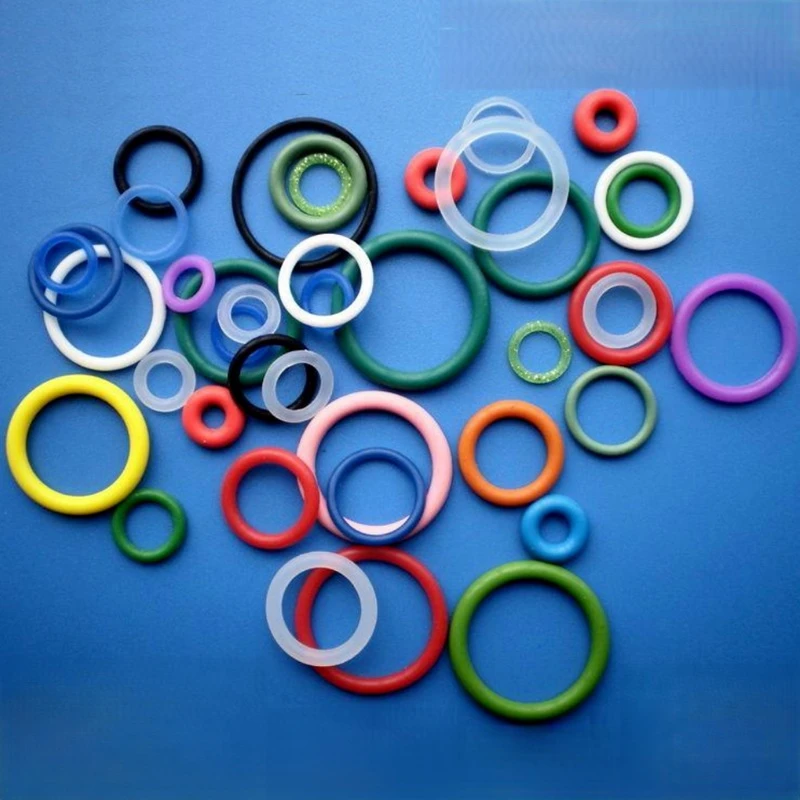
NBR is not the only material used in rubber seals. Engineers often compare it with EPDM, silicone, FKM and neoprene before finalizing a sealing design.
| Material | Main advantages | Main limitations | Typical applications |
|---|---|---|---|
| NBR (Buna-N) | Good resistance to many oils and fuels; good mechanical properties; cost-effective | Limited ozone and weather resistance; moderate temperature capability | Hydraulic equipment, pumps, automotive systems |
| EPDM | Good resistance to ozone, weathering, hot water and steam in suitable grades | Generally unsuitable for petroleum oils and fuels | Water systems, outdoor equipment and plumbing |
| Silicone (VMQ) | Good flexibility over a wide temperature range; suitable grades for food-contact applications | Generally lower tear and abrasion resistance than NBR; poor resistance to many petroleum oils | Food equipment, appliances and selected water systems |
| FKM (Viton®) | Good resistance to many fuels, oils and chemicals; suitable for higher-temperature applications | Higher cost; low-temperature performance depends on grade | Automotive, chemical processing and industrial equipment |
| Neoprene (CR) | Balanced weather, ozone and moderate oil resistance | Not suitable for all oils and aggressive chemicals | General industrial and outdoor applications |
When Should You Choose NBR?
NBR is often worth considering when:
- The sealing component contacts mineral oil or compatible petroleum-based fluids.
- The operating temperature falls within the selected compound's rated range.
- Good mechanical strength and abrasion resistance are required.
- The application needs a practical balance between performance and cost.
When Should You Consider Another Material?
- Choose EPDM when resistance to hot water, steam, ozone or outdoor weathering is more important than oil resistance.
- Choose silicone when temperature flexibility or a suitable food-contact material grade is required.
- Consider FKM when the application involves higher temperatures or chemicals that exceed the capabilities of conventional NBR.
- Consider HNBR when improved heat, aging and mechanical performance is needed compared with standard NBR.
The final choice should always be based on actual operating conditions and verified compound data.
5. Common Applications of Nitrile O-Rings and Seals
NBR sealing products are used in many industries because oil-resistant seals are needed in a wide range of mechanical and fluid systems.
Automotive Industry
Nitrile O-rings and seals are commonly used in:
- Engine oil systems
- Fuel-related components using compatible NBR grades
- Transmission systems
- Lubrication equipment
- Pumps and fluid connectors
For automotive fuel applications, confirm compatibility with the exact fuel blend and operating conditions. NBR should not be assumed suitable for every fuel formulation.
Brake fluid warning: Conventional NBR is generally not suitable for glycol-based automotive brake fluids. Brake system seals must use materials specified for the particular brake fluid and vehicle design.
Hydraulic and Industrial Equipment
Hydraulic equipment often uses NBR seals in systems containing compatible petroleum-based hydraulic oils.
Typical applications include:
- Hydraulic cylinders
- Pumps and valves
- Gearboxes
- Compressors
- Industrial machinery
- Lubrication systems
Pressure, temperature, movement and fluid additives all affect seal life. For high-pressure systems, groove design and extrusion clearance are just as important as rubber hardness.
Plumbing and Water Equipment
NBR O-rings and rubber gaskets may be used in selected plumbing and water equipment, including:
- Faucet assemblies
- Water meter components
- Valve connections
- Pump housings
- Non-potable water equipment
For drinking-water contact, ordinary NBR is not automatically approved. The exact compound and finished component must meet the relevant requirements in the target market. Depending on the application, buyers may need to evaluate NSF/ANSI/CAN 61 or other applicable drinking-water regulations.
EPDM or silicone may be more appropriate for some potable-water applications, depending on water temperature, chemistry and certification requirements.
Aerospace and Specialized Equipment
NBR may be used in selected aircraft or specialized equipment systems where the fluid and operating conditions are compatible. However, aerospace applications often involve strict material, traceability and qualification requirements.
Do not assume that a general industrial NBR compound is suitable for aerospace use. The specified material grade and approved supplier documentation must match the equipment requirements.
6. Common Problems with Nitrile O-Rings and How to Prevent Them
An O-ring can fail even when the correct material family has been selected. Installation, groove design, surface condition and operating conditions all affect sealing performance.
| Common problem | Possible cause | Recommended action |
|---|---|---|
| Swelling | Incompatible fluid or excessive temperature | Verify chemical compatibility and select a suitable compound |
| Hardening | Heat aging, oxidation or unsuitable compound | Check temperature limits and material formulation |
| Cracking | Ozone exposure, aging or excessive strain | Improve environmental protection or consider another elastomer |
| Abrasion and wear | Excessive friction, poor surface finish or insufficient lubrication | Review surface finish, movement and lubrication |
| Extrusion damage | Excessive pressure or large clearance gap | Review groove design, clearance and material hardness |
| Compression set | Long-term compression, heat or unsuitable compound | Evaluate compression-set data and operating conditions |
| Leakage after installation | Incorrect size, damaged O-ring or improper groove design | Check dimensions, groove geometry and assembly procedure |
| Twisting or spiral failure | Excessive friction or unsuitable dynamic installation | Review installation method, lubrication and surface finish |
Why Does an NBR O-Ring Swell?
Swelling usually occurs when the rubber absorbs a fluid that is not compatible with the compound. The O-ring may increase in volume, lose mechanical strength and become unable to maintain the required sealing force.
To reduce this risk:
- Identify the exact fluid.
- Check the NBR compound's compatibility data.
- Consider fluid temperature and exposure time.
- Test the material under representative operating conditions when the application is critical.
Why Do NBR O-Rings Crack?
Cracking can result from heat aging, ozone exposure, excessive stretching, poor storage or unsuitable installation.
If the seal operates outdoors or near equipment that generates ozone, standard NBR may not provide enough environmental resistance. A different elastomer or a protective design may be required.
7. How to Select the Right Nitrile O-Ring
A reliable O-ring specification should cover more than its inside diameter and cross-section. Engineers and purchasing teams should consider the full sealing environment.
| Selection factor | What to specify | Why it matters |
|---|---|---|
| Material | NBR, ACN range or required compound | Determines fluid and temperature performance |
| Inside diameter (ID) | Required O-ring ID | Ensures correct fit |
| Cross-section (CS) | Required rubber cross-section | Determines compression and groove fit |
| Hardness | Shore A requirement | Affects deformation and extrusion resistance |
| Temperature | Minimum, normal and maximum | Prevents excessive hardening or heat degradation |
| Fluid | Exact oil, fuel, water or chemical | Determines compatibility |
| Pressure | Working and peak pressure | Affects extrusion risk and groove design |
| Movement | Static, reciprocating or rotary | Determines friction and wear requirements |
| Groove design | Groove width, depth and clearance | Controls squeeze and sealing behavior |
| Compliance | Applicable customer and market requirements | Supports product qualification |
Static vs. Dynamic O-Ring Selection
For static applications, the O-ring is compressed between surfaces that do not move relative to each other. The main design considerations include squeeze, groove dimensions, pressure and compression set.
For dynamic applications, the O-ring moves against a mating surface. Friction, lubrication, surface finish, speed and heat generation become more important.
A standard NBR compound may work well in a static oil seal but wear too quickly in a demanding dynamic application. The material and design should be evaluated together.
8. Nitrile O-Ring Installation and Maintenance
Correct installation helps prevent early leakage and unnecessary replacement.
Before Installation
- Check the O-ring for cuts, cracks, deformation or contamination.
- Confirm the dimensions and material grade.
- Inspect the groove and mating surface for burrs, scratches or sharp edges.
- Make sure the selected lubricant is compatible with both the NBR compound and the operating fluid.
During Installation
- Avoid stretching the O-ring more than necessary.
- Do not twist the seal when fitting it into the groove.
- Use suitable installation tools where required.
- Prevent contact with sharp edges and threaded sections.
- Apply only a compatible lubricant when the design permits it.
During Storage
Store NBR O-rings in a cool, dry environment away from direct sunlight, ozone-generating equipment, excessive heat and incompatible chemicals. Keep them in suitable packaging to reduce contamination and deformation.
When Should an NBR O-Ring Be Replaced?
Replace an O-ring when inspection shows:
- Cracks or surface damage
- Permanent deformation
- Excessive swelling or shrinkage
- Hardening or loss of elasticity
- Cuts, abrasion or extrusion damage
- Leakage that can be traced to seal deterioration
For critical equipment, replacement intervals should follow the equipment manufacturer's maintenance schedule and actual service conditions.
9. Quality Control for NBR O-Rings and Rubber Seals
For OEM manufacturers, distributors and industrial procurement teams, quality control should cover both material consistency and finished-part dimensions.
Depending on the product specification, relevant checks may include:
| Quality check | What it evaluates |
|---|---|
| Material verification | Confirms the specified NBR compound or grade |
| Hardness testing | Measures Shore A hardness |
| Dimensional inspection | Checks ID, OD and cross-section |
| Tensile testing | Evaluates tensile strength and elongation |
| Compression-set testing | Measures the material's ability to recover after compression |
| Fluid immersion testing | Evaluates changes in volume, mass or hardness after fluid exposure |
| Visual inspection | Checks cracks, flash, bubbles and surface defects |
| Batch documentation | Supports production traceability and quality review |
The appropriate tests depend on the application and customer specification. Not every NBR O-ring requires every test listed above.
When qualifying a supplier, buyers should also review the manufacturer's quality management system, inspection procedures, material documentation and ability to maintain consistent production specifications.
10. Custom Nitrile O-Rings from Jinshun Sealing
Since 2002, Xiamen Jinshun Sealing Technology Co., Ltd. has specialized in rubber sealing products for industrial and equipment manufacturers.
Our product range includes NBR O-rings, rubber gaskets, silicone sealing components, waterproof rings and custom molded rubber parts. We support customers who need rubber components for machinery, water equipment, sanitary products, appliances and other applications.
When discussing a custom NBR O-ring project, provide:
- O-ring drawing or sample
- Inside diameter and cross-section
- Required NBR hardness
- Fluid and temperature conditions
- Static or dynamic sealing requirements
- Applicable standards or customer specifications
- Estimated order quantity
Our team can review the application requirements and discuss suitable rubber component options.
Looking for a nitrile O-ring manufacturer for your next project? Contact Jinshun Sealing at wb6@jinshunxm.com to discuss your drawings, samples and technical requirements.
Frequently Asked Questions About Nitrile O-Rings and Seals
1. What is the difference between NBR, Buna-N and nitrile rubber?
NBR, Buna-N and nitrile rubber are commonly used names for acrylonitrile-butadiene rubber. They refer to the same general elastomer family. The actual performance depends on the compound formulation, ACN content, hardness and curing system.
2. Are nitrile O-rings suitable for hydraulic oil and fuel?
NBR O-rings are generally suitable for many petroleum-based hydraulic oils, lubricants and selected fuels. Compatibility depends on the exact fluid formulation, additives and operating temperature. Always check the compound manufacturer's compatibility data before use.
3. Are NBR O-rings suitable for drinking-water applications?
Not automatically. Standard NBR is not necessarily approved for potable-water contact. The specific compound and finished component must meet the applicable drinking-water requirements and have supporting documentation for the intended use.
4. How long do nitrile O-rings last?
There is no fixed service life for every NBR O-ring. Lifespan depends on temperature, fluid compatibility, pressure, compression, movement, installation and storage. Regular inspection and application-specific maintenance schedules help reduce unexpected seal failure.
5. When should I choose FKM instead of NBR?
Consider FKM when the application requires stronger resistance to higher temperatures, fuels or chemicals that exceed the capabilities of the selected NBR compound. FKM generally costs more, so compare the actual operating conditions and compound data before changing materials.