


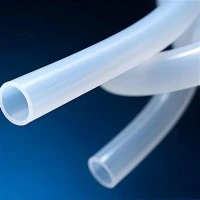


Common rubber sheets are widely used in various industries due to their excellent elasticity, insulation, and sealing properties. The manufacturing process involves several key steps, each crucial to ensuring the quality and performance of the final product.
Raw Material Preparation
The main raw material for rubber sheets is rubber, which can be divided into natural rubber and synthetic rubber. Natural rubber is obtained from the latex of rubber trees. The latex is first collected and then undergoes a coagulation process. This is usually done by adding formic acid or acetic acid to the latex, which causes the rubber particles to aggregate and form a solid mass. The coagulated rubber is then rolled to remove excess water, resulting in a sheet-like material called crepe rubber or ribbed smoked sheet, depending on the processing method.
Synthetic rubber, on the other hand, is produced through chemical synthesis using monomers such as styrene, butadiene, and ethylene. These monomers are polymerized under specific temperature, pressure, and catalyst conditions to form rubber polymers. The synthetic rubber is often supplied in the form of bales, which need to be cut into smaller pieces for further processing.
Mastication
The next step is mastication, which aims to soften the rubber and reduce its molecular weight, making it easier to process. The rubber is placed in a mixer, such as an internal mixer or an open mill. During mastication, mechanical shear forces are applied to the rubber, breaking the chemical bonds in the polymer chains. This process also helps to remove any air bubbles and impurities present in the rubber.
Compounding
After mastication, compounding is carried out to add various additives to the rubber to improve its properties. The additives include fillers (such as carbon black, silica, and calcium carbonate) to enhance strength and reduce cost; plasticizers to increase flexibility; antioxidants to prevent aging; vulcanizing agents (typically sulfur) to cross-link the polymer chains; and accelerators to speed up the vulcanization process.
The rubber and additives are mixed in a mixer until a homogeneous mixture is obtained. The mixing time, temperature, and speed are carefully controlled to ensure that the additives are evenly distributed throughout the rubber.
Calendering
Once the compound is ready, it is fed into a calender. A calender consists of a series of rotating rollers that squeeze and shape the rubber into a sheet of the desired thickness and width. The temperature and pressure of the rollers are adjusted according to the type of rubber and the required sheet properties. The calendared sheet is then cooled to set its shape.
Vulcanization
Vulcanization is a critical step that gives rubber its unique elastic properties. The calendared rubber sheet is placed in a vulcanizing press or a continuous vulcanization line. Under the action of heat and pressure, the vulcanizing agent (sulfur) forms cross-links between the polymer chains, transforming the plastic rubber into an elastic material. The temperature, pressure, and time of vulcanization are strictly controlled to ensure that the rubber is properly cross-linked. Over-vulcanization can make the rubber brittle, while under-vulcanization results in poor elasticity.
Finishing
After vulcanization, the rubber sheet undergoes finishing processes. This may include trimming the edges to remove any irregularities, inspecting the sheet for defects such as bubbles, cracks, or thickness variations, and cutting it into standard sizes or custom lengths according to customer requirements.
Quality Control
Throughout the manufacturing process, quality control measures are implemented. Samples of the rubber sheet are tested for properties such as tensile strength, elongation at break, hardness, and resistance to heat, oil, and chemicals. These tests ensure that the rubber sheets meet the specified standards and customer expectations.
In conclusion, the production of common rubber sheets involves a series of carefully controlled steps, from raw material preparation to finishing and quality control. Each step plays a vital role in determining the final properties of the rubber sheet, making it suitable for a wide range of applications in industries such as automotive, construction, and electronics.