



What Is the Difference Between FFKM and FKM?
[2025-12-02] | By Xiamen Jinshun Sealing Technology Co., Ltd. Annie Xu
Table of Contents
- Introduction: Why FFKM and FKM Matter
- Quick Comparison Table: FFKM vs FKM
- What Is FKM?
- What Is FFKM?
- Key Differences Between FFKM and FKM
- When You Must Choose FFKM ("Top-Tier Performance")
- When FKM Is the Better, More Economical Choice
- Summary: How to Choose the Right O-Ring Material
- FAQs
- CTA: Source High-Performance O-Rings from China
What Is the Difference Between FFKM and FKM?
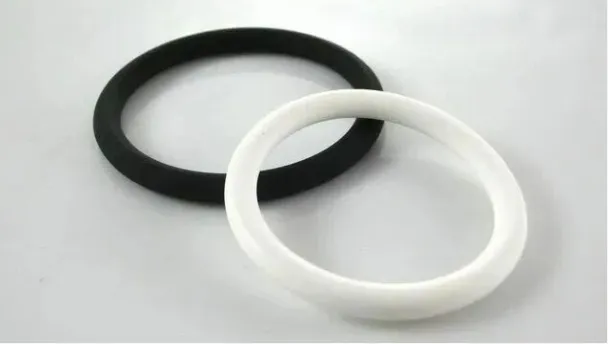
In the sealing industry, FFKM O-Rings are often considered the "ultimate configuration," while FKM O-Rings are the widely used "industry workhorse."
Both belong to the fluorinated elastomer family, but their performance is not interchangeable. Choosing the wrong material may result in leakage, unplanned downtime, equipment damage, or even safety risks.
This guide breaks down real-world performance data, operating conditions, and application scenarios to help engineers and buyers choose the right O-Ring.
| Property / Feature | FKM (Fluoroelastomer) | FFKM (Perfluoroelastomer) |
|---|---|---|
| Fluorine content | 66–70% | 72%+ |
| Temperature range | -20°C to 200°C | -20°C to 320°C (short-term 350°C) |
| Chemical resistance | Good | Excellent (near universal) |
| Resistance to strong acids/oxidizers | Moderate | Outstanding |
| Compression set (200°C, ISO 815) | ~35% | ~8% |
| Volume swelling in 98% sulfuric acid (ASTM D1418) | >30% | <5% |
| Suitable for oxygen-plasma | No | Yes |
| Expected service life in extreme environments | Medium | Very long |
| Cost level | ★★☆ (affordable) | ★★★★★ (premium) |
| Typical applications | Automotive, general industry | Semiconductor, pharma, aerospace, high-corrosion chemicals |
FKM, commonly known as Viton, FPM, or fluorocarbon rubber, is a fluorinated elastomer containing ~66–70% fluorine.
Key Characteristics of FKM O-Rings
- Good resistance to oils, hydrocarbons, solvents
- Reliable performance from -20°C to 200°C
- Good resistance to ozone, weathering, and aging
- Suitable for CIP, SIP, FDA-grade applications (depending on compound)
FKM offers a balanced mix of performance and cost, making it ideal for general industrial sealing.
FFKM, or perfluoroelastomer, contains over 72% fluorine, with both the backbone and side chains fully fluorinated.
Why It Matters
This molecular structure gives FFKM:
- Extreme chemical inertness
- Resistance to almost all chemicals, except molten alkali metals and fluorine gas
- An ultra-wide temperature window of -20°C to 320°C
- Exceptional resistance to plasma and oxidative environments
This is why FFKM O-Rings are widely used in:
- Semiconductor etching & deposition
- High-purity chemical processing
- Aerospace fuel systems
- Harsh chemical reactors
- High-temperature sealing near 300°C
(1). Temperature Capability
- FKM: stable up to ~200°C
- FFKM: stable up to 320°C (350°C short-term)
Real-world example:
A chemical reactor operating at 220–260°C caused FKM O-rings to harden and crack within 3 months. After switching to FFKM, the service life exceeded 18 months with no visible aging.
(2). Chemical Resistance
FKM tolerates oils, fuels, and many solvents.
FFKM tolerates nearly all chemicals, including:
- Strong acids (H₂SO₄, HNO₃)
- Strong alkalis
- Oxidants
- Halogenated chemicals
- Oxygen-plasma
Data Example:
When immersed for 100 hours at 80°C:
- FKM swelled 40% in concentrated nitric acid
- Hardness dropped by 30%
- FFKM swelled only ~5%, with <2% hardness change
(3). Compression Set & High-Pressure Reliability
Under ISO 815 testing (200°C, 20% compression):
- FKM compression set ≈ 35%
- FFKM compression set ≈ 8%
In high-pressure or high-temperature cycling environments, the lower compression set of FFKM translates into 4× better long-term sealing reliability.
6. When You MUST Choose FFKM O-Rings ("Top Tier Only")
Scenario 1: Extreme High Temperatures (>200°C)
- Chemical reactors (220–260°C)
- Turbocharged fuel systems (up to 210°C)
- High-temperature polymerization lines
FKM will gradually harden, crack, or swell.
FFKM maintains stable elasticity.
Scenario 2: Strong Corrosive Chemicals
FFKM is often the only viable choice when sealing:
- HF, HNO₃, H₂SO₄
- Strong oxidizers (H₂O₂, peracetic acid)
- Halogenated gases (CF₄, Cl₂)
Common industries:
- Semiconductor etching
- Pharmaceutical sterile processing
- High-purity chemical production
Scenario 3: High Pressure + Mixed Media
Environments with >10 MPa pressure and multi-chemistry exposure:
- Oil & gas downhole tools (180°C, 30 MPa)
- Aerospace hydraulic systems (-50°C to 230°C)
- Chemical pump seals
FKM commonly shows compression set >25%, leading to leakage.
FFKM keeps compression set <10%.
Choose FKM O-Rings instead of FFKM when:
- Temperature stays between -20°C and 150°C
- Media includes oils, fuels, water-based fluids
- Pressure ≤10 MPa
- Replaceable components with acceptable maintenance intervals
- Cost sensitivity matters (FFKM is 5–10× higher cost)
FKM remains one of the most cost-effective sealing materials for general industry.
Choose FFKM for extreme conditions: high temperature, strong acids, oxidizers, high pressure, or mixed-media environments.
Choose FKM for general industrial sealing where moderate chemical and temperature resistance is sufficient.
The key is to evaluate:
- Medium (chemical composition)
- Temperature range
- System pressure
- Frequency of cycling
- Cost of downtime vs cost of materials
If in doubt, run an engineering simulation or consult a sealing specialist.
(1). Is FFKM always better than FKM?
Performance-wise, yes - but FFKM is much more expensive. Choose it only when your working conditions justify the upgrade.
(2). How much more expensive is FFKM compared to FKM?
Typically 5–10× higher, depending on grade and application.
(3). Can FKM handle strong acids?
FKM performs well with mild to moderate chemicals, but strong acids and oxidizers will degrade it quickly.
(4). Does FFKM work in oxygen-plasma environments?
Yes. FFKM is specifically engineered for plasma resistance, making it suitable for semiconductor tools.
(5). Are FFKM and FKM both available as FDA-grade O-Rings?
Yes. Specialty formulations are available for food, pharmaceutical, and biotech applications.
Xiamen Jinshun Sealing Technology Co., Ltd. is a certified China O-Rings manufacturer & exporter supplying global OEM/ODM brands.
We provide:
- FFKM O-Rings for extreme chemical and temperature environments
- FKM (Viton®) O-Rings for industrial and automotive applications
- Custom sizes, materials, and hardness options
- Fast delivery for distributors and wholesale buyers
- Engineering support and sample testing
👉 Contact us today to get a factory price quote and technical recommendations.
https://www.jinshunsealing.com/