


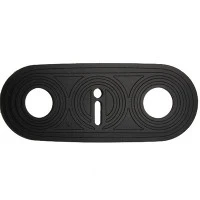


FDA-Approved Gasket
FDA-compliant rubber gaskets are used in food processing, beverage production, pharmaceutical equipment, and potable water systems where sealing materials must meet defined contact requirements. Xiamen Jinshun Sealing Technology Co., Ltd., established in 2002, manufactures custom rubber gaskets and seals using material options such as EPDM, NBR, silicone, FKM, and other application-specific compounds. FDA compliance depends on the exact material formulation, intended conditions of use, and applicable regulatory requirements-not simply on the gasket's rubber type.
FDA-Approved Gasket Specifications
| Parameter | Specification |
|---|---|
| Product name | FDA-Compliant Rubber Gasket |
| Product type | Custom rubber gasket and seal |
| Available material options | Silicone, EPDM, NBR, FKM, FFKM, and other suitable compounds, subject to project requirements |
| PTFE option | Available for suitable gasket designs and material specifications |
| Dimensions | Custom dimensions based on drawings or samples |
| Shape | Flat gasket, molded gasket, ring seal, or other specified profile |
| Hardness | Specified according to material grade and application |
| Operating temperature | Depends on the selected material, compound, and service conditions |
| Contact media | Food, beverages, water, oils, cleaning solutions, or other specified media, subject to compatibility verification |
| Compliance requirements | Applicable FDA food-contact requirements; other certifications available for selected products and grades |
| Potable water applications | NSF/ANSI/CAN 61-compliant material or product options, subject to verification |
| Quality management | ISO 9001:2015 and ISO 14001:2015 |
| Manufacturing services | Custom production, OEM supply, and bulk orders |
| Manufacturer | Xiamen Jinshun Sealing Technology Co., Ltd. |
| Established | 2002 |
Note: This table describes material and manufacturing options, not a blanket certification of every gasket. Confirm the exact compound, regulatory basis, test evidence, and conditions of use before approving a product for food or drinking-water contact.
What Makes a Gasket FDA-Compliant?
The US Food and Drug Administration (FDA) regulates materials used in food-contact applications under applicable provisions of Title 21 of the Code of Federal Regulations (21 CFR). For rubber gaskets, the relevant regulatory basis depends on the material formulation, the type of food or fluid, temperature, contact duration, and other conditions of use.
The term "FDA-approved gasket" is widely used in procurement searches. Technically, however, the FDA does not generally issue a universal approval certificate for every finished rubber gasket. Buyers need to establish whether the supplied material complies with the applicable food-contact requirements and whether the finished component is suitable for its intended service.
When sourcing FDA-compliant gaskets, check the following:
- Material formulation: The ingredients must be permitted for the intended food-contact use under the applicable regulation.
- Conditions of use: Temperature, contact time, food type, and repeated-use conditions can affect compliance.
- Chemical compatibility: The gasket must resist the food, beverage, process fluid, and cleaning chemicals it will encounter.
- Physical performance: Hardness, compression set, tensile properties, and dimensional stability must suit the joint design.
- Documentation: Request the applicable compliance declaration, material identification, and supporting test reports.
A material described as food grade is not automatically suitable for every food-processing application. Regulatory compliance and sealing performance must both be checked.

FDA-Compliant Gasket Materials and Their Applications
Different elastomers perform differently when exposed to fats, oils, water, cleaning agents, temperature changes, and repeated compression. Material selection should start with the process conditions rather than the material name alone.
1. Silicone Rubber Gaskets
Silicone rubber is commonly selected for food-processing equipment and appliances where flexibility, temperature tolerance, and low odor are important. Suitable food-contact grades may be available, but the formulation must meet the applicable regulatory requirements.
Typical applications include food-processing equipment, beverage dispensers, appliance seals, and fluid-handling assemblies.
Selection points:
- Confirm the applicable food-contact compliance of the exact silicone compound.
- Specify hardness, thickness, and dimensional tolerances.
- Check compression set and resistance to the cleaning chemicals used on site.
- Confirm whether the gasket requires repeated hot-water or steam exposure.
2. EPDM Gaskets
EPDM is often used in water systems, beverage equipment, and sanitary applications because it offers good resistance to water, ozone, and weathering. Selected EPDM compounds can be formulated for food-contact or potable-water applications.
EPDM is generally unsuitable for many petroleum-based oils and hydrocarbon fluids. If the process involves oils, fats, or aggressive cleaning chemicals, verify compatibility with the exact formulation.
3. NBR (Nitrile Rubber) Gaskets
NBR is frequently used where resistance to oils and greases is required. Selected compounds may be available for food-contact applications, but standard industrial NBR should not be assumed to meet food-contact requirements.
For food-processing equipment, confirm both the compliance documentation and the expected exposure to fats, oils, cleaning agents, and temperature cycling.
4. FKM and FFKM Gaskets
FKM and FFKM are used in demanding sealing environments where chemical resistance or elevated-temperature performance is required. Certain grades may be suitable for specific food-contact applications, provided the formulation and conditions of use comply with the applicable requirements.
These materials can have a higher unit cost than general-purpose elastomers. They are worth evaluating when lower-cost compounds cannot meet the required chemical or temperature conditions.
5. PTFE Gaskets
PTFE is a fluoropolymer rather than a rubber elastomer. It is used in food-processing pumps, valves, mixers, pipe connections, and other equipment that requires broad chemical resistance and low friction.
| Property | Engineering consideration |
|---|---|
| Chemical resistance | Resists many chemicals, but suitability must be checked for the specific medium and conditions |
| Friction | Low coefficient of friction compared with many elastomers |
| Temperature capability | Depends on the PTFE grade, design, and operating conditions; the material's temperature limit is not automatically the gasket's pressure limit |
| Compression behavior | PTFE can creep under sustained load, affecting sealing force over time |
| Design options | Sheet-cut gaskets and other suitable PTFE components |
| Food-contact compliance | Confirm the specific material and applicable regulatory requirements |
PTFE can be a good option for static flange connections and chemical-transfer equipment. Its creep behavior and relatively limited elastic recovery compared with rubber must be considered when designing the joint.
Material Comparison for Food and Beverage Gaskets
| Material | Typical strengths | Common applications | Main limitations to assess |
|---|---|---|---|
| Silicone | Flexibility and broad temperature capability in suitable grades | Food appliances, beverage equipment, dispensing systems | Tear resistance, compression set, cleaning chemicals, and exact compliance |
| EPDM | Water, ozone, and weathering resistance | Water systems, beverage equipment, sanitary assemblies | Compatibility with oils and hydrocarbons |
| NBR | Resistance to many oils and greases | Oil-contact equipment and selected food-processing assemblies | Weathering, ozone, temperature limits, and food-contact grade availability |
| FKM | Resistance to many oils, fuels, and chemicals | Industrial process equipment and selected food-contact applications | Grade-specific compliance and compatibility |
| FFKM | Broad chemical resistance in selected high-performance grades | Demanding process equipment | High material cost and grade-specific regulatory suitability |
| PTFE | Broad chemical resistance and low friction | Pumps, valves, mixers, and flange connections | Creep, joint design, and limited elastic recovery compared with rubber |
These are general material-selection guidelines. Actual performance depends on the compound or grade, manufacturing process, joint geometry, and service conditions.
Engineering Parameters for FDA-Compliant Rubber Gaskets
A gasket can meet material requirements and still fail in service if its dimensions, compression, or surface contact are incorrect. Product developers and purchasing engineers should define the key parameters before requesting samples or mass production.
| Parameter | What to specify | Why it matters |
|---|---|---|
| Material grade | Exact compound or PTFE grade | Establishes the basis for compatibility and compliance |
| Inner and outer dimensions | Nominal dimensions and tolerances | Controls fit and sealing position |
| Thickness | Nominal thickness and allowable variation | Affects compression and joint spacing |
| Hardness | Shore A target for applicable elastomers | Influences deformation and contact pressure |
| Compression | Available gland depth or assembled gap | Helps prevent leakage and excessive deformation |
| Temperature | Minimum, continuous maximum, and peak conditions | Determines material suitability |
| Contact medium | Food type, beverage, water, oil, or cleaning solution | Supports chemical-compatibility assessment |
| Contact duration | Intermittent or continuous contact | Helps establish the relevant regulatory conditions |
| Cleaning and sterilization | Chemical cleaning, hot water, steam, or other cycles | Identifies risks of swelling, hardening, or property changes |
| Regulatory documents | Required declarations, reports, and applicable standards | Supports supplier qualification and compliance review |
For molded rubber gaskets, tooling design and dimensional control also matter. Shrinkage, flash, parting lines, and uneven thickness can affect assembly and sealing performance. The production drawing should identify critical sealing dimensions and acceptable defect limits.
FDA and NSF/ANSI/CAN 61: What Is the Difference?
FDA food-contact requirements and NSF/ANSI/CAN 61 address different regulatory and performance needs.
FDA-related requirements apply to materials used in food-contact applications under the relevant provisions and conditions of use. NSF/ANSI/CAN 61 evaluates the health effects of materials and components that contact drinking water in drinking-water system applications.
| Requirement | Primary purpose | Typical use |
|---|---|---|
| Applicable FDA food-contact requirements | Establishes whether material constituents and use conditions comply with relevant food-contact regulations | Food processing, beverages, and food-contact equipment |
| NSF/ANSI/CAN 61 | Evaluates health effects of materials and components in contact with drinking water | Potable-water systems and related components |
| RoHS | Restricts specified hazardous substances in products within its scope | Electrical and electronic equipment and applicable components |
| REACH | Addresses chemical substances and related obligations in its scope | Products and supply chains subject to EU chemical requirements |
One approval does not replace another. For example, an FDA-compliant food-contact material does not automatically meet NSF/ANSI/CAN 61 requirements for potable-water applications. Buyers should specify the market, intended use, and exact documentation required.
Manufacturing and Quality Control at Jinshun
Xiamen Jinshun Sealing Technology Co., Ltd. was established in 2002 and manufactures rubber O-rings, Y-seals, silicone gaskets, RO membrane seals, silicone tubes, shower gaskets, and custom rubber components.
For custom food-contact gasket projects, buyers should establish a clear link between the approved material, drawing, production batch, and compliance documents. Depending on the product, the quality plan may include:
- Incoming material identification and document review.
- Dimensional inspection of critical features.
- Hardness testing for applicable elastomers.
- Visual inspection for flash, cracks, voids, contamination, and surface defects.
- Verification of material compliance documents for the ordered grade.
- Batch identification and agreed inspection records.
Jinshun maintains ISO 9001:2015 and ISO 14001:2015 management-system certifications. Raw materials are selected to meet applicable RoHS, REACH, and PAHs requirements. Additional certifications or test reports should be confirmed for the exact product and order.
How to Order Custom FDA-Compliant Gaskets
To help the manufacturing team evaluate a project, provide the following details with your inquiry.
| Required information | Details to provide |
|---|---|
| Drawing or sample | 2D drawing, 3D CAD file, or physical sample |
| Application | Food processing, beverage equipment, potable water, or another defined use |
| Material preference | Silicone, EPDM, NBR, FKM, FFKM, PTFE, or performance requirements |
| Dimensions | Inner diameter, outer diameter, thickness, and critical tolerances |
| Operating conditions | Temperature, pressure, and contact medium |
| Cleaning conditions | Cleaning chemicals, hot water, steam, or sterilization cycles |
| Compliance | Applicable FDA requirements, NSF/ANSI/CAN 61, or other requested standards |
| Order volume | Sample quantity, initial order, and estimated annual demand |
| Packaging | Bulk, individual, or customer-specified packaging |
| Destination market | Country or region where the product will be sold or used |
Request a quotation for custom FDA-compliant gaskets
Frequently Asked Questions
1. Does the FDA certify every FDA-approved rubber gasket?
No. FDA compliance generally depends on the applicable food-contact regulation, material formulation, and conditions of use. Buyers should request documentation for the exact gasket material and intended application rather than relying on a generic "FDA-approved" label.
2. Which rubber material is best for food-processing gaskets?
There is no single best material for every application. Silicone, EPDM, NBR, FKM, FFKM, or PTFE may be suitable depending on the food or fluid, temperature, cleaning chemicals, compression conditions, and applicable compliance requirements.
3. Can Jinshun manufacture custom FDA-compliant gaskets for bulk orders?
Yes. Jinshun reviews custom gasket projects based on drawings, samples, material requirements, and order quantities. MOQ, tooling needs, lead time, and documentation should be confirmed for the specific design before ordering.
An FDA-compliant gasket must meet the applicable food-contact requirements for its material formulation and conditions of use. Material choice, dimensions, compression, chemical compatibility, and cleaning conditions also determine sealing performance. For procurement approval, specify the intended application and required regulatory documentation, then verify that the evidence applies to the exact gasket supplied.


