



Customized Rubber Parts and Silicone Parts
A Practical Manufacturing Guide for OEM & ODM Buyers
Table of Contents
- What Are Customized Rubber Parts and Silicone Parts?
- Why Custom Manufacturing Matters in Industrial Applications
- Overview of Rubber & Silicone Molding Processes
- Liquid Silicone Rubber (LSR) Molding Explained
- Rubber Compression Molding Explained
- LSR Molding vs Compression Molding: Side-by-Side Comparison
- Typical Applications of Customized Rubber & Silicone Parts
- How to Choose the Right Molding Process
- Quality Standards, Compliance, and Reliability
- Why Work with Xiamen Jinshun Sealing Technology
- FAQs
- Call to Action
Customized rubber parts and silicone parts are engineered components designed to meet specific performance, size, and environmental requirements. Unlike off-the-shelf items, custom parts are developed based on:
- Exact dimensions and tolerances
- Specific materials (silicone, EPDM, NBR, Viton, etc.)
- Application environments (heat, pressure, chemicals, food contact)
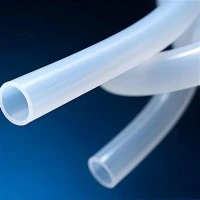
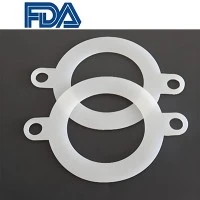
Common examples include rubber O-rings, Y-seals, shower gaskets, RO membrane seals, silicone tubes, and other precision sealing components used across industries.

Standard parts rarely fit perfectly.
Custom manufacturing helps OEM and brand owners:
- Reduce leakage and failure risks
- Improve product lifespan
- Meet regulatory and safety standards
- Optimize total cost of ownership
In industries like water treatment, automotive, medical devices, and consumer appliances, even small sealing failures can cause system-wide issues. That's why custom silicone parts and customized rubber parts are increasingly the preferred choice.
Different products require different manufacturing methods. At Xiamen Jinshun Sealing Technology, two core processes are used:
- Liquid Silicone Rubber (LSR) Injection Molding
- Rubber Compression Molding
Understanding how each process works helps buyers choose the most cost-effective and reliable solution.

What Is LSR Molding?
LSR molding is a thermoset injection molding process. Two liquid silicone components are mixed and injected into a heated mold, where they cure using a platinum catalyst.
Once cured, the silicone part is permanently formed and ready for use.
Key Advantages of LSR Molding
- High precision and tight tolerances
- Excellent surface finish with minimal flash
- Wide temperature resistance (-60°C to +230°C)
- Chemical and UV resistance
- Biocompatibility and food safety
- Easy sterilization
- Low material waste
Typical LSR Applications
- Medical device components
- Food-grade seals and gaskets
- Electric connectors
- Silicone tubes
- RO membrane seals
- Functional prototypes and pilot runs
LSR molding is ideal for complex, high-performance custom silicone parts where consistency and reliability matter.
What Is Rubber Compression Molding?
Compression molding uses pre-measured uncured rubber, placed into a heated mold and compressed under high pressure. Heat and pressure vulcanize the rubber, forming the final part.
Pins automatically eject the finished part, enabling efficient production.
Key Advantages of Compression Molding
- Lower tooling cost
- Faster mold development
- Suitable for high-volume production
- Works with many rubber materials
- Strong mechanical and tear resistance
Supported Materials
- Natural rubber
- Silicone rubber
- EPDM
- NBR (BUNA)
- Viton (FKM)
- Neoprene
Typical Applications
- Rubber O-rings and Y-seals
- Shower gaskets
- Automotive seals
- Hydraulic and pneumatic seals
- Kitchen cookware components
| Item | LSR Molding | Compression Molding |
|---|---|---|
| Best for | Complex, high-precision parts | Simple, high-volume parts |
| Tooling Cost | Higher | Lower |
| Production Volume | Low to medium | Medium to high |
| Material Waste | Very low | Low |
| Tolerance Control | Excellent | Good |
| Surface Finish | Very smooth | Slightly rougher |
| Material Options | Liquid silicone only | Rubber & silicone |
| Typical Lead Time | Moderate | Shorter |
Customized parts produced by Jinshun Sealing Tech are widely used in:
- Water filtration systems (RO membrane seals, silicone gaskets)
- Automotive systems (fuel, HVAC, sensor seals)
- Medical devices (sterilizable seals and tubing)
- Food & beverage equipment (food-grade silicone parts)
- Household appliances (shower gaskets, valves)
- Industrial machinery (hydraulic and pneumatic seals)
Both molding processes produce durable, reliable, and application-specific components.

Ask yourself these questions:
- Is the design complex or simple?
- What is the expected production volume?
- Are temperature or chemical resistance critical?
- Is food-grade or medical compliance required?
- What is the budget and lead-time target?
Quick Guidance
- Choose LSR molding for precision, compliance, and complex shapes
- Choose compression molding for cost efficiency and high-volume rubber parts
An experienced manufacturer can help you finalize the decision early-saving time and cost.
At Xiamen Jinshun Sealing Technology, quality is built into every step:
- Strict material inspection
- Dimensional and performance testing
- Support for FDA, LFGB, ROHS, and other standards
- Capability to meet Mil-Spec requirements for defense applications
This ensures every customized rubber part or silicone part performs as expected in real-world conditions.
- Professional China customized rubber parts and silicone parts manufacturer
- Expertise in both LSR and compression molding
- ODM & OEM support from design to mass production
- Stable export experience with international clients
- Competitive pricing with reliable lead times
We don't just produce parts-we help brands reduce risk and improve product performance.

What is the minimum order quantity (MOQ)?
MOQ depends on material, design, and tooling. Prototype and pilot runs are supported.
Can you help with material selection?
Yes. Our engineers recommend materials based on application and compliance needs.
Do you offer custom tooling and molds?
Yes. All molds are custom-built based on your drawings or samples.
Are your silicone parts food-grade or medical-grade?
Yes. FDA and LFGB-compliant materials are available.
Do you support ODM projects?
Absolutely. We support full ODM development for global brands.
Looking for a reliable manufacturer of customized rubber parts and custom silicone parts?
Xiamen Jinshun Sealing Technology Co., Ltd. is ready to support your next project-from prototyping to mass production.
👉 Visit https://www.jinshunsealing.com/
👉 Request samples or an ODM quotation today
Let's build sealing solutions that perform, last, and scale with your business.