



Is Silicone Better Than Rubber? A Practical Comparison for Manufacturers & Buyers
Content Menu
1. Introduction: Silicone vs Rubber – What's at Stake?
2. Chemical & Physical Characteristics
2.1 What Is Rubber?
2.2 What Is Silicone?
3. Where Silicone Outperforms Rubber
3.1 Automotive Applications
3.2 Healthcare and Medical Devices
3.3 Everyday Consumer Products
4. Limitations of Silicone
4.1 Cost Considerations
4.2 Where Rubber Performs Better
5. Environmental Impact
5.1 Rubber and Sustainability
5.2 Silicone's Eco Profile
5.3 Balancing Performance and Responsibility
6. Conclusion: When and Why Silicone Is the Better Choice
1. Introduction: Silicone vs Rubber – What's at Stake?
Silicone and rubber are two of the most widely used elastomer materials in modern manufacturing. From automotive seals to medical tubing, these materials are often compared-but which one truly delivers better performance, longer lifespan, and higher value?
As a custom silicone parts manufacturer, Xiamen Jinshun Sealing Technology Co., Ltd. aims to help engineers, procurement teams, and brand owners make informed material choices for their OEM or ODM product needs.
Let's explore the key differences between silicone and rubber based on performance, cost, industry suitability, and environmental impact.
2. Chemical & Physical Characteristics
2.1 What Is Rubber?
Rubber is typically derived from natural sources (latex) or synthesized using petrochemicals. It's known for its elasticity, abrasion resistance, and cost-effectiveness. However, rubber tends to degrade under prolonged heat, UV light, and certain chemical exposures.
Main properties of rubber:
- Highly elastic at room temperature
- Affordable
- Resistant to water and wear
- Sensitive to UV, ozone, and extreme temperatures
2.2 What Is Silicone?
Silicone is a synthetic polymer made from silicon (from sand), oxygen, carbon, and hydrogen. Unlike rubber, silicone maintains flexibility and performance in extreme temperatures-from -55°C to over 300°C.
Key advantages of silicone:
- Excellent heat and cold resistance
- UV and ozone stable
- Chemically inert and hypoallergenic
- Longer lifespan in demanding environments
| Property | Rubber | Silicone |
|---|---|---|
| Source | Natural or synthetic | Synthetic (silicon-based) |
| Temp Range | -30°C to 120°C | -55°C to 300°C (some up to 600°C) |
| UV Resistance | Poor | Excellent |
| Chemical Resistance | Limited | Excellent |
| Elasticity | High (room temp) | Moderate (but stable) |
| Cost | Lower | Higher |
3. Where Silicone Outperforms Rubber
3.1 Automotive Applications
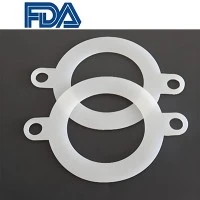
In engine bays and brake systems, rubber often fails under high heat and oil exposure. Silicone, however, remains stable, flexible, and leak-proof.
✅ Case Example: Silicone gaskets in turbocharged engines outperform rubber by lasting 3–5x longer, reducing maintenance costs and improving performance.
3.2 Healthcare and Medical Devices
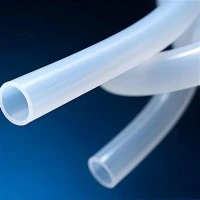
Medical-grade silicone is biocompatible, non-reactive, and sterilization-resistant. This makes it the ideal choice for tubing, implants, and diagnostic devices.
✅ Unlike rubber, silicone doesn't leach chemicals, cause allergic reactions, or degrade after sterilization.
3.3 Everyday Consumer Products
Silicone is increasingly used in baby products, kitchen tools, and electronics due to its safety, softness, and resilience. Unlike rubber, it doesn't crack, harden, or discolor over time.
✅ Silicone baking molds, watch bands, phone cases, and window seals maintain performance even after years of use.
4. Limitations of Silicone
4.1 Cost Considerations
Silicone components cost more to manufacture due to their raw materials and processing complexity. For cost-sensitive projects with mild operating conditions, rubber may still be a viable option.
4.2 Where Rubber Performs Better
- Abrasion resistance: In high-friction use (e.g., shoe soles), certain rubber types last longer.
- Tear resistance: Rubber gaskets in mechanical joints may hold up better under tension.
- Budget-friendliness: Rubber is suitable for disposable or low-stress parts.
5. Environmental Impact
5.1 Rubber and Sustainability
- Natural rubber is biodegradable and renewable but often linked to deforestation and land-use issues.
- Synthetic rubber is petroleum-based and non-biodegradable.
5.2 Silicone's Eco Profile
- Made from abundant sand, silicone avoids deforestation.
- Long-lasting and chemically stable, it reduces replacement frequency.
- However, it is non-biodegradable and currently difficult to recycle at scale.
5.3 Balancing Performance and Responsibility
For OEM buyers concerned about carbon footprints, it's critical to work with manufacturers who focus on:
- Waste reduction
- Eco-friendly production processes
- Sustainable material sourcing
At Xiamen Jinshun Sealing Technology Co., Ltd., we continuously explore greener manufacturing practices while delivering high-performance custom silicone parts to global brands.
6. Conclusion: When and Why Silicone Is the Better Choice
Silicone isn't always the winner-but when you need:
- Performance in extreme environments
- Resistance to heat, UV, and chemicals
- Biocompatibility for healthcare
- Long-lasting flexibility and form retention
Then silicone outshines rubber.
For international buyers looking to develop high-quality silicone components, the choice is clear. Partner with an experienced custom silicone parts manufacturer who understands both the technical requirements and your end-user expectations.
Looking for ODM/OEM silicone products?
Contact Xiamen Jinshun Sealing Technology Co., Ltd. – Your trusted partner in custom silicone part manufacturing and global distribution.